Getting Started
How to Start Fermenting at Home: A Complete Beginner's Guide
Ready to ferment your own food? This beginner-friendly guide covers the basics, the gear, and a simple first sauerkraut batch you can start today.
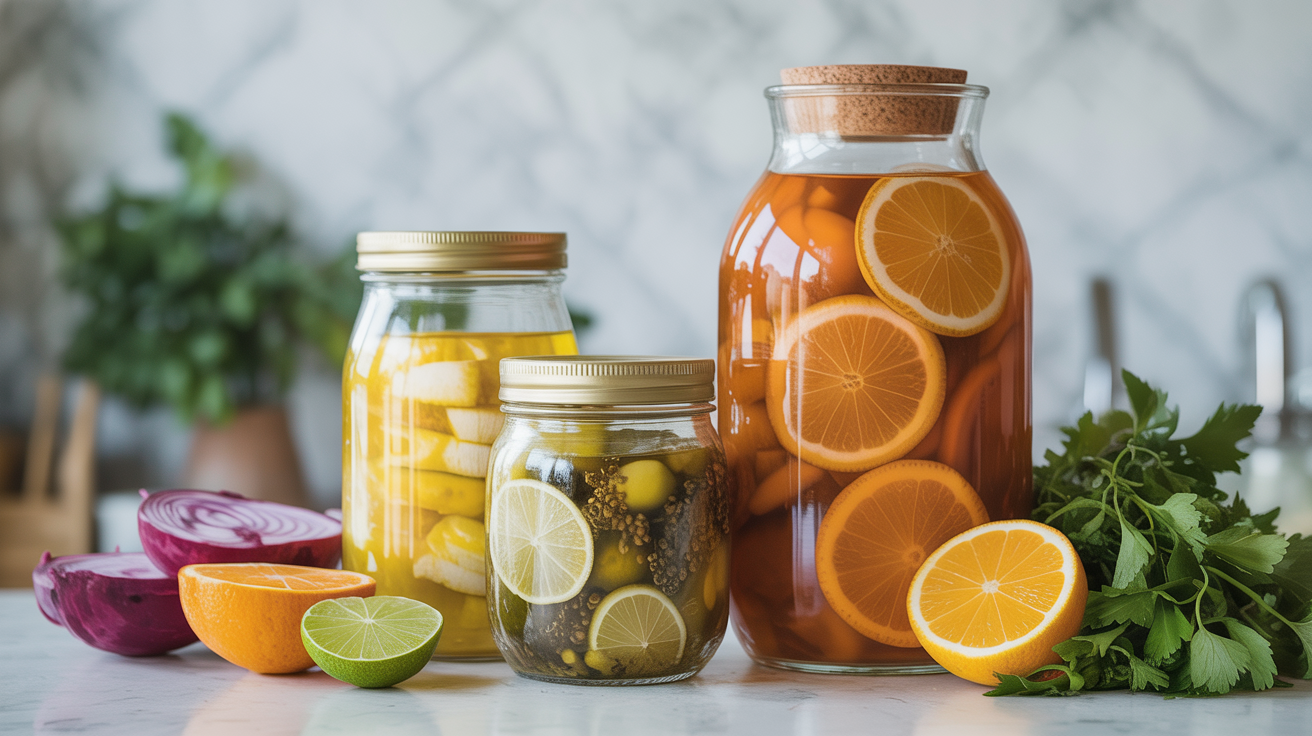
If you have a jar, some salt, and a head of cabbage, you already have everything you need to start fermenting at home. No special equipment. No culinary degree. No long list of ingredients. Fermentation is one of the oldest food-preservation methods humans know, and it turns out ordinary kitchen conditions are perfectly suited for it.
This guide walks you through what fermentation actually is, why it is safe when you follow a few simple rules, the gear worth owning, and a first batch (a small jar of classic sauerkraut) you can put up in under fifteen minutes. By the end you will know exactly what to look for to tell whether your ferment is working.
At a Glance
- Salt (2% of vegetable weight) plus submerged vegetables is the whole safety system, no canning, no sterilizing.
- A basic mason jar, a kitchen scale, and non-iodized salt are the only essential purchases.
- Your first sauerkraut takes about 15 minutes of hands-on work and 5 to 14 days of waiting.
- Bubbles, cloudy brine, and rising sourness in the first 48 hours mean it's working correctly.
- Warmer rooms (72°F/22°C) ferment faster and sharper; cooler rooms (65°F/18°C) ferment slower and mellower.
- "When in doubt, throw it out" still applies, but true spoilage is rare when vegetables stay under the brine.
What Fermentation Actually Is

At its core, fermentation is the process of letting microorganisms, mostly bacteria, yeasts, or both, convert sugars in food into acids, gases, or alcohol. The type you will be doing most as a beginner is lacto-fermentation, where naturally occurring Lactobacillus bacteria eat the sugars in vegetables and produce lactic acid as a byproduct.
That lactic acid is doing two things at once. It gives fermented foods their characteristic tangy flavor, and it lowers the pH of your jar until the environment becomes too acidic for harmful bacteria to survive. Salt reinforces this by drawing liquid out of the vegetables and giving the good microbes a head start before pathogens can take hold. The University of Georgia's National Center for Home Food Preservation puts it plainly: salt in a ferment is "vital to safety and texture," not just flavor, because it favors the growth of desirable bacteria while inhibiting the growth of others. That is the whole mechanism in one sentence, and it is why recipes are specific about salt amounts rather than "salt to taste."
Understanding what is happening in your jar makes it much easier to troubleshoot if something looks unusual, and it is genuinely interesting science.
Why Home Fermentation Is Safe
People often wonder whether fermenting food at home opens the door to food poisoning. It is a fair question, and the honest answer is: lacto-fermentation has a strong natural safety record because of how the process works, not just because people are careful.
Three things combine to protect you:
- Salt suppresses the growth of most harmful bacteria right from the start.
- Beneficial microbes establish themselves quickly and crowd out unwanted organisms.
- Submersion keeps vegetables under the brine, away from oxygen where mold can grow.
The danger zone is the beginning, before the lactic acid builds up. During those first day or two, keeping your vegetables fully submerged and your salt ratio accurate matters most. After that, the ferment largely protects itself. This is also why food-preservation guidance is firm on one point: do not cut back on the salt a tested ratio calls for, even if you're trying to eat less sodium, because the salt level is doing safety work, not just seasoning work. If you want a lower-sodium ferment, the fix is a shorter fermentation time or diluting the finished product, not a weaker starting brine.
That said, "when in doubt, throw it out" is the right call. If something smells putrid (not just sour, there is a real difference), shows pink or black mold throughout the jar, or has a slimy texture, discard it and start over. Mold on the surface brine is common and often harmless white or gray kahm yeast, but fuzzy colored mold means the batch is done. You can read more about safety signals and what to watch for before your first batch if that helps your confidence.
The Minimal Gear You Actually Need
One of the best things about beginner fermenting is that the barrier to entry is low. Here is what you genuinely need versus what is nice to have later.
Essential:
- A clean 1-quart (about 1-liter) wide-mouth glass jar
- A kitchen scale that reads in grams
- Non-iodized salt (kosher salt or pure sea salt, iodine inhibits fermentation)
- A clean weight or small zip-lock bag filled with brine to keep vegetables submerged
- A cloth, coffee filter, or loose lid to cover the jar (lets CO2 escape)
Useful but not required at the start:
- A dedicated fermentation weight (glass or ceramic)
- An airlock lid
- A set of jars in multiple sizes
You do not need a crock, a fermenting crock lid, or any proprietary kit to get started. A mason jar works perfectly well for sauerkraut and most other beginner vegetables. Most of what you need probably already lives in your kitchen; a small zip-lock bag filled with the same 2% brine you're using in the jar makes a perfectly good improvised weight, and a folded cabbage leaf does the job of a fancy follower plate.
Your First Batch: Simple Sauerkraut
Sauerkraut is the ideal starting ferment. Cabbage is cheap and forgiving. The ratio is easy to remember. And in five to seven days (sometimes sooner), you will have a genuinely useful condiment.
What You Need
- 500 g (about 1 lb) green cabbage, shredded thin
- 10 g non-iodized salt (2% of the vegetable weight)
- 1 clean 1-quart jar
- Something to weigh the cabbage down under the brine
The 2% salt-by-weight ratio is the standard starting point for lacto-fermented vegetables. It is salty enough to create the right environment without making the finished product unpleasantly briny. If you scale up or down, recalculate: multiply the weight of your vegetables in grams by 0.02.
Step-by-Step Instructions
- Wash your hands and your jar. Hot soapy water is enough. You do not need to sterilize with boiling water the way you would for canning, but working clean matters.
- Shred the cabbage into thin strips, removing the outer leaves and core. Set aside one of the outer leaves, you will use it later.
- Weigh the shredded cabbage and calculate your salt: cabbage weight (g) × 0.02 = grams of salt.
- Toss the cabbage and salt together in a large bowl. Squeeze and massage firmly for 5 to 10 minutes until it releases a significant amount of liquid. This is your brine.
- Pack the cabbage tightly into your jar, pressing down hard after each handful so the liquid rises above the shreds. Leave at least an inch of headspace at the top.
- Fold the reserved outer leaf into a disk and press it on top of the shredded cabbage. This helps hold everything down.
- Add your weight (or the brine-filled bag) on top so all the cabbage stays under the liquid. If the brine does not cover the top of the cabbage after you press down, dissolve 1 teaspoon of salt in 1 cup of water and add just enough to cover.
- Cover the jar loosely with a cloth or a lid left slightly ajar. Place it somewhere at room temperature, ideally between 65–72°F (18–22°C), out of direct sunlight.
- Check it daily. Press the cabbage down if it has floated above the brine. Rinse the weight if needed. Taste starting around day three.
- Move to the fridge when it tastes right to you, usually between five and fourteen days. Cooler rooms ferment slower; warmer rooms faster.
Temperature has a real effect on pace and flavor. A cooler ferment (closer to 65°F / 18°C) develops more slowly and tends to produce a more complex, mellow sour. A warmer one (closer to 72°F / 22°C) moves faster and can be sharper. Neither is wrong; it is a matter of preference.
Fermentation Timeline at a Glance
| Day | What's Happening | What You'll Notice |
|---|---|---|
| Day 0 | Salt draws liquid out; brine forms | Cabbage shrinks and softens as you pack it |
| Day 1–2 | Lactic acid bacteria activate | First tiny bubbles, brine still fairly clear |
| Day 3–4 | Acid production ramps up | Brine turns cloudy, smell shifts sour and tangy |
| Day 5–7 | Flavor develops toward mild sour | Good stopping point for a bright, crisp kraut |
| Day 10–14 | Flavor deepens further | Softer texture, more complex, more sour |
Use this as a rough map, not a hard rule. A jar sitting at 72°F will move through this table noticeably faster than one at 65°F, and taste is always the final word over the calendar.
How to Tell It Is Working
Fermentation gives you clear signals when things are going well.
Within 24 to 48 hours, you should see tiny bubbles forming in the brine or rising when you press down on the cabbage. This CO2 is produced by the bacteria as they eat the sugars, it is a reliable sign that fermentation is active.
The brine will turn slightly cloudy over the first few days. This is normal and is actually a sign of healthy bacterial activity. Crystal-clear brine after three or four days sometimes means fermentation is sluggish.
By day three or four, the smell should be noticeably sour and a little tangy, similar to the smell of a good vinegar or a ripe pickle, not sharp or unpleasant. If you taste it and the sourness is building, you are on track.
If you see bubbles, cloudy brine, and increasing sourness, your sauerkraut is doing exactly what it should. If nothing is happening after 48 hours (no bubbles, no smell change), double-check that your vegetables are fully submerged and that you used non-iodized salt. A cold kitchen, under 60°F, is the other common culprit; the bacteria simply slow down and need more time, not more salt.
What to Ferment Next
Once your first sauerkraut is in the fridge, the natural next question is what else you can do. Vegetables that work well for beginners include cucumbers (classic dill pickles), carrots, radishes, and green beans. Each one follows a similar logic: a brine, submersion, time, and temperature. Standard, food-grade containers matter here too; if you eventually scale up past a quart jar, the safety guidance is to use only food-grade plastic, glass, or stoneware, and to keep vegetables 1 to 2 inches under the brine with a clean, sealed weight, never a garbage bag or non-food-grade container.
The best foods to ferment as a beginner covers which vegetables are most forgiving and which ones to approach once you have a few batches under your belt.
Some fermenters eventually move into dairy ferments (yogurt, kefir), grain ferments (sourdough bread), or longer projects like kombucha. None of those are harder in principle, but starting with lacto-fermented vegetables gives you the clearest feedback loop while you learn to read your jars.
Frequently Asked Questions
Do I need to sterilize my jars before fermenting?
No. Unlike water-bath canning, lacto-fermentation does not require sterile equipment, it relies on the natural bacteria present on the vegetables, not a sterile environment. Clean your jars thoroughly with hot soapy water and rinse well. Residual soap can inhibit fermentation, so rinse carefully.
What if I see white stuff floating in my jar?
A thin white or cream-colored film on the surface of the brine is usually kahm yeast, a harmless wild yeast that shows up in warmer conditions or lower-salt ferments. Skim it off with a spoon, make sure your vegetables are submerged, and continue. Fuzzy mold in green, black, or pink tones is a different situation and means the batch should be discarded.
Can I use regular table salt?
It is better not to. Most table salt contains iodine or anti-caking agents that can inhibit the bacteria you are counting on. Use kosher salt, pickling salt, or a sea salt with no additives. Check the label, it should list only salt as the ingredient.
How long does fermented sauerkraut last in the fridge?
A well-made jar of sauerkraut can last several months in the refrigerator. The acidity that develops during fermentation is what preserves it. Keep it submerged under the brine in a sealed jar and it will stay good for a long time. The flavor continues to mellow slowly in the cold, which many people prefer.
My sauerkraut smells really sour. Is that normal?
Yes. Lacto-fermented foods are genuinely acidic, and the smell reflects that. A strong sour smell is a sign things are working. The distinction to know is between a clean, vinegary sourness (good) and a rotten, putrid, or sulfurous odor (not good). Fermented cabbage has a pungent smell, but it should not be off-putting in the way spoiled meat is. When in doubt, trust your nose, if something smells genuinely wrong, it probably is.
Can I stop the fermentation early if I like a milder flavor?
Yes. There is no rule that says you must wait a set number of days. If your kraut tastes good to you on day three, move it to the fridge. Cold slows the bacteria dramatically, though it does not stop them completely, so a jar that goes into the fridge mild will keep getting very slightly more sour over the following weeks, just much more slowly than it would at room temperature.