Getting Started
The Best Foods to Ferment as a Beginner
Discover the easiest things to ferment at home, from sauerkraut to yogurt. A practical guide to picking your first ferment and actually finishing it.
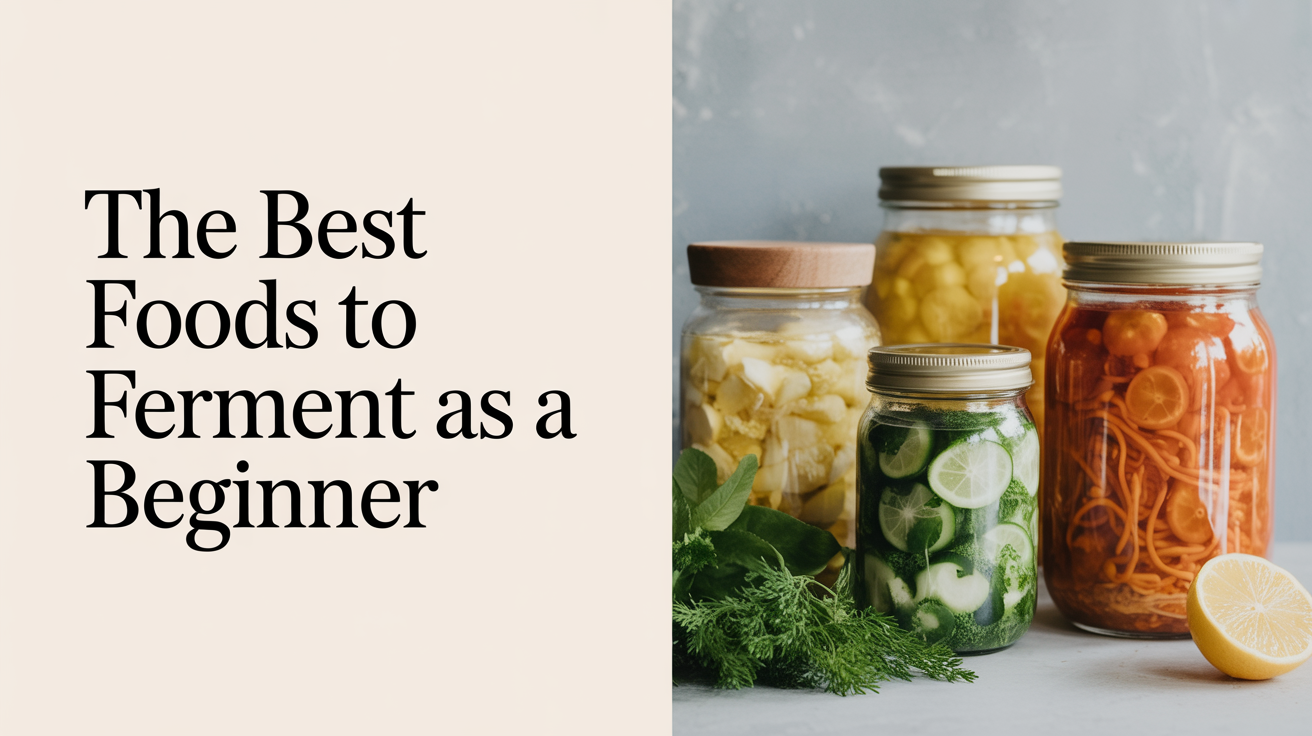
If you're trying to decide what to ferment first, start with something forgiving. That means a project where the margin for error is wide, the ingredients are cheap, and you can taste results in under two weeks. The six ferments below fit that description. They're ranked roughly from easiest to most involved, so you can pick your entry point and go.
A Quick Comparison
Before diving into the details, here's a side-by-side look at how these ferments stack up for a first-timer.
| Ferment | Difficulty | Time to First Taste | Why It's a Good Starter |
|---|---|---|---|
| Sauerkraut | Very easy | 1–4 weeks | Two ingredients, no equipment, hard to fail |
| Fermented veg sticks | Very easy | 3–7 days | Even faster than sauerkraut, great for variety |
| Fermented pickles | Easy | 3–5 days | Fast results, satisfying crunch |
| Kimchi | Easy–Moderate | 1–5 days | Spicy and punchy; slight more prep work |
| Yogurt | Easy (with thermometer) | 6–12 hours | Familiar flavors, very quick turnaround |
| Kombucha | Moderate | 1–4 weeks | Needs a SCOBY; more moving parts |
The Two Most Forgiving Ferments: Sauerkraut and Veg Sticks
These belong in the same category because the method is nearly identical: vegetables plus salt, packed into a jar. No starter culture, no special equipment, no temperature control beyond keeping the jar out of direct sunlight.
Why Sauerkraut Is the Classic First Ferment
Sauerkraut is shredded cabbage salted until it releases its own brine. That liquid submerges the cabbage, the naturally present Lactobacillus bacteria get to work, and the result is tangy, crunchy, and genuinely shelf-stable. The science is on your side from the start: salt creates a selective environment where the right bacteria thrive and harmful ones can't. You can read more about why this works in how fermentation works: the simple science for beginners.
What you need: One head of cabbage, non-iodized salt (about 2% of the cabbage's weight), a wide-mouth jar, something to weigh down the cabbage.
Effort: Low. Shredding and massaging takes about 15 minutes. After that, you check on it every day or two.
Time to first taste: 1 week minimum. Most people prefer it at 2–4 weeks, when the flavor has developed past sharp and into something more complex.
The main thing that trips beginners up is not keeping the cabbage submerged. If a piece floats above the brine and you see white fuzz (kahm yeast), just scrape it off. Soft pink or black mold is a reason to discard and start over, but that's rare if you keep the veg under the brine.
Fermented Veg Sticks: Even Faster
Carrot sticks, cucumber spears, green beans, radishes, anything crunchy ferments beautifully in a simple salt brine. You skip the massage step entirely: just dissolve salt in water, pack the jar with veg, and pour the brine over.
Effort: Very low. Five minutes of prep.
Time to first taste: 3–7 days. Taste one stick daily starting on day 3 until the sourness is where you want it, then move the jar to the fridge to slow fermentation.
This is a great project if you want feedback quickly. A week from today you can be eating something you fermented yourself.
Fermented Pickles
Classic dill pickles fermented in brine (not vinegar) are a natural next step after veg sticks. The process is the same, salt brine, submerged vegetables, room-temperature ferment, but the result tastes distinctly different from a quick salt pickle. You get that characteristic sour, complex flavor you associate with real delicatessen pickles.
What you need: Small cucumbers (Kirby or Persian work best), garlic, fresh dill if you can find it, non-iodized salt, filtered or non-chlorinated water.
Effort: Low. The main extra step is packing the jar tightly so the cucumbers stay submerged, and making sure you use cucumbers without the blossom end removed (enzymes in the blossom end can make pickles soft).
Time to first taste: 3–5 days at room temperature. Move to the fridge when they taste right. They'll continue slowly fermenting even cold, getting tangier over weeks.
Kimchi
Kimchi has a reputation for being complicated, but a basic version is well within reach for a beginner. The core technique is the same as sauerkraut: salt the vegetables, add flavorings, pack into a jar, let it ferment. The main difference is that kimchi involves more ingredients and a paste (typically gochugaru, garlic, ginger, and fish sauce or a vegan substitute).
Effort: Moderate prep. Salting the cabbage takes a few hours (you can do it overnight). Making the paste and assembling takes another 20–30 minutes.
Time to first taste: You can eat it immediately as a fresh banchan, but most people prefer it after 1–5 days at room temperature when the flavors meld and a light sour note develops. Move it to the fridge after that.
The only real risk for beginners is making the paste too watery, which can dilute the brine and raise the pH. Keep the paste thick and you'll be fine. Everything else about kimchi is as forgiving as sauerkraut.
Yogurt
Yogurt is technically a dairy ferment rather than a vegetable lacto-ferment, which makes it a good parallel track rather than a strict next step. The process is fast, you can have finished yogurt in under 12 hours.
What you need: Whole milk, a few tablespoons of plain yogurt with live cultures as your starter, a cooking thermometer.
Effort: Low, with attention. You heat the milk to 180°F (82°C) to kill competing bacteria, let it cool to 110°F (43°C), stir in the starter, then keep it warm for 6–12 hours. An oven with the light on, a slow cooker on the lowest setting, or a dedicated yogurt maker all work.
The thermometer is non-negotiable here. Too hot when you add the starter and you kill the cultures; too cool and they won't activate. But once you've done it once, you'll find the process genuinely simple.
Time to first taste: 6–12 hours. Thicker yogurt comes from longer incubation or straining through cheesecloth.
Yogurt is also one of the best ways to understand fermentation before committing to a weeks-long project. The feedback loop is fast.
Kombucha
Kombucha is the most involved ferment on this list. It's not hard once you understand the process, but it has more moving parts: you need a SCOBY (symbiotic culture of bacteria and yeast), starter liquid from a previous batch, brewed sweet tea, and patience.
What you need: A SCOBY (you can grow one from store-bought raw kombucha, or get one from a brewer), sweet black or green tea, a large glass jar, cloth cover.
Effort: Moderate. Brewing the tea takes 30 minutes. After that, the first fermentation is hands-off for 7–14 days. If you want carbonation, a second fermentation in sealed bottles adds another 2–4 days.
Time to first taste: 1 week minimum. Most people find 2 weeks gives a better balance of sweet and tart on the first batch.
The reason kombucha sits further down this list is that sourcing a healthy SCOBY is an extra step, and the first batch can taste uneven as the SCOBY settles into your home environment. Subsequent batches are much more predictable. If you're curious about the safety side of any of these ferments, is home fermentation safe? what beginners need to know covers the basics clearly.
Where to Actually Start
If this is your first ferment, pick sauerkraut or fermented veg sticks. Both teach you the core principle, salt creates a safe environment for beneficial bacteria, and neither requires you to buy anything beyond a jar and some salt. You can run your first batch with what's already in your kitchen this week.
Once you're comfortable with lacto-fermentation, everything else on this list follows naturally. How to start fermenting at home: a complete beginner's guide walks through the equipment and mindset in more detail if you want a fuller picture before you begin.
Frequently Asked Questions
How long does it take to ferment something for the first time?
It depends on what you're making. Fermented veg sticks can be ready in 3–5 days. Sauerkraut takes 1–4 weeks. Yogurt is done in under 12 hours. Your first ferment doesn't have to be a long commitment, start with something quick if you want early feedback.
Do I need special equipment to start fermenting?
For lacto-fermented vegetables (sauerkraut, veg sticks, pickles, kimchi), you need a clean wide-mouth jar and non-iodized salt. That's genuinely it to start. A kitchen scale helps for getting the salt ratio right, but it's not required if you use a reliable volume measure. Yogurt is the only beginner ferment that truly needs a thermometer.
What's the safest ferment for a complete beginner?
Sauerkraut and fermented veg sticks have the lowest risk. The salt brine creates an acidic environment quickly, and the signs of a problem (pink or black mold, foul smell) are obvious. White film on top is usually harmless kahm yeast, not mold, skim it off and keep going.
Can fermented vegetables make you sick?
Properly made lacto-fermented vegetables are very safe. The acidity produced during fermentation inhibits pathogenic bacteria. Problems arise when vegetables float above the brine and get exposed to air, or when equipment isn't clean. Keep everything submerged, use clean jars, and trust your senses, if it smells genuinely foul (not just sour), discard it.
What's the difference between fermented pickles and regular vinegar pickles?
Fermented pickles (also called "brined pickles" or "lacto-fermented pickles") are soured by bacterial activity in a salt-water brine. Vinegar pickles are preserved by adding acid directly. Fermented pickles have live cultures and develop a more complex, nuanced flavor. Vinegar pickles are faster but don't have the same probiotic content or depth of taste.