Fermented Vegetables
Beyond Napa Cabbage: Other Kimchi Vegetables Worth Fermenting
Once you've nailed napa kimchi, try radish, cucumber, and scallion kimchi. Here's how the paste stays the same while salt and timing shift by vegetable.
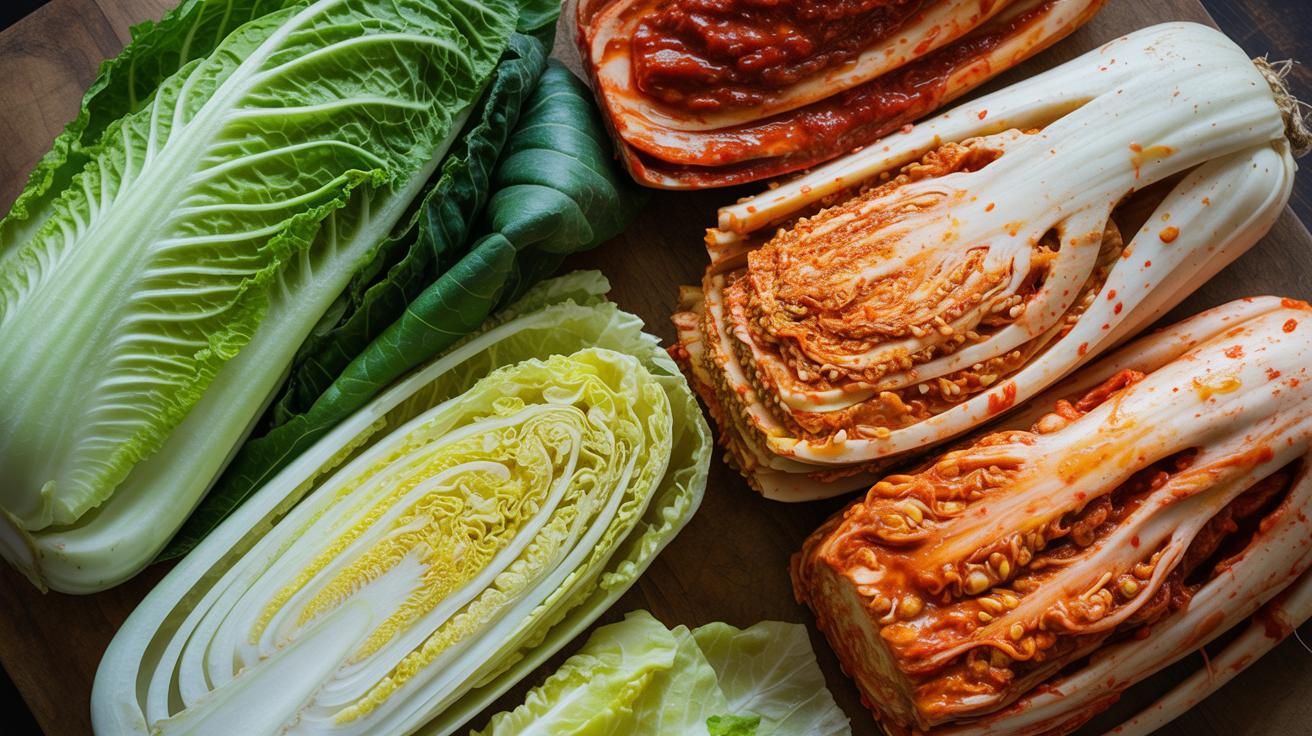
If you've already worked through your first batch of napa cabbage kimchi and it came out crunchy, tangy, and not too salty, you're ready for the fun part. Kimchi variations are where the technique stops being a single recipe and starts being a method you can point at almost any vegetable in the produce aisle. Radish, cucumber, scallion, and mustard greens all take the same red paste in different directions, and each one teaches you something about how salt, water content, and time work together in a ferment.
This guide walks through four common variations beyond napa, what makes each one different to prep, and how to adjust salting and fermentation time so you don't end up with mush or an under-seasoned jar.
The One Paste, Many Vegetables Idea
Most kimchi variations share a base paste: gochugaru (Korean chili flakes), garlic, ginger, a sweetener like sugar or grated pear, and a savory, funky element such as fish sauce, salted shrimp, or a vegetarian stand-in like soy sauce mixed with a little kelp broth. What changes from one type of kimchi to the next isn't the paste so much as three other things: how the vegetable is cut, how much salt it needs relative to its water content, and how long it takes to ferment to the sourness you like.
Napa cabbage is mild, holds a lot of water, and has broad leaves that soak up paste easily. Swap in a dense radish or a watery cucumber and the math changes. A vegetable that's mostly water, like cucumber, will dilute its own brine as it sits and can go soft fast. A dense root vegetable, like daikon, holds its shape longer and can handle a slightly bolder cut. Once you see kimchi as a technique applied to whatever vegetable is in front of you, the different vegetables for kimchi stop feeling like separate recipes and start feeling like the same three or four decisions made slightly differently each time.
Radish Kimchi (Kkakdugi): The Cube-Shaped Classic
Kkakdugi is probably the most common kimchi variation after napa, and it's a good next project because the technique transfers directly. Korean radish (or a daikon if that's what your store carries) gets peeled and cut into roughly half-inch cubes rather than sliced into ribbons. The cube shape matters: it gives you a satisfying crunch and lets the radish hold its structure through weeks of fermentation, which shredded radish wouldn't do nearly as well.
Salt the radish cubes and let them sit for twenty to thirty minutes to pull out some moisture, then drain off that liquid before mixing in the paste. This step matters more here than with napa, because radish releases less water on its own during salting, and skipping it can leave you with a watery, underseasoned jar. Once it's coated in paste and packed into a jar, kkakdugi generally ferments a bit slower than napa kimchi at the same room temperature, since the dense cubes take longer for the paste's flavor and salt to penetrate all the way through. Taste it starting around day three or four and let your own kitchen's temperature and your taste for sourness guide you from there rather than a fixed number of days.
Cucumber Kimchi (Oi Sobagi): Kimchi for Hot Weather
Oi sobagi is the kimchi variation to make when it's too hot to think about a long ferment. Small, thick-skinned cucumbers (Persian or Kirby cucumbers work better than the big waxy slicing kind, which tend to turn mushy and watery) are cut into short lengths, then slit lengthwise into quarters without cutting all the way through, so each piece opens like a little pocket you can stuff with paste.
Because cucumbers are almost entirely water, they need a shorter, gentler approach than radish or cabbage. A quick salt brine of ten to fifteen minutes is usually enough. Stuff the paste into the slits, pack the cucumbers loosely, and expect this one to move fast: oi sobagi is often ready to eat within a day at room temperature and is best treated as a short-lived, refrigerator-finished ferment rather than something you tuck away for weeks. If you let it sit too long, the cucumbers lose their crunch and go limp, which is the main risk with this variation. Treat it more like a fast pickle with kimchi flavor than a long-aged ferment, and you'll get the texture right.
Scallion and Mustard Green Kimchi: For When You Want More Punch
Scallion kimchi (pa kimchi) and mustard green kimchi (gat kimchi) both lean into stronger, sharper flavors than napa or radish. Scallions are salted only briefly, since their thin structure absorbs brine and paste quickly, then tied into small bundles or left loose and coated generously in paste, which tends to be a bit more heavily seasoned than a napa batch to stand up to the scallion's bite. Mustard greens have their own natural heat and a slightly bitter edge, so some cooks cut the paste's chili slightly and let the green's own flavor come through instead of doubling up on spice.
Both of these ferment on the faster side compared to root vegetables, since their leaves and stems are thinner and let paste and salt move through quickly. They're good ferments to make in smaller batches, since the flavor is bold enough that a little goes a long way as a side dish or a topping for rice and noodles rather than something you eat by the bowlful the way you might with mild napa kimchi.
Adjusting Salt and Fermentation Time by Vegetable
The core adjustment across all these types of kimchi comes down to water content. Watery vegetables need less added salt and shorter salting time, because they're already diluting whatever salt touches them. Dense, low-water vegetables need a firmer hand with salt and more patience, both during the initial salting and during fermentation itself. If you want the underlying math instead of eyeballing it, our guide to building a salt brine for fermenting vegetables covers percentages you can apply to kimchi salting as well as jar brines.
| Vegetable | Cut | Initial salting | Typical fermentation pace |
|---|---|---|---|
| Napa cabbage | Wide strips or quarters | 1 to 2 hours | Moderate |
| Radish (kkakdugi) | Half-inch cubes | 20 to 30 minutes, drain well | Slower |
| Cucumber (oi sobagi) | Slit lengthwise | 10 to 15 minutes | Fast, refrigerate soon |
| Scallion | Whole or bundled | Brief, a few minutes | Fast |
| Mustard greens | Whole leaves | Short, 15 to 20 minutes | Fast to moderate |
These are starting points, not fixed rules. Your kitchen's temperature, the exact size of your vegetable pieces, and how sour you personally like your kimchi all push these numbers around. A warm kitchen in summer will move any of these along faster than a cool one in winter, so use taste rather than the clock as your real guide.
If you're curious about branching out even further, plenty of other produce ferments well using similar salt logic even outside the kimchi paste, and carrots, green beans, and other easy vegetables are a good next stop once you've got a feel for how salt percentage changes with water content.
Frequently Asked Questions
Can I use the same paste for every kimchi variation?
Mostly, yes. The base paste of chili flakes, garlic, ginger, sweetener, and a savory element works across napa, radish, cucumber, scallion, and mustard greens. What you'll want to tweak is the amount: watery vegetables like cucumber can take a slightly thinner coating, while dense radish cubes benefit from a bit more paste worked into every surface so the flavor reaches the center.
Why did my radish kimchi turn out watery?
This usually means the radish wasn't drained well enough after salting. Radish releases liquid slowly, so give it the full twenty to thirty minutes and pour off the liquid that collects before mixing in the paste. If it's already made and tastes diluted, our guide on fixing kimchi and ferments that are too salty, too sour, or not sour enough covers ways to rebalance a batch after the fact.
How do I know when a fast ferment like cucumber kimchi is done?
Taste it. Because oi sobagi ferments quickly, checking daily (or even twice a day in a warm kitchen) matters more than following a set number of days. Once it has a light tang and the cucumber still has some crunch, move it to the fridge to slow things down before it turns soft.
Is it safe to substitute fish sauce with a vegetarian option?
Yes, a soy sauce and kelp broth mix or a store-bought vegan fish sauce alternative works fine for flavor. The substitution doesn't change the fermentation safety of the batch, since the salt and the vegetables' own fermentation are what keep it safe, not the fish sauce itself. As always with any home ferment, keep vegetables submerged, use clean jars and hands, and when a batch smells off or grows anything fuzzy rather than just bubbly, discard it rather than taste-testing your way through doubt.
Do these variations need a different jar or setup than napa kimchi?
No. Any of the jars, weights, or airlock lids you're already using for napa kimchi work the same way for radish, cucumber, or scallion kimchi. The only real difference is how full to pack the jar, since watery ferments like cucumber can bubble and expand more actively in the first day than a denser radish batch will.