Tools & Ingredients
Do You Need a Fermentation Crock or Will a Jar Work?
A plain-language comparison of mason jars vs. fermentation crocks so you can pick the right vessel before you buy anything extra.
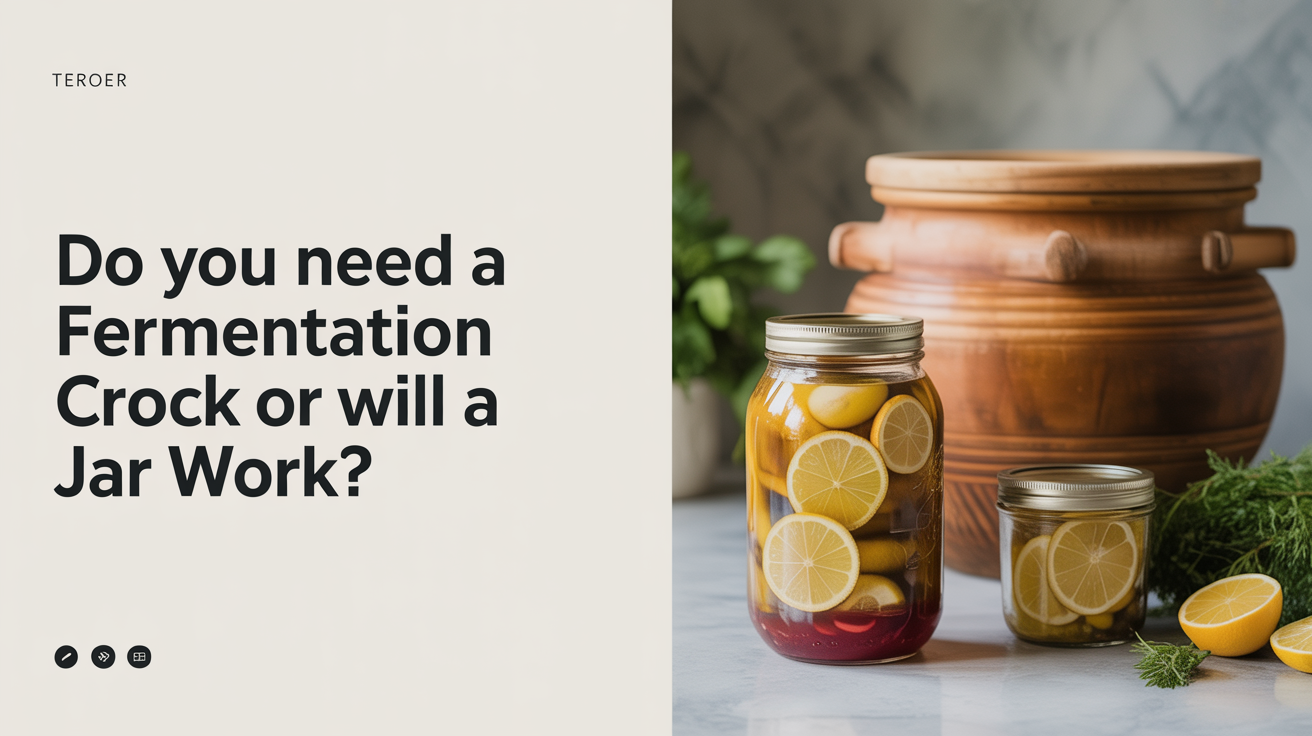
A wide-mouth mason jar works perfectly well for home fermentation. You can make sauerkraut, kimchi, pickles, and most other lacto-fermented vegetables in one without any special gear. A fermentation crock earns its place later, once you're making bigger batches more often and want a more hands-off process.
That's the short answer. Below is everything you need to decide which vessel actually makes sense for where you are right now.
How Each Vessel Works
Both mason jars and ceramic crocks rely on the same biology: beneficial bacteria produce lactic acid, which preserves the food and crowds out harmful microbes. The vessel shapes how you manage the process, not the process itself.
Mason Jars
A standard wide-mouth quart jar holds about 1 pound of shredded cabbage, enough for a small batch of sauerkraut. You pack the vegetables below the brine, set a weight to keep everything submerged, and either use a loose lid (to let CO2 escape) or screw on an airlock. Glass is clear, so you can see bubbles forming, check the brine level, and spot any problems early. That visibility is genuinely useful for beginners.
Mason jars are inexpensive and available everywhere. A four-pack costs a few dollars. You probably already own some.
The main limitation is size. A quart jar is small. If you want enough sauerkraut to last a family through the month, you'll be managing four or five jars at once, checking each one, burping lids, and topping off brine. That gets tedious.
Water-Sealed Ceramic Crocks
A traditional fermentation crock has a lip around the top that holds water. When you set the lid in place, that water creates an airlock: CO2 from fermentation pushes out through the water, but outside air (and the mold spores in it) can't get in. You fill it, weigh the vegetables down with the included stones, add water to the seal, and mostly leave it alone.
Crocks come in sizes from 1 liter up to 10 liters or more. A 5-liter crock holds roughly 5 pounds of vegetables, which is a meaningful batch. The ceramic is opaque, so you can't see what's happening inside, but the water-seal system is self-managing in a way that jars aren't.
The tradeoffs are cost and storage. A quality crock runs $60 to $150 depending on size and brand. It's also heavy and takes up counter or cabinet space.
Other Options Worth Knowing
A half-gallon mason jar bridges some of the gap between a quart jar and a full crock. It holds about 2 pounds of vegetables and is still cheap and clear.
Food-grade plastic buckets (the kind used in home brewing) work for very large batches but aren't ideal because plastic can absorb odors over time and is harder to inspect for residue.
Glass pickle jars (the large kind from a grocery store deli counter) are free if you can get them and function exactly like mason jars. Just check that the lid fits securely.
Side-by-Side Comparison
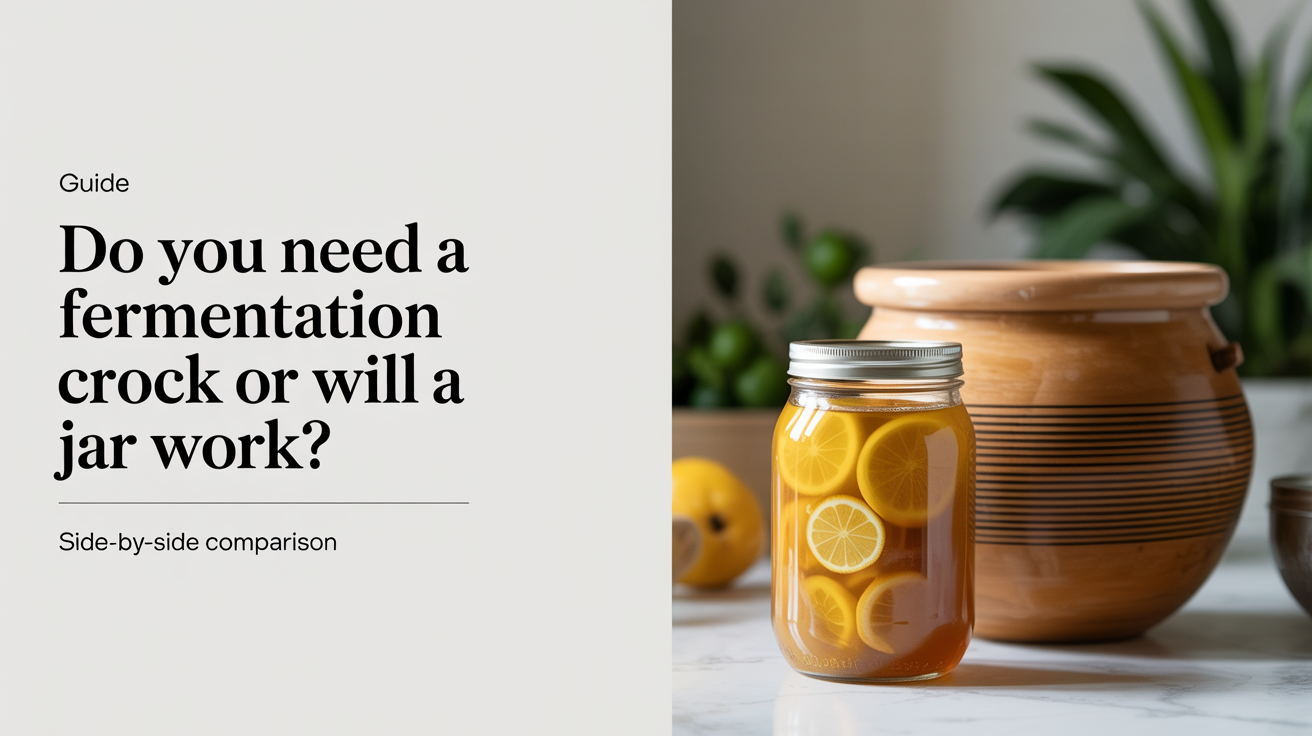
| Factor | Wide-Mouth Mason Jar | Water-Sealed Crock |
|---|---|---|
| Typical capacity | 1 qt – ½ gal (1–2 lbs) | 1–10 L (2–20+ lbs) |
| Cost | $1–$5 | $60–$150 |
| Visibility | Clear glass — you can see everything | Opaque — no visual check |
| Airlock management | Manual (loose lid or add-on airlock) | Self-managing water seal |
| Ease for beginners | Very easy to start | Slightly more setup; simpler to maintain |
| Cleaning | Dishwasher-safe | Hand-wash; harder to clean corners |
| Storage footprint | Minimal | Takes up significant space |
| Best for | Small batches, learning, variety | Large or frequent batches, low-maintenance |
When to Upgrade to a Crock
There's no pressure to buy a crock early. Start with jars. Make a few batches. Learn what the brine should look like, how fast things bubble in your kitchen, and what flavors you prefer.
A crock makes sense when you notice yourself:
- Running four or more jars at the same time regularly
- Making the same ferment repeatedly (weekly sauerkraut, for instance)
- Wanting to set something up and not think about it for two to four weeks
- Fermenting large amounts to stock a root cellar or share with others
At that point, the cost of a crock pays off in convenience. The water seal means you're not checking lid pressure or burping jars every day. The larger volume means fewer batches to get the same output.
If you're still on your first or second batch, a crock is a nice-to-have, not a necessity.
Getting Started With What You Have
If you have mason jars already, use them. The basic equipment list for beginners is short: a jar, salt, and something to keep vegetables submerged. That's it for the first several batches.
Choosing the right salt matters more at the beginning than vessel choice. Fine sea salt or kosher salt without additives is what you want. Table salt with iodine or anti-caking agents can interfere with fermentation.
Once you have a batch going, check it every day or two at first. Look through the glass. You'll see tiny bubbles rising as fermentation gets active, usually within two to four days at room temperature. The brine should stay cloudy. If the vegetables are floating above the brine, press them back down or adjust your weight. Clear glass makes all of this easy to monitor, which is a real advantage when you're still learning what normal looks like.
Frequently Asked Questions
Can I ferment vegetables in a regular mason jar without an airlock?
Yes. A loose-fitting lid (just rested on top, not screwed down) lets CO2 escape without letting much air in. You can also use a plastic bag filled with brine as a weight and seal, which covers the opening while staying flexible enough to let gas out. Purpose-made airlock lids that fit mason jar mouths are inexpensive and remove most of the guesswork, but they're optional.
Is a more expensive crock better?
Not necessarily. The key features are a proper water-seal channel and a close-fitting lid. Some well-known European crocks are excellent; so are less-expensive versions made to the same design. What you want to avoid is a crock with a poorly fitted lid that doesn't hold water in the seal groove, or one with a glaze that isn't food-safe. Check that the listing or packaging confirms food-safe glazing.
Do I need a weight no matter what vessel I use?
Yes, for lacto-fermented vegetables. Anything poking above the brine is exposed to air and can mold. Crocks usually come with ceramic weights sized to fit. For mason jars, a small zip-lock bag filled with brine works, as does a smaller jar that fits inside the opening. Dedicated fermentation weights and airlock systems are available if you want something cleaner.
How long do ferments take in a jar vs. a crock?
The timeline is the same. Temperature and salt concentration drive fermentation speed, not the vessel. A sauerkraut at room temperature (68 to 72°F) takes about two to four weeks in a jar or a crock. Crocks often work for longer ferments because the water seal makes them more hands-off, but there's no inherent speed difference.
Can I use a crock for small batches?
You can, but it's inefficient. A crock needs the vegetables packed close enough to the water seal to stay anaerobic. Most crocks specify a minimum fill level (usually halfway). Putting a half-pound of cabbage in a 5-liter crock is impractical. For small batches, a mason jar is genuinely the better tool.