Tools & Ingredients
Fermentation Equipment Every Beginner Needs
A practical guide to fermentation equipment for beginners: what's essential, what helps, and what you can improvise from things already in your kitchen.
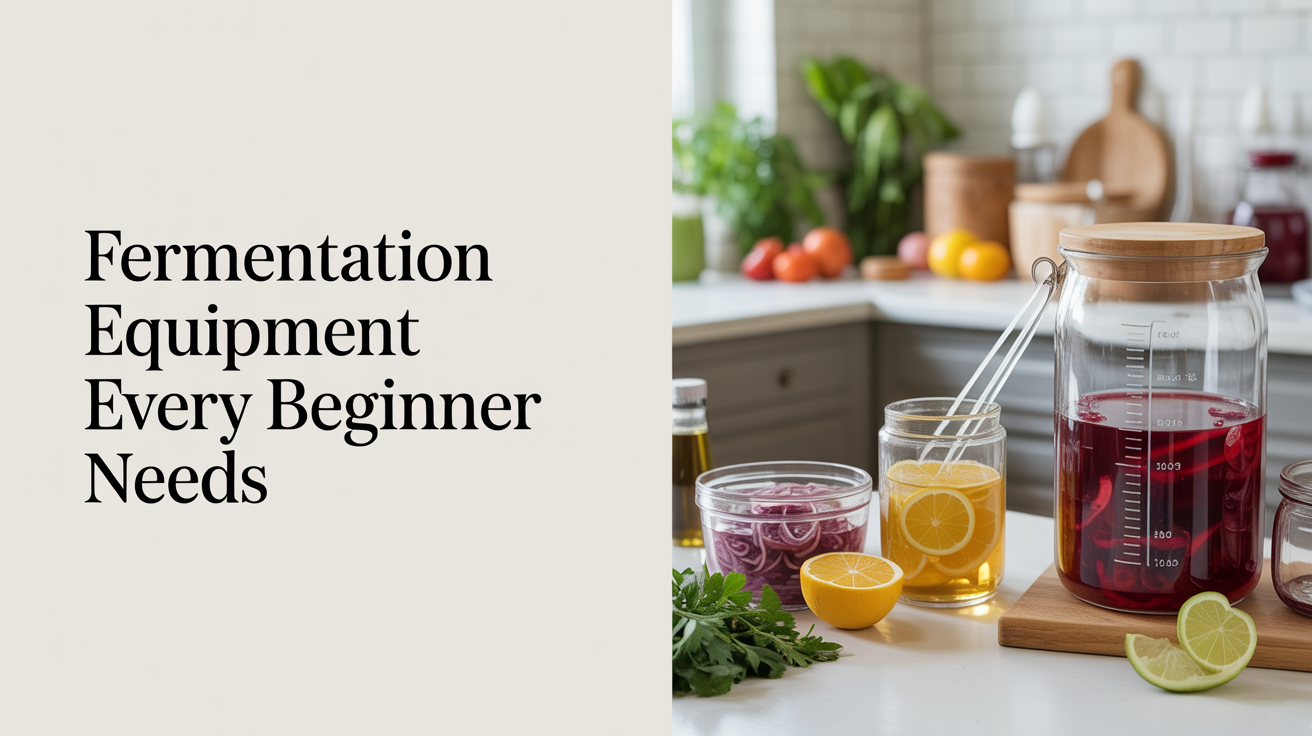
You can start fermenting with a mason jar, a kitchen scale, and a box of non-iodized salt. That's it. Everything else on this page either makes the process easier or becomes relevant once you're hooked. Here's a clear-eyed breakdown of what actually matters, what can wait, and what you can fake with stuff already in your kitchen.
At a Glance
- Three purchases cover a real beginner setup: a wide-mouth jar, a gram scale, and non-iodized salt.
- Weights, airlocks, crocks, and pH meters all make fermenting easier but none are required to start.
- Almost every piece of "extra" equipment has a free substitute already in most kitchens.
- Food-grade containers only, at roughly 1 gallon of capacity per 5 pounds of vegetables for larger batches.
- Keep vegetables 1 to 2 inches under the brine; this single habit prevents most beginner problems.
- Standard vegetable ferments run 65-75°F (18-24°C) and reach a safe pH of roughly 3-4 through their own acid production.
The Essentials You'll Use Every Single Time
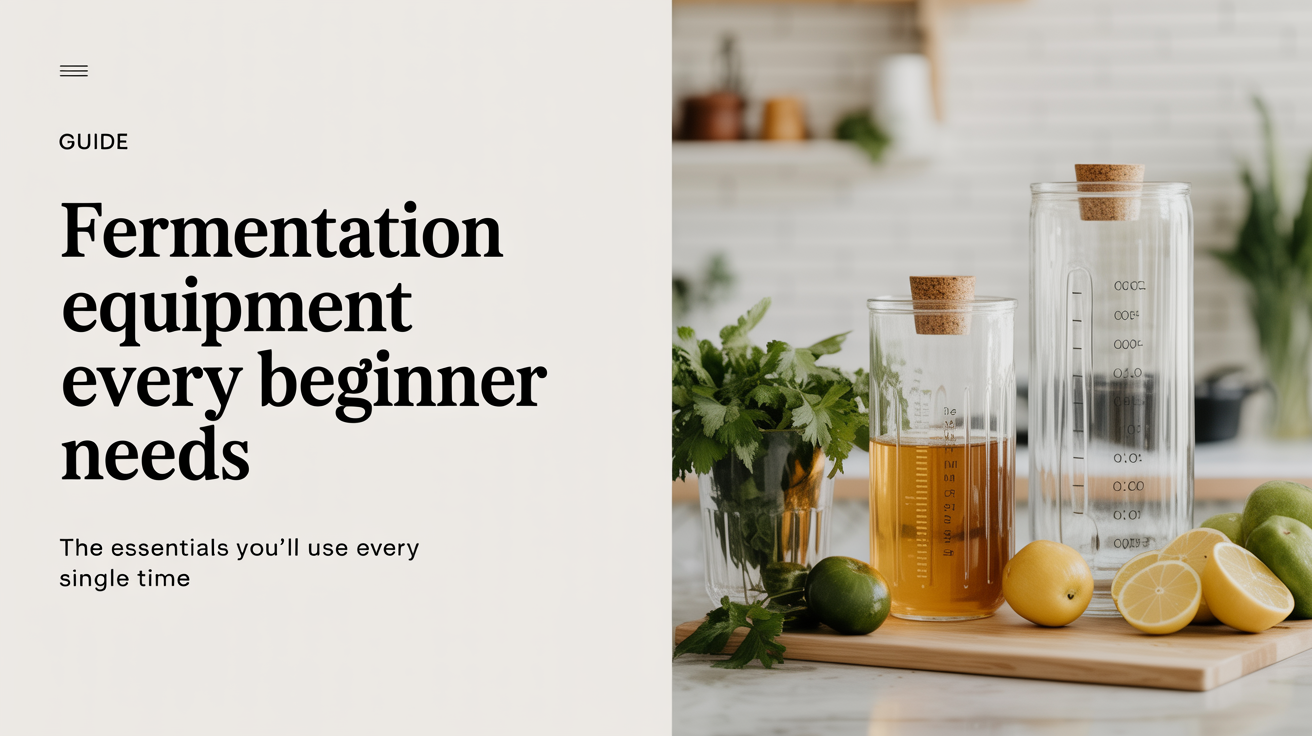
Wide-Mouth Glass Jars
Wide-mouth mason jars (quart and half-gallon sizes) are the workhorse of home fermentation. The wide opening makes packing vegetables easy, lets you reach in to check things, and fits standard fermentation lids if you want them later. Regular-mouth jars work in a pinch, but packing a narrow neck with cabbage is a frustrating experience.
Ball, Kerr, and Weck are common brands, but store-brand and off-brand jars work just as well for fermentation (unlike canning, you're not pressure-processing, so sealing precision isn't critical). Buy a set of quart jars as your first purchase. Half-gallons are useful for larger batches and for kombucha.
A Kitchen Scale
Volume measurements are notoriously unreliable for salt. A teaspoon of fine sea salt contains far more sodium than a teaspoon of Diamond Crystal kosher salt, because the crystals are different sizes. If you use volume, you're guessing.
A scale removes the guesswork. Most beginner fermentation recipes express salt as a percentage of total vegetable weight (typically 2–2.5% for sauerkraut and kimchi-style ferments). A scale makes that calculation a two-second job. Any digital kitchen scale accurate to 1 gram works. You don't need anything expensive.
Non-Iodized Salt
This one is a supply item, not equipment, but it belongs here because iodized table salt is one of the most common reasons beginner ferments fail. Iodine is added to table salt to prevent iodine deficiency, but it also inhibits the lactobacillus bacteria you're trying to cultivate. Home food-preservation guidance is direct about this tradeoff: salt in a ferment does real safety work, favoring the growth of the bacteria you want while suppressing the ones you don't, which is why the standard advice is never to cut back on the salt a recipe calls for, even for a lower-sodium diet.
Use kosher salt, sea salt, or pickling salt. Check the label: if it says "iodized," skip it. Choosing the right salt matters more than most beginners expect, it affects both the microbial environment and the final flavor.
Something to Keep Vegetables Submerged
Keeping vegetables below the brine line is the single most important food-safety practice in lacto-fermentation. Anything exposed to air can grow mold. Most beginners skip weights entirely, then wonder why they got surface mold on day three.
You don't need to buy anything for this. A small zip-lock bag filled with brine (not plain water, in case it leaks) works well. A smaller jar filled with water and set inside the ferment jar also works. Zip-lock brine bags conform to the jar's shape and push everything down evenly. Once you've done a few batches and want a more reliable solution, dedicated glass or ceramic weights are worth buying.
A Way to Cover the Jar
For most vegetable ferments, you have two reasonable options: a cloth cover secured with a rubber band (good for kombucha and anything where you want airflow), or a regular lid set loosely on top and "burped" daily by briefly opening it to release CO2 buildup.
Airlocks are genuinely useful but not required. A standard mason jar lid screwed on loosely does the job for a beginner's first few batches. If you forget to burp it and it builds too much pressure, the lid will pop off before anything dangerous happens.
What Comes Next: Supplies That Make Life Easier
Fermentation Weights
Glass fermentation weights designed to fit wide-mouth mason jars are a small upgrade that removes a regular chore. They sit inside the jar, hold everything submerged without improvising, and are easy to clean. Some people prefer ceramic weights or small glass discs.
Worth buying once you're making ferments regularly. Not worth buying before you've made your first batch.
Airlock Lids
An airlock lid replaces a standard mason jar lid and allows CO2 to escape without letting air in. This means you never have to remember to burp the jar, and you get a more anaerobic environment from day one. Some beginner kits include these.
There are a few styles: two-piece water airlocks (the kind used in homebrewing) seated in a rubber grommet drilled through a standard lid, or purpose-built fermentation lids with built-in valves. Both work. The tradeoffs between weights and airlocks are worth understanding before you buy, sometimes the simpler option is better.
A Crock
Traditional ceramic crocks with water-seal channels (the moat around the rim holds water, creating a natural airlock) are excellent for larger batches and look good on a counter. They're also expensive and bulky. A two-liter crock costs more than a full set of mason jars and holds about as much as one half-gallon jar.
For reference, home food-preservation sources size larger fermentation setups at roughly 1 gallon of container capacity per 5 pounds of fresh vegetables, with a 5-gallon stone crock as the classic reference size for a substantial batch. That math is useful even if you're sticking with jars, it tells you roughly how much container volume a given amount of cabbage or cucumbers actually needs.
Crocks have real advantages for long ferments and large batches, but most beginners don't need one until they know they'll be making fermenting a regular practice.
pH Strips or a Meter
Measuring pH isn't necessary for standard vegetable ferments, which become safe through the production of lactic acid that acidifies the brine to roughly pH 3–4. But if you're troubleshooting a failed batch, or fermenting proteins (meat, fish), a pH meter gives you real data instead of guesswork. A basic pH meter in the $15–25 range is adequate. Paper pH strips work too, though they're less precise.
Cloth Covers
Kombucha and water kefir both need airflow during fermentation, not a sealed environment. A tight-weave cotton cloth (a flour sack towel works well) or paper coffee filters secured with a rubber band keep fruit flies out while letting the culture breathe. Don't skip this for kombucha, fruit flies love the sweet tea and will lay eggs in an uncovered vessel.
What You Can Improvise
A lot of fermentation equipment is just a container, a weight, and a cover. Here's what actually works:
- Weight substitute: Fill a small zip-lock bag with 2% brine and press it into the jar opening. It fills the gap, weighs down the vegetables, and won't dilute your brine if it leaks.
- Airlock substitute: A standard mason jar lid screwed on loosely. Open briefly once a day to release gas. This works fine for ferments under two weeks.
- Crock substitute: A half-gallon mason jar. It handles 2–3 pounds of vegetables with room to spare.
- Tamper/pounder substitute: The end of a French rolling pin, a muddler, or your fist covered in a zip-lock bag. The goal is just to bruise the vegetables and push them down.
- Follower plate substitute: A reserved outer cabbage leaf, or a food-grade plate small enough to fit inside a wide-mouth jar, does the same job as a purpose-made glass follower disk in a crock.
Equipment at a Glance
| Item | What It Does | Essential or Later | Cheap Substitute |
|---|---|---|---|
| Wide-mouth quart jars | Fermentation vessel | Essential | Any clean glass jar with a lid |
| Kitchen scale | Accurate salt measurement | Essential | Skip at your peril; volume is unreliable |
| Non-iodized salt | Feeds lactobacillus, inhibits pathogens | Essential | Any non-iodized salt works |
| Fermentation weights | Keeps vegetables submerged | Later (helpful) | Zip-lock bag filled with brine |
| Airlock lid | Releases CO2 without letting air in | Later (helpful) | Loose-fitting regular lid, burped daily |
| Cloth cover | Airflow for kombucha/kefir | Essential for kombucha | Tight-weave cotton or coffee filter |
| Ceramic crock | Large-batch fermentation | Later (optional) | Half-gallon mason jar |
| pH strips or meter | Troubleshooting and safety check | Later (optional) | Not easily improvised; buy if needed |
| Tamper/pounder | Packing and bruising vegetables | Nice to have | Rolling pin end, muddler, clean fist |
What to Buy First, Second, and Third
If you're building a kit gradually rather than all at once, buying in this order avoids wasted money on gear you won't use yet.
First purchase (under $20 total): a digital gram scale and a 2-3 pack of wide-mouth quart jars. This alone covers sauerkraut, kimchi-style ferments, and simple pickles.
Second purchase, after 2-3 successful batches: a set of glass fermentation weights sized for your jars, plus a half-gallon jar or two for bigger batches. This is the point where the daily "press the vegetables back down" chore starts to feel worth automating.
Third purchase, once you know fermenting is a regular habit: an airlock lid or two for ferments you don't want to burp daily, and a basic pH meter if you're branching into meat, fish, or anything where "smells fine" isn't a precise enough safety check on its own.
A crock is really a fourth-tier purchase, worth it only once you're regularly making batches large enough that jars feel like a bottleneck, and even then it's optional rather than an upgrade everyone needs.
Cleaning and Reusing Your Equipment
Fermentation equipment doesn't need hospital-grade sterilization, but it does need to be genuinely clean between batches, since dried-on brine residue or old bits of vegetable can harbor unwanted mold spores that get a head start on your next ferment.
Wash jars, weights, and lids in hot soapy water immediately after emptying them, rather than letting them sit. A bottle brush helps get into the corners of wide-mouth jars. Rinse thoroughly, since leftover soap residue is a real inhibitor of the bacteria you want in your next batch, not just a flavor issue.
Cloth covers should go through the wash between uses. A cloth that's been sitting damp for a week develops its own smell that has nothing to do with fermentation and everything to do with normal laundry hygiene. Airlock lids with a rubber grommet or gasket are worth inspecting every few batches; a cracked or stretched gasket is the same failure mode that causes flat kombucha or a slow, air-exposed vegetable ferment.
Food Safety Basics You Should Know Before You Start
Lacto-fermentation is one of the oldest and safest food preservation methods. The lactic acid produced by naturally occurring bacteria drops the pH quickly enough to prevent pathogen growth. But a few practices matter:
Keep vegetables submerged. Surface mold (usually white and fuzzy, or occasionally pink) happens when vegetables float above the brine. It's not necessarily dangerous, but it's a sign of an aerobic environment. Skim it off, push everything back down, and use a weight going forward. If it's throughout the jar or looks black or green and fuzzy, discard the batch.
Use clean equipment, not sterile. You don't need to sterilize jars for lacto-fermentation the way you do for canning. Wash jars in hot soapy water and rinse well. Residual soap can inhibit fermentation.
Use food-grade containers only. This sounds obvious until you're improvising with something from the garage. Any container that touches your ferment needs to be food-grade glass, food-grade plastic, or stoneware, never a trash bag, a bucket rated for paint or chemicals, or reactive metal. If you're lining a large container, use a bag sold specifically as food-grade.
Trust your senses. A good ferment smells sour and tangy. It might smell a bit funky (that's fine for kimchi). If it smells putrid, rotten, or like nail polish remover, don't eat it.
Temperature matters. Most vegetable ferments work best between 65–75°F (18–24°C). Warmer speeds fermentation but can produce softer textures and stronger flavors. Cooler slows things down. A ferment left in an 85°F kitchen in August will be done in two days but may be quite sour and soft. Adjust timing to your environment, not the other way around.
Frequently Asked Questions
Do I need a special fermentation lid, or will a regular mason jar lid work?
A regular mason jar lid works for most beginner ferments. The key is to not seal it completely, leave it just loose enough that CO2 from active fermentation can escape, or open it briefly once a day (called "burping"). Fermentation lids with built-in valves make this automatic and are worth buying once you're fermenting regularly, but they're not required to get started.
Can I ferment in plastic containers?
It's not ideal. Plastic can harbor bacteria from previous uses and may absorb flavors. Acidic ferments can also leach compounds from some plastics over time. Glass is cheap and widely available, start with glass jars and don't complicate it. If you do use plastic for a larger batch, make sure it's explicitly labeled food-grade, not a repurposed bucket of unknown origin.
Why does my ferment have white stuff on top?
White, flat, film-like growth on the brine surface is usually kahm yeast, a harmless (if off-tasting) film that forms when the surface is exposed to air. Skim it off and get a weight in there. White fuzzy mold higher up on the jar or on a floating vegetable is more concerning, remove the mold and whatever it touched, check that the rest of the vegetables are fully submerged, and monitor closely. If mold is throughout the jar or is any color other than white, discard the batch.
How much salt should I use for a basic vegetable ferment?
2–2.5% salt by weight of vegetables is the standard starting range for most lacto-fermented vegetables. For every 1000 grams of vegetables, use 20–25 grams of non-iodized salt. This range inhibits harmful bacteria while letting lactobacillus thrive. Going below 1.5% risks a mushy, potentially unsafe ferment. Going above 3% slows fermentation noticeably and can result in an overly salty final product.
How long until my ferment is ready?
Most basic vegetable ferments are ready in 3–7 days at room temperature (65–75°F). Sauerkraut is often left for 2–4 weeks for a fuller flavor. The right time is when it tastes the way you want it to taste, try it starting at day three and decide for yourself. Fermentation doesn't have a hard finish line.
What's the very first thing I should buy if I'm starting from zero?
A digital gram scale, if you had to pick just one item. Jars you likely already own in some form (any clean glass jar with a lid works for a first try), and salt is cheap and available anywhere. The scale is what turns "salt to taste" into a repeatable, safe ratio, and it's the one tool that's genuinely hard to substitute with something already in your kitchen.