Fermented Vegetables
How to Make Fermented Hot Sauce at Home
Learn how to make lacto-fermented hot sauce at home with a simple 2-3% salt brine, safe pepper handling, and step-by-step blending instructions.
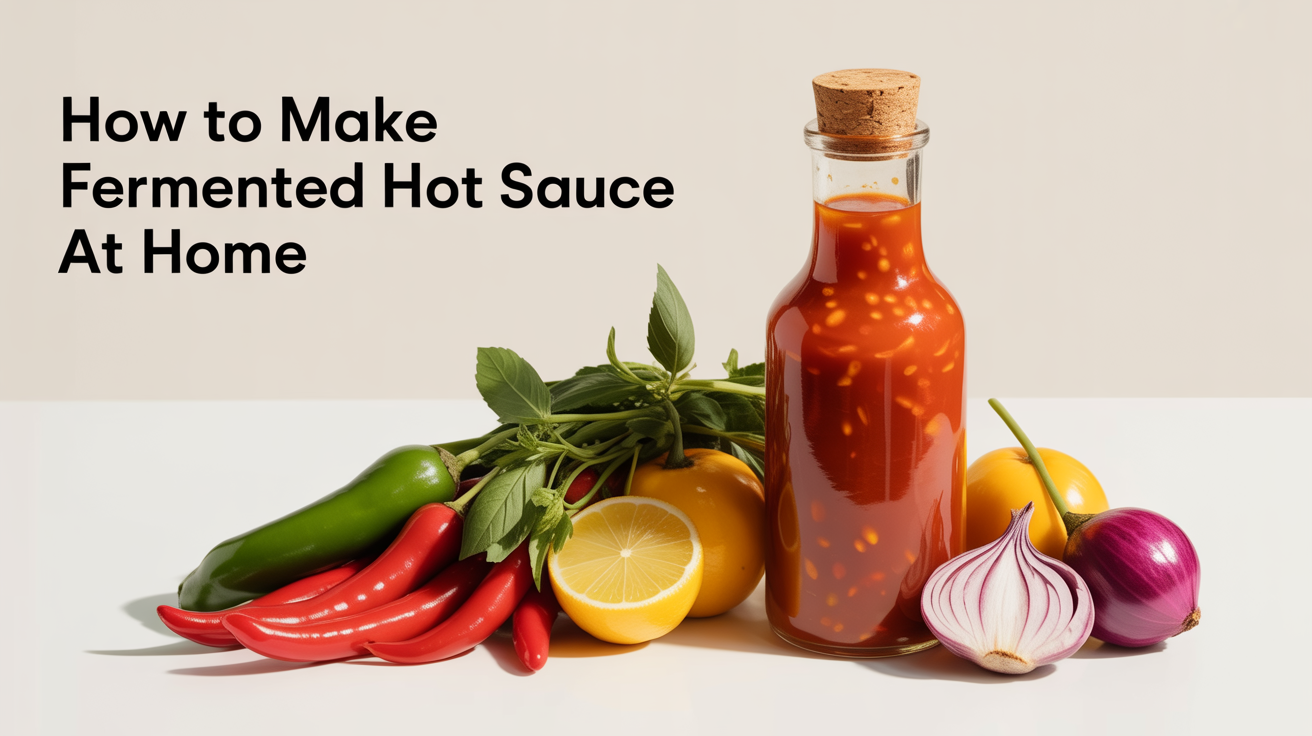
Fermented hot sauce has a depth of flavor you will not get from vinegar-only bottles. The lacto-fermentation process lowers the pH gradually through lactic acid produced by naturally occurring bacteria, which softens the raw heat of fresh peppers and adds a funky, tangy complexity. It is also one of the more forgiving pepper ferments you can make at home, as long as you keep the salt percentage right and everything submerged under brine.
This guide walks through choosing peppers, measuring your salt accurately, setting up the ferment, monitoring it day by day, and blending the finished sauce safely. Food safety is woven throughout because peppers ferment differently than cabbage and a few details matter.
Choosing Your Peppers
Nearly any fresh pepper ferments well. The main variable is heat level, which you control by how you blend the finished sauce. A few starting points:
- Mild and fruity: Fresno, red Anaheim, or sweet Italian peppers give body and color without much burn.
- Medium heat: Jalapeños and serranos are widely available and ferment predictably. They are a reliable first batch.
- Hot: Cayenne and Thai chiles work well, but blend them with some mild peppers to keep the sauce pourable and the heat manageable.
- Very hot: Habaneros and ghost peppers can be included in small amounts. Mix them with milder peppers for balance.
Use firm, fresh peppers with no soft spots or mold on the skin. Overripe or damaged peppers introduce unwanted microbes and can push a ferment toward spoilage instead of lactic acid development. Wash peppers thoroughly before use.
A note on gloves: Wear nitrile or rubber gloves when handling hot peppers, especially serranos, habaneros, and hotter varieties. Capsaicin binds to skin and is difficult to remove with soap. Getting it in your eyes or on your face is genuinely painful. Gloves are not optional for high-heat peppers.
Getting the Salt Percentage Right
Salt drives everything in a pepper ferment. Too little and the wrong bacteria can take hold. Too much and fermentation stalls. For hot sauce, aim for 2 to 3 percent salt by weight of the total brine and peppers combined. Two percent is on the lower end and gives a livelier ferment; three percent is more conservative and gives more margin for error.
The only accurate way to hit this is to weigh your ingredients. Volume measurements like teaspoons are not reliable for fermentation because salt density varies by brand and grind.
Here is the basic formula:
- Weigh your peppers and any aromatics (garlic, onion) in grams.
- Weigh the water you plan to use.
- Add those two numbers together.
- Multiply by 0.02 (for 2%) or 0.03 (for 3%) to get how many grams of salt to add.
For example: 400 g peppers + 300 g water = 700 g total. At 2.5%, you need 17.5 g of non-iodized salt. Iodized salt can inhibit fermentation, so use kosher salt, sea salt, or pickling salt.
You can ferment peppers two ways: submerged in a salt brine (whole or roughly chopped peppers packed in a jar with brine poured over), or as a mash (peppers blended raw with salt, no added water). The brine method is easier to monitor and recommended for beginners. For a detailed breakdown of how to mix the brine correctly, see how to make a salt brine for fermenting vegetables.
Setting Up the Ferment
Pack your peppers into a clean wide-mouth jar. Roughly chopping them into halves or quarters helps fit more in and exposes more surface area to the brine.
Add garlic cloves, a small piece of onion, or a few black peppercorns if you want a more complex sauce. Pour brine over the peppers until they are fully covered, leaving about an inch of headspace at the top.
Now comes the most important part: keeping everything below the brine surface. Any pepper or garlic clove that floats above the liquid is exposed to air. Air exposure at this stage does not automatically mean the batch is ruined, but it creates conditions where mold can grow. Use a small glass weight, a zip-lock bag filled with brine, or a folded piece of food-grade plastic pressed against the vegetables to hold them down. For more options and troubleshooting on this step, read how to keep vegetables submerged while fermenting.
Cover the jar loosely or with an airlock lid to let carbon dioxide escape. A standard lid screwed on loosely works fine as long as you burp the jar daily for the first week.
Monitoring the Ferment and Spotting Problems
Set your jar somewhere out of direct sunlight at room temperature. The sweet spot for lacto-fermentation is 65 to 75 F (18 to 24 C). Cooler temperatures slow things down; warmer speeds them up and can make flavors sharper.
What you should see:
- Small bubbles forming on the peppers and rising in the brine within 24 to 72 hours. This is CO2 from active fermentation.
- The brine may turn slightly cloudy or develop a whitish tint. This is normal.
- The color of the peppers will shift, often becoming slightly duller or darker.
- A sour, tangy, pleasantly funky smell when you open the jar. This should remind you of good pickles, not rot.
What to watch for:
- Kahm yeast: A thin, flat, white or off-white film on the brine surface. It looks smooth and matte, not fuzzy. Kahm is harmless but can add off-flavors. Skim it off with a spoon and press the peppers back under brine.
- Fuzzy mold: Green, black, or pink fuzzy growth is mold, not kahm. If you see fuzzy mold, discard the batch. Do not try to salvage it by scooping out the moldy part.
- Foul or putrid smell: A healthy ferment smells sour and tangy. A smell of rot or sewage means something has gone wrong. Throw it out.
When in doubt, throw it out. Lacto-fermented vegetables are generally very safe when the salt concentration and submersion are correct, but a batch that looks or smells wrong is not worth the risk.
For guidance on how long to let the peppers ferment, see how long should you ferment vegetables. For hot sauce, most batches are ready between five and fourteen days at room temperature, depending on your kitchen temperature and how tangy you want the finished sauce.
Blending and Bottling Safely
Once fermentation is where you want it, taste the brine. It should be pleasantly sour with a distinct pepper flavor. If the tanginess is to your liking, it is time to blend.
Before blending:
Drain the peppers but save the brine. You will add some back to reach the consistency you want.
Wear your gloves. Even mild-looking peppers release capsaicin when blended. Blend with the lid on. When opening the blender, tilt the lid away from your face to let any pressure escape before you remove it fully.
Blend the peppers with a splash of the reserved brine until smooth. Add more brine to thin the sauce to your preferred texture. Taste and adjust. Some people add a small amount of vinegar at this stage to sharpen the flavor and add extra preservation insurance.
Checking pH before room-temperature storage:
If you want to store your hot sauce at room temperature outside the refrigerator, you need to verify the pH. A safe, stable fermented hot sauce should measure below 4.0, and ideally 3.5 or lower. Inexpensive pH strips work for a rough check; a digital pH meter gives a more reliable reading.
If your pH reads above 4.0, add distilled white vinegar a teaspoon at a time, stir, and retest until you are below that threshold. Alternatively, store the sauce in the refrigerator, where cold temperature keeps it safe even at a slightly higher pH.
Refrigerated fermented hot sauce keeps well for three to six months. If you want shelf-stable bottles at room temperature, confirm pH below 4.0 and use clean, sterilized bottles with tight-fitting lids.
Frequently Asked Questions
Can I use frozen peppers to make fermented hot sauce?
Fresh peppers work best. Freezing breaks down cell walls, which makes peppers soft and can release excess liquid that dilutes the brine. If fresh peppers are not available, use them from frozen as a last resort, but expect a softer texture in the final sauce.
How do I know if my fermented hot sauce went bad?
Fuzzy mold (green, black, or pink, not flat and white) and a foul or putrid smell are the clearest signs. A healthy ferment smells sour, tangy, and peppery. If you open the jar and something smells off, trust that instinct. When in doubt, throw it out.
Why is my brine pink or red?
The pigments from red and orange peppers bleed into the brine during fermentation. This is completely normal. The brine color reflects the pepper variety you used.
Do I need to cook the hot sauce before bottling it?
No. Cooking stops the fermentation and kills the live cultures, but it also means you lose the live bacteria. Some people prefer raw, unpasteurized sauce for the probiotic benefits; others prefer a cooked sauce for a milder flavor and longer shelf life. Either approach is a valid choice. If you cook it, treat it like any cooked hot sauce and refrigerate after opening.
Can I add fruit to my fermented hot sauce?
Yes. Mango, pineapple, and peach all pair well with spicy peppers. Add fruit to the ferment jar alongside the peppers. The natural sugars in fruit can accelerate fermentation, so check the jar more frequently and taste it earlier than you normally would.