Fermented Vegetables
How Long Should You Ferment Vegetables?
Fermentation time for vegetables varies by type, temperature, and taste. Learn the ranges for sauerkraut, pickles, and kimchi, plus how to tell when they're...
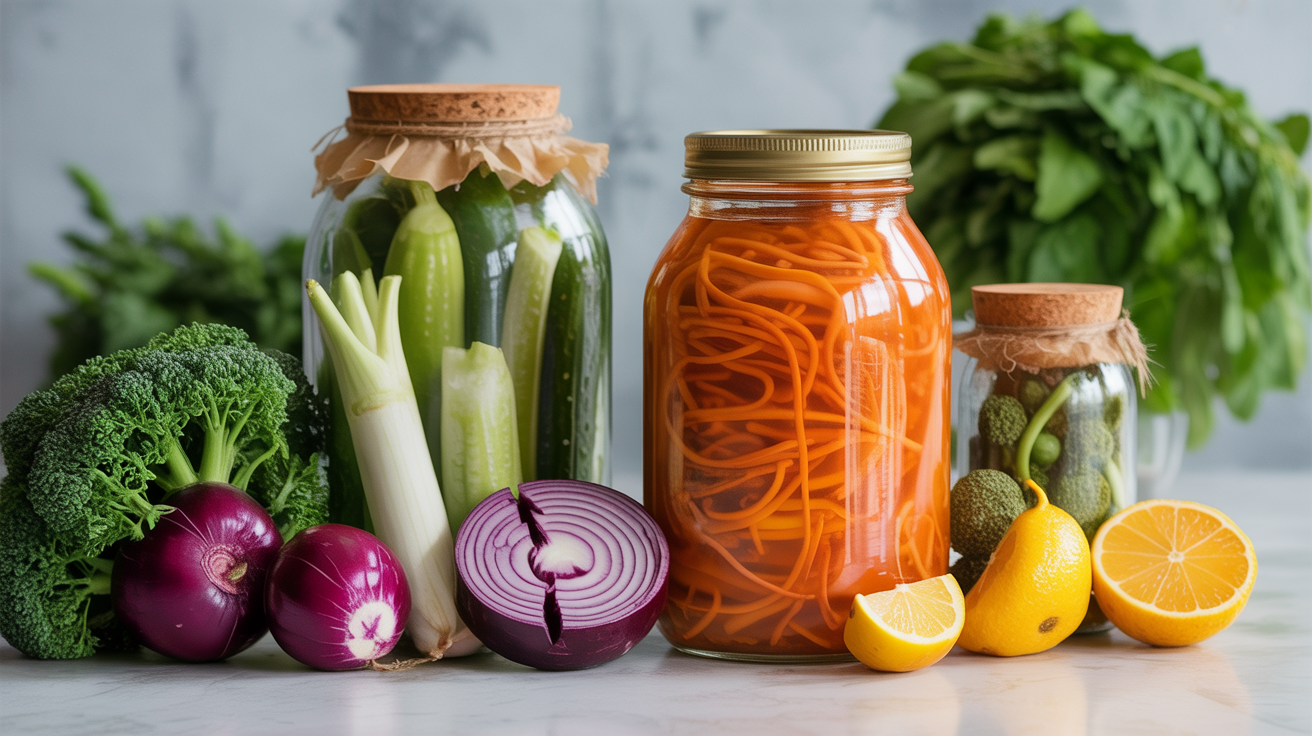
There is no single right answer to how long you should ferment vegetables, because fermentation time depends on what you are making, how warm your kitchen is, and how sour you like the result. That said, most beginner ferments fall into a clear range: lacto-fermented vegetables are typically ready somewhere between 3 days and 4 weeks. Knowing what to look for at each stage is more useful than watching the clock.
The good news is that vegetable ferments are fairly forgiving. As long as your salt concentration is right and your vegetables stay submerged under brine, lactic acid bacteria do the work of creating an acidic environment that keeps harmful microbes out. Understanding the variables that affect timing helps you get the texture and flavor you want, rather than pulling the jar too early or leaving it too long.
What Drives Fermentation Time
Three things determine how quickly a vegetable ferment progresses: salt concentration, temperature, and the vegetable itself.
Salt concentration affects both the speed and safety of fermentation. A standard range for lacto-fermented vegetables is 2% salt by weight of the vegetables and water combined. Lower salt (around 1.5%) speeds things up but leaves less room for error. Higher salt (2.5% to 3%) slows fermentation down and produces a crisper, less sour result over a longer period. Going below 1.5% raises the risk that undesirable bacteria get a foothold before lactic acid bacteria can acidify the brine.
Temperature is the biggest lever you have after salt. Warmer kitchens speed fermentation up; cooler ones slow it down. This is not just about speed: slow, cool fermentation tends to produce more complex flavor. Ferments done at 75 to 80 degrees F (24 to 27 degrees C) can be ready in three to five days. The same ferment at 65 degrees F (18 degrees C) might take two to three weeks.
The vegetable itself matters too. Shredded cabbage has a lot of surface area and ferments quickly. Whole cucumbers are dense and take longer for brine to penetrate. Root vegetables like carrots and beets, cut into sticks or coins, sit somewhere in the middle.
Fermentation Time Ranges by Vegetable
These ranges assume a salt concentration of 2% by weight and a kitchen temperature between 65 and 75 degrees F (18 to 24 degrees C). Taste your ferment starting at the early end of the range and continue fermenting until it reaches the sourness you prefer.
| Vegetable | Typical Range | Notes |
|---|---|---|
| Sauerkraut (shredded cabbage) | 1 to 4 weeks | Eat at 1 week for mild; 3 to 4 weeks for classic sour |
| Fermented dill pickles (sliced) | 3 to 7 days | Whole cucumbers: 1 to 2 weeks |
| Kimchi | 1 to 5 days at room temp, then refrigerate | Continues to sour slowly in the fridge |
| Fermented carrots | 3 to 7 days | Longer for thicker cuts |
| Fermented radishes | 3 to 5 days | Can turn soft quickly in heat |
| Fermented beets | 5 to 10 days | Dense; give them more time |
| Fermented hot peppers / hot sauce base | 1 to 2 weeks | Longer ferment = more complex heat |
| Mixed vegetable kraut (cortido) | 3 to 7 days | Shredded mix ferments fast |
If you are just getting started, sauerkraut is the best first project because the timeline is long enough that you can taste it at different stages and learn what you like.
How Temperature Changes the Outcome
Room temperature in summer versus winter can shift fermentation speed by a factor of two or more. Here is a practical breakdown:
- 60 to 65 degrees F (15 to 18 degrees C): Slow fermentation, often three to four weeks for sauerkraut. The result is usually crisp and mildly sour with good depth of flavor. This is close to traditional cellar fermentation.
- 65 to 72 degrees F (18 to 22 degrees C): The sweet spot for most beginner ferments. Predictable speed, good flavor, low risk of softening.
- 72 to 78 degrees F (22 to 26 degrees C): Faster fermentation, often ready in a week or less for shredded vegetables. Check more frequently; the sour flavor develops quickly and texture can soften if left too long.
- Above 78 degrees F (26 degrees C): Fermentation moves very fast. Cucumbers can turn mushy in days. If your kitchen is hot in summer, taste daily and move the jar to the fridge earlier than you otherwise would.
Fermentation does not stop when you refrigerate a jar, but it slows to a crawl. Moving a ferment to cold storage is how you pause it at the flavor you want. This is especially relevant for kimchi, which Korean households traditionally ferment at room temperature for just one to five days, then refrigerate for weeks or months as it continues to slowly develop.
How to Tell When Your Ferment Is Done
Timing is a guide, not a finish line. Here is what to look and taste for:
Taste it. This is the most reliable signal. Open the jar, remove a piece with a clean utensil, and try it. Is it pleasantly sour? Does the acidity balance the salt? If you want more sourness, close the jar and give it more time. If it is where you want it, move it to the fridge.
Watch the bubbling. Active fermentation produces visible bubbles, especially in the first few days. When bubbling slows to almost nothing, the bacteria have consumed most of the available sugars. The ferment is not necessarily done (flavor can keep developing), but the most active phase is over.
Check the brine clarity. Brine often turns cloudy during active fermentation because of suspended bacteria. This is normal and a sign things are working. The brine may clear slightly over time.
Know what healthy looks like vs. what to discard. A thin, flat, white or beige film on the surface is kahm yeast. It is harmless, if unpleasant to look at. Skim it off with a clean spoon and keep fermenting. Fuzzy growth in colors such as green, blue, black, or pink is mold, and mold means discard the whole jar. The same goes for any off smell beyond vinegar-sour or salty: a putrid or genuinely rotten smell is a reason to throw it out. When in doubt, throw it out.
Keep vegetables submerged. Any vegetable exposed above the brine during fermentation is vulnerable to mold. This is worth checking every day or two. Use a clean weight, a zip-lock bag filled with brine, or a small jar to keep everything below the surface.
For fermented pickles, check our guide to making fermented pickles for tips on keeping cucumbers submerged and crisp through the full fermentation window.
Moving Ferments to Cold Storage
Cold storage does not end fermentation; it slows it. A jar that goes into the fridge at two weeks will be more sour at four weeks and even more so at eight. This can be a feature or a problem depending on your taste.
For most beginners, the right move is to refrigerate when the ferment reaches the sourness you enjoy and plan to eat it within one to three months. The lactic acid environment that fermentation creates is genuinely preservative, so properly fermented vegetables stored cold keep well beyond a few weeks.
Keep the brine covering the vegetables in cold storage just as you would during fermentation. The salt and acid together do the preserving.
Frequently Asked Questions
Can I ferment vegetables for only three days? Yes, for some vegetables. Shredded vegetables like kimchi and coleslaw-style kraut can develop pleasant mild sourness in three to five days at room temperature, especially in a warm kitchen. Three days is too short for whole or thick-cut vegetables like cucumbers or beets, which need more time for the brine to penetrate fully.
What happens if I ferment vegetables for too long? Flavor becomes sharper and more sour. Texture can soften, especially for cucumbers, which turn mushy if left at room temperature past their window. Most ferments do not become unsafe from over-fermentation if salt and submersion were correct throughout, but the eating quality declines. If yours went too sour, rinse a serving before eating to knock down the intensity.
Does my fermentation vessel affect the timing? Not much, as long as it is food-safe and holds the brine. A wide-mouth mason jar and a dedicated fermentation crock with a water seal both work. A water-sealed crock limits oxygen exposure, which can reduce kahm yeast formation, but it does not meaningfully speed up fermentation.
Do I need to burp the jar? If you are using a regular mason jar with a lid screwed on tight, yes. Carbon dioxide builds up and needs to be released once or twice a day to prevent pressure buildup. If you are using an airlock lid, the airlock handles this automatically. For very active ferments in a sealed jar, a loose lid or a dedicated fermentation lid is worth it.
Is it safe to eat fermented vegetables that smell strongly sour? A strong sour or tangy smell is normal and expected in a well-fermented vegetable. Lactic acid is what makes it smell that way. What you are watching for is a putrid, rotten, or genuinely foul smell that is distinct from sour. Trust your nose: sour and sharp is fermentation; rotten is a reason to discard.