Fermented Vegetables
How to Make Fermented Pickles (Not Vinegar Pickles)
Learn how to make lacto-fermented pickles using a simple salt brine. No vinegar, no canning—just cucumbers, salt, and time.
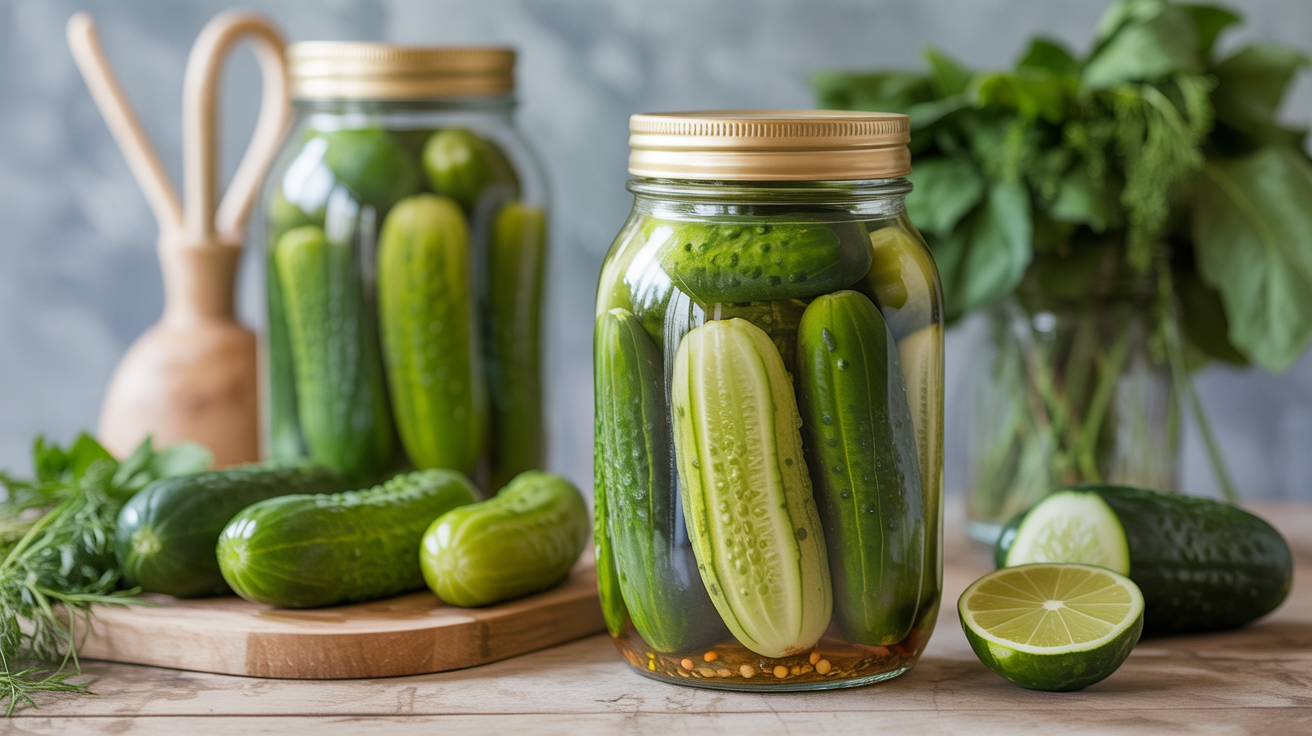
Fermented pickles use a salt brine and live bacteria, not vinegar, to develop their flavor. The salt pulls water out of the cucumbers and creates an environment where Lactobacillus bacteria thrive, produce lactic acid, and naturally preserve the vegetables. The result is a tangy, complex pickle with a living culture that you'll actually taste the difference in.
This is not the same as the shelf-stable dill pickles at most grocery stores. Those are acidified with vinegar, heated to kill bacteria, and sealed in a sterile jar. They're fine pickles, but they're not fermented. If you've ever had a deli-style "full sour" or a half-sour pickle from a barrel, you've had the real thing. This guide shows you how to make them at home.
At a Glance
- Fermented pickles rely on a 3.5 to 5% salt brine and time, not vinegar or heat, to develop flavor and safety.
- Half-sours are ready in 3 to 5 days; full sours take 7 to 14 days depending on temperature and size.
- A tannin source (grape leaf, oak leaf, horseradish leaf, or black tea) is the single biggest factor in crunch.
- Keep cucumbers fully submerged; anything above the brine line is where mold and softening start.
- Cloudy brine and white sediment are normal; pink, red, or black discoloration and fuzzy mold are not.
- Refrigerate once the sourness is where you want it; that's what slows (not stops) the fermentation.
Fermented vs. Vinegar Pickles: What's Actually Different
Vinegar pickles are fast. You make a hot brine of water, vinegar, and salt, pour it over cucumbers, and refrigerate. They're ready in hours. The acid comes entirely from the vinegar, and there's no live culture involved.
Lacto-fermented pickles take 3 to 10 days at room temperature. The acidity builds gradually as bacteria convert sugars to lactic acid. The flavor is more layered, sour, salty, faintly vegetal, and the cucumbers stay alive with microorganisms until you refrigerate them to slow fermentation down.
Both are safe when made correctly. The key difference is that fermented pickles are a process you're starting, not a recipe you're finishing in one afternoon. It's worth noting that "fermented pickle" recipes from home food-preservation authorities like the National Center for Home Food Preservation actually use a small amount of vinegar alongside the salt brine in some traditional versions, mostly for consistency across seasons and water hardness, but the defining feature is still the multi-week fermentation and curing period, not a quick vinegar soak.
Why Salt Concentration Matters
The salt brine does two things: it pulls moisture out of the cucumbers to help create the brine, and it selects for the right bacteria. Too little salt and you get mushy, off-flavored results. Too much and you slow fermentation to a crawl.
For cucumber pickles, a 3.5–5% salt brine (by weight) is the standard range. Use 3.5% for a faster ferment in cooler weather; go to 5% in summer when kitchen temps are warmer, since higher salt compensates for faster bacterial activity.
| Salt % | Grams of salt per 1 liter of water |
|---|---|
| 3% | 30 g |
| 3.5% | 35 g |
| 4% | 41 g |
| 4.5% | 46 g |
| 5% | 53 g |
Always use non-iodized salt. Iodized table salt can inhibit fermentation and produce off flavors. Kosher salt, pickling salt, and sea salt all work well.
What You Need
Cucumbers: Use pickling cucumbers (Kirby variety is ideal), not slicing cucumbers. Slicers have a higher water content and tend to go soft. The cucumbers should be fresh and firm with no soft spots. Garden-fresh cucumbers picked in the morning ferment better than ones that have sat in a refrigerator for a week. Home food-preservation guidance is specific on this point: cucumbers should go into the brine within 24 hours of harvest, since a delay between picking and brining is one of the documented causes of hollow or shriveled pickles.
Blossom end: Remove about 1/8 inch from the blossom end (opposite the stem). That end contains enzymes that soften cucumbers during fermentation.
Tannin source: This is the key to crunch. Tannins inhibit the softening enzymes. Add one of these to each jar:
- 1–2 grape leaves (fresh or dried)
- 2–3 oak leaves
- 1 horseradish leaf
- 1 black tea bag (opened, or 1 teaspoon loose black tea)
Aromatics: Fresh dill (heads and fronds), garlic cloves, black peppercorns, and red pepper flakes are classic. Mustard seeds, coriander, and bay leaf are common additions.
Equipment: A wide-mouth quart or half-gallon jar, a fermentation weight or small zip-lock bag filled with brine to keep cucumbers submerged, a loose lid or cloth cover.
How to Make Fermented Pickles: Step by Step
Step 1: Make the brine. Dissolve salt in room-temperature water. For a quart jar, start with about 2 cups (475 ml) of water and scale up, you'll use roughly 1.5 to 2 cups of brine per quart jar depending on how tightly you pack the cucumbers. Mix until the salt is fully dissolved before adding to the jar.
Step 2: Prep the cucumbers. Wash the cucumbers well. Trim off the blossom ends. Cut them into spears or leave them whole (whole cucumbers take longer to ferment). If you want half-sour pickles, cut into spears for faster penetration.
Step 3: Layer the jar. Place your tannin source at the bottom of the jar. Add half the garlic, dill, and spices. Pack in the cucumbers tightly, they should fit snugly so they're less likely to float. Add the remaining garlic, dill, and spices on top.
Step 4: Add the brine. Pour the salt brine over the cucumbers, leaving about an inch of headspace. The cucumbers must be fully submerged. Any cucumber above the brine line can develop surface yeast or mold.
Step 5: Weight them down. Place a fermentation weight, a folded zip-lock bag filled with extra brine, or a smaller jar filled with water on top of the cucumbers to keep them under the brine surface.
Step 6: Cover loosely. Don't seal the jar airtight. Carbon dioxide builds up during fermentation and needs to escape. Use a cloth secured with a rubber band, a loose lid set on top (not screwed down), or an airlock if you have one.
Step 7: Ferment at room temperature. Set the jar in a spot out of direct sunlight. Ferment at 65–75°F (18–24°C). Cooler temperatures (65–68°F) produce crunchier, slower-fermented pickles with more complex flavor. Warmer temperatures speed things up but can lead to softer results.
Step 8: Taste daily starting on day 3. The pickles will turn from bright green to an olive green color. By day 3 or 4 you'll notice a faint sour smell and small bubbles in the jar, that's the fermentation working. Taste one. A half-sour is ready in 3–5 days; a full sour takes 7–10 days or longer at cooler temperatures.
Step 9: Refrigerate when they reach the sourness you want. Move the jar to the refrigerator. Fermentation doesn't stop completely in the cold, but it slows dramatically. The pickles will keep for 2–3 months refrigerated, though they'll continue to slowly sour over time.
Keeping Your Pickles Crunchy
Soft fermented pickles are the most common beginner frustration. A few things cause it, and most are preventable.
Use fresh cucumbers. Cucumbers start losing moisture and firmness the moment they're picked. Supermarket cucumbers that have been refrigerated for days will not ferment as crisply as fresh ones. If you're buying rather than growing, look for firm cucumbers at a farmers market or farm stand and ferment them the same day.
Don't skip the tannin source. This genuinely matters. Grape leaves and horseradish leaves are traditional for a reason, they contain tannins that bind to the softening enzymes and slow them down. Black tea works too and is easy to find year-round. See how to make a salt brine for fermenting vegetables for more detail on brine chemistry and enzyme activity.
Ferment cool. Warmth speeds fermentation but also accelerates enzyme activity and bacterial breakdown of pectin (the compound that keeps cell walls firm). A ferment at 65°F will produce crunchier pickles than one at 78°F. A basement, a cool pantry, or a spot away from the stove all work well in summer. NCHFP's troubleshooting guide traces soft or slippery pickles specifically to a combination of a brine that was too weak and fermentation temperatures running above the recommended range, which is exactly why the salt percentage table above matters as much as the temperature you ferment at.
Don't over-ferment. The longer pickles ferment at room temperature, the softer they'll become. If you want a crisp half-sour, pull them at 3–5 days. Full sours are softer by nature but still have some snap.
Salt concentration. Higher salt (4–5%) produces slightly firmer pickles by drawing moisture out more aggressively and slowing bacterial activity. At 3%, the ferment is faster and the pickles can soften more quickly.
Skip the metal and the ground spices. Iodized salt, ground (rather than whole) spices, hard tap water, and reactive metal utensils are all documented contributors to dark or discolored pickles. Use whole spices, filtered or dechlorinated water if your tap water is heavily treated, and glass, stainless steel, or stoneware tools and containers.
What Normal Fermentation Looks Like
You will see bubbles. The brine may become slightly cloudy. The cucumbers will change color. These are all signs of a healthy ferment, not spoilage.
What to watch for: a pink or black discoloration, a foul smell (not just sour, something genuinely rotten), or fuzzy mold growing on the surface. If the cucumbers above the brine develop white film or mold, that cucumber is compromised. If the brine smells off and the texture is wrong, discard and start again. A healthy lacto-ferment smells sour and tangy, not putrid.
For comparison, how to make sauerkraut and how to make kimchi at home follow the same core principle: salt, submersion, time. Getting confident with one ferment makes the others intuitive.
Scaling Up: Half-Gallon and Gallon Batches
Once you're comfortable with a quart jar, scaling up is mostly arithmetic. The salt percentage stays the same; only the total volume of brine changes.
| Container Size | Approx. Water Needed | Salt at 3.5% | Salt at 5% |
|---|---|---|---|
| 1 quart (0.95 L) | 2-2.5 cups (500-600 ml) | 18-21 g | 25-30 g |
| Half-gallon (1.9 L) | 4-5 cups (950-1180 ml) | 33-41 g | 48-59 g |
| 1 gallon (3.8 L) | 8-10 cups (1900-2360 ml) | 67-83 g | 95-118 g |
Weigh your water rather than eyeballing it once you're above a quart jar; the difference between "close enough" and the actual salt percentage matters more as batch size grows, because a small percentage error compounds into a much larger gram error. Larger batches also ferment a little more slowly at the center of the jar than a quart does, since there's more brine mass to come up to room temperature, so give a half-gallon or gallon batch an extra day or two before you expect the same flavor a quart jar would show.
Timing Guide
| Style | Salt % | Temperature | Time |
|---|---|---|---|
| Half-sour (spears) | 3.5% | 70–75°F | 3–5 days |
| Half-sour (whole) | 3.5% | 70–75°F | 5–7 days |
| Full sour (spears) | 4–5% | 65–70°F | 7–10 days |
| Full sour (whole) | 4–5% | 65–70°F | 10–14 days |
These are starting points. Temperature and cucumber size both affect timing. Taste is the real indicator.
Frequently Asked Questions
Do fermented pickles need to be refrigerated?
Once you're happy with the sourness, yes. Refrigeration slows fermentation and keeps the pickles from continuing to acidify. They don't need refrigeration during the fermentation period (3–10 days at room temperature), but they'll keep for months in the fridge afterward.
Why are my pickles mushy?
The most common causes are: cucumbers that were too old or soft to start with, skipping the tannin source, fermenting in a warm kitchen, or letting them ferment too long before refrigerating. Next batch: use fresh-picked pickling cucumbers, add grape leaves or a tea bag, and pull them earlier.
Can I use regular table salt?
Avoid iodized table salt. The iodine can inhibit Lactobacillus bacteria and affect flavor. Kosher salt, pickling salt, and non-iodized sea salt all work. If you only have iodized table salt, the ferment may still work, but results are less predictable.
Is the white cloudiness in the brine normal?
Yes. A white, milky cloudiness in the brine is lactic acid bacteria doing their job. It's a sign of a healthy ferment. White sediment at the bottom of the jar is also normal, home food-preservation references describe it as a natural bacterial byproduct rather than a defect, distinct from any salt additive residue. What you don't want is pink, red, or black discoloration in the brine, or mold growth on the surface.
How long do fermented pickles last in the fridge?
Properly fermented pickles refrigerated in their brine typically keep well for 2–3 months. They'll continue to slowly sour in the refrigerator. Some people find they prefer the flavor at the 2-week mark; others let them go a full month before eating.
My pickles have a strange hollow center. What caused that?
Hollow pickles usually come from cucumbers that sat too long between picking and brining, oversized cucumbers with naturally looser internal structure, or a brine that was too weak to properly cure the vegetable all the way through. It's a texture flaw, not a safety issue, so hollow pickles are still fine to eat. Prevent it next time by brining same-day cucumbers and sticking to smaller, firmer pickling varieties rather than large slicers.