Fermented Vegetables
How to Make Sauerkraut: A Step-by-Step Beginner's Guide
Learn how to make sauerkraut at home with just cabbage and salt. A clear, beginner-friendly guide covering salt ratios, fermentation time, and food safety.
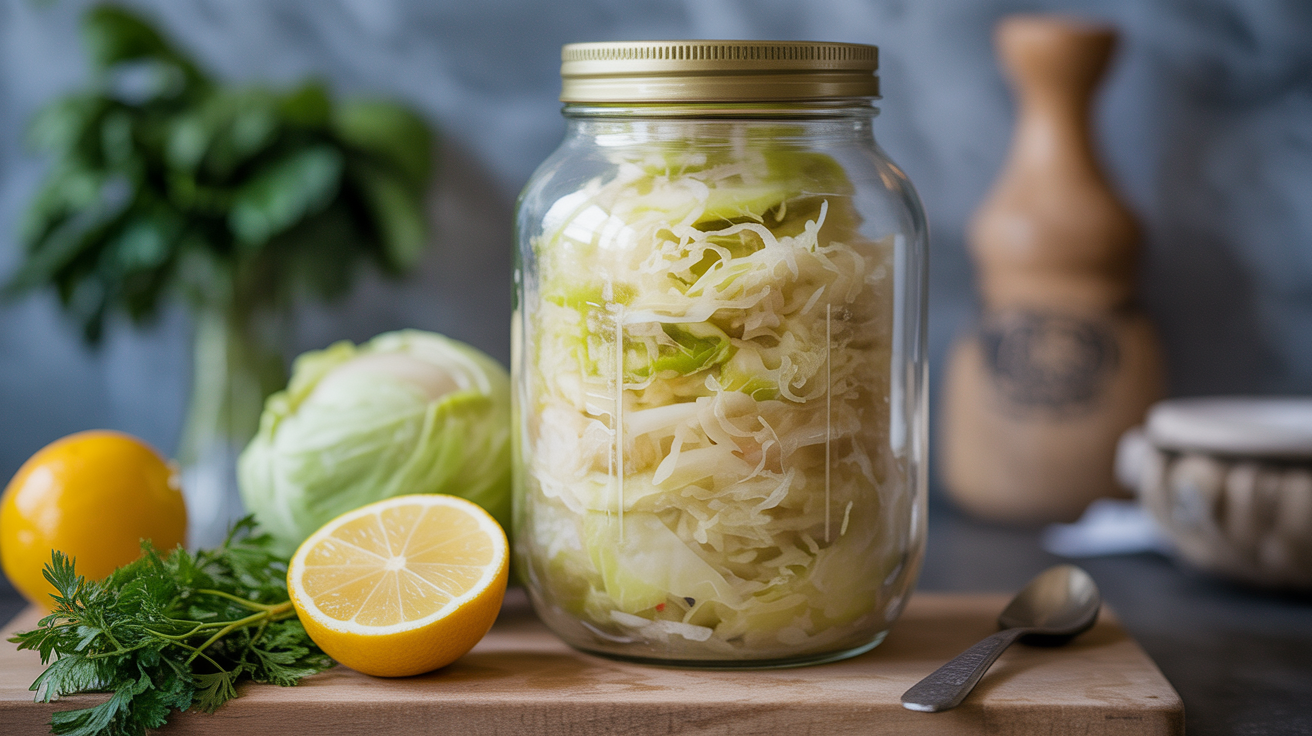
Sauerkraut is one of the best fermentation projects for beginners. Two ingredients, no special equipment, and the result is a tangy, probiotic-rich condiment that keeps for months in the fridge. The process relies entirely on salt and time, so there's very little that can go wrong if you follow a few basic rules.
What You Need Before You Start
Ingredients:
- 1 head of green cabbage (roughly 900 g / 2 lbs after trimming)
- Non-iodized salt (kosher salt or sea salt work well; iodized salt can slow fermentation)
Equipment:
- Kitchen scale
- Large mixing bowl
- Sharp knife or mandoline
- A wide-mouth 1-quart mason jar (or similar glass jar)
- Something to weigh the cabbage down: a small zip-lock bag filled with brine, a smaller jar that fits inside, or a dedicated fermentation weight
You don't need an airlock lid. A regular jar lid loosely set on top (or a cloth secured with a rubber band) works fine. The fermentation produces CO2, so you want gas to escape rather than build pressure.
The Salt Ratio: Why 2% Matters
The single most important number in sauerkraut making is 2% salt by weight of cabbage. That's it. This concentration draws water out of the cabbage through osmosis, creates the brine the cabbage will ferment in, and suppresses harmful bacteria while letting the beneficial lactobacillus strains thrive.
Too little salt and the cabbage can go mushy or develop unwanted bacteria. Too much and fermentation stalls. Two percent is the sweet spot that produces reliable, crunchy kraut.
Salt Calculation Table
| Cabbage weight | Salt needed (2%) |
|---|---|
| 500 g | 10 g |
| 750 g | 15 g |
| 900 g | 18 g |
| 1,000 g (1 kg) | 20 g |
| 1,500 g | 30 g |
Always weigh both your cabbage and your salt. Volume measurements like "tablespoons" vary too much by salt brand and grind size.
If you want to go deeper on brine science, how to make a salt brine for fermenting vegetables covers the principles that apply across all vegetable ferments.
Step-by-Step: Making Sauerkraut
-
Weigh your cabbage. Remove the outer leaves and set one aside. Cut the cabbage into quarters, remove the core, then weigh what's left. Note the weight.
-
Calculate and weigh your salt. Multiply the cabbage weight in grams by 0.02. That's your salt amount.
-
Shred the cabbage. Slice it thinly across the grain, about 1/8 inch (3 mm) thick. A mandoline speeds this up, but a sharp knife works fine.
-
Combine cabbage and salt in a large bowl. Toss everything together so the salt is evenly distributed.
-
Massage the cabbage. Squeeze and work the cabbage with your hands for 5-10 minutes. You'll feel it soften and release liquid. Keep going until there's a noticeable pool of brine in the bowl. If your hands tire, take a 5-minute break and let the salt keep working, then continue.
-
Pack it into your jar. Transfer the cabbage in handfuls, pressing each layer down firmly with your fist or a wooden spoon. Pour any brine from the bowl into the jar.
-
Submerge the cabbage under its brine. This is the most important food safety step. Fold the reserved outer leaf and tuck it over the shredded cabbage, then press your weight on top. The cabbage should be fully submerged, with at least 1/2 inch of brine covering it. If you don't have enough brine, mix a small amount of extra (1 teaspoon non-iodized salt per 1 cup water) and add just enough to cover.
-
Leave at least 1 inch of headspace at the top of the jar. Fermentation produces gas and the contents can expand.
-
Set the jar on a small plate (to catch any overflow) and leave it at room temperature, out of direct sunlight.
-
Ferment for 1-4 weeks, tasting from day 5. Press the cabbage down under the brine each time you check it.
-
When it tastes right to you, seal and refrigerate. Fermentation slows dramatically in the cold. The kraut keeps for several months.
Fermentation Temperature and Timing
Room temperature matters. The ideal range for lacto-fermentation is roughly 65-72°F (18-22°C).
- Below 65°F: Fermentation is very slow. You might wait 4-6 weeks for the flavor to develop. This isn't a problem, just patience.
- 65-72°F: The sweet spot. Expect noticeable sourness by day 5-7, with full flavor developing around week 2-3.
- Above 75°F: Fermentation races, which can produce a softer, mushier texture. Not dangerous, just less pleasant. Move the jar somewhere cooler.
Taste the kraut starting around day 5. Use a clean fork every time you reach in. The sauerkraut is done when it's tangy enough for your taste. There's no single right answer. Some people prefer a mild 10-day kraut; others like the sharper flavor you get at 3-4 weeks.
Signs of Active Fermentation
You should see bubbles forming within 24-48 hours. Tiny bubbles rising through the brine or appearing on the surface are good signs. The brine might cloud slightly, which is also normal and expected with lacto-fermented vegetables.
If you want to compare this process with another popular ferment, how to make fermented pickles (not vinegar pickles) follows the same salt-and-time logic and is a natural next project.
Keeping the Cabbage Submerged
Submersion is the food safety foundation of sauerkraut. Lactobacillus bacteria are anaerobic, meaning they work without oxygen. Harmful molds and yeasts need air. Keep the cabbage under its brine and you've stacked the odds heavily in your favor.
What to Use as a Weight
- Brine-filled zip-lock bag: Fill a small bag with 2% salt solution (so a leak doesn't dilute your batch), press out the air, and lay it over the cabbage inside the jar.
- Smaller jar: A 4 oz jar filled with water fits inside a wide-mouth quart jar and works as a simple weight.
- Fermentation weights: Glass weights sized for mason jars are inexpensive and purpose-built. Worth buying if you plan to ferment regularly.
- The folded outer cabbage leaf: By itself it doesn't weigh much, but tucked under the neck of the jar it keeps shredded bits from floating up.
Check the jar daily for the first few days. Cabbage can ride up above the brine, especially early in fermentation when CO2 production peaks. Press it back down each time.
Food Safety: What to Watch For
Sauerkraut is genuinely safe to make at home. The combination of salt and acid makes it hostile to pathogens. But a few visual cues are worth knowing.
Kahm yeast: A thin, flat, white or cream-colored film that sometimes forms on the brine surface. It looks smooth and almost waxy. This is not harmful, but it can add off-flavors if left to build up. Skim it off with a spoon whenever you see it. Keep the jar covered to reduce its exposure to air.
Fuzzy mold: Distinct from kahm yeast. If you see fuzzy growth in colors like green, black, pink, or orange, especially on pieces of cabbage above the brine line, that's mold and the batch should be discarded. This is uncommon when the cabbage stays submerged, but it's the clear line between "fix it" and "toss it."
Slimy texture or bad smell: Fresh-smelling sourness is what you want. If the kraut smells rotten (not just sour) or the texture is slimy rather than pleasantly soft, trust your nose and start over. This is rare with proper salt ratios and submersion.
Variations to Try Once You're Comfortable
Basic sauerkraut is just cabbage and salt, but a few additions are traditional and work well:
- Caraway seeds: Add 1 teaspoon per pound of cabbage in step 4. Classic in German-style kraut.
- Juniper berries: A few berries add a subtle piney note. Good with pork dishes.
- Red cabbage: Works exactly the same way as green, and turns a vivid purple-pink color.
- Carrot ribbons: Shred 1-2 carrots per head of cabbage and add them to the bowl. They soften and pick up the tang nicely.
Once sauerkraut feels easy, how to make kimchi at home for beginners is the natural next step. It follows the same lacto-fermentation principles with a more complex spice paste.
Frequently Asked Questions
Can I use table salt?
Avoid iodized table salt. The iodine can inhibit the lactobacillus bacteria you're trying to cultivate. Kosher salt and non-iodized sea salt are both reliable choices. If you only have iodized table salt, some batches succeed, but your margin for error shrinks.
My cabbage didn't release much brine. What do I do?
This happens with older or drier cabbage. Give the massaging step more time, 15-20 minutes total. If you still don't have enough brine to cover the cabbage, make a small amount of extra brine (1 teaspoon non-iodized salt dissolved in 1 cup of water) and add just enough to submerge everything. Don't drown the cabbage; just cover it.
There's no bubbling. Did I do something wrong?
Not necessarily. Bubbling activity depends on temperature and how active the lactobacillus colonies are. Cooler kitchens ferment more quietly. Check that the salt ratio was correct (2% by weight) and that the cabbage is submerged. If the kraut is developing a sour smell by day 4-5, fermentation is happening even if it looks calm.
How long does finished sauerkraut last in the fridge?
Several months, easily. The acid environment that developed during fermentation continues to preserve the kraut in cold storage. Many people eat batches that are 4-6 months old without any issue. Use a clean utensil every time you reach into the jar.
Can I ferment in a plastic container instead of glass?
Glass is strongly preferred because it's non-reactive and easy to sanitize. Plastic can harbor scratches where bacteria accumulate, and some plastics absorb odors. Food-grade plastic is technically acceptable in a pinch, but a mason jar is inexpensive and the better long-term choice.