Troubleshooting & Safety
Kahm Yeast vs. Mold: How to Tell the Difference
A beginner's visual guide to spotting kahm yeast vs mold in your ferments, what each one means, and exactly what to do about it.
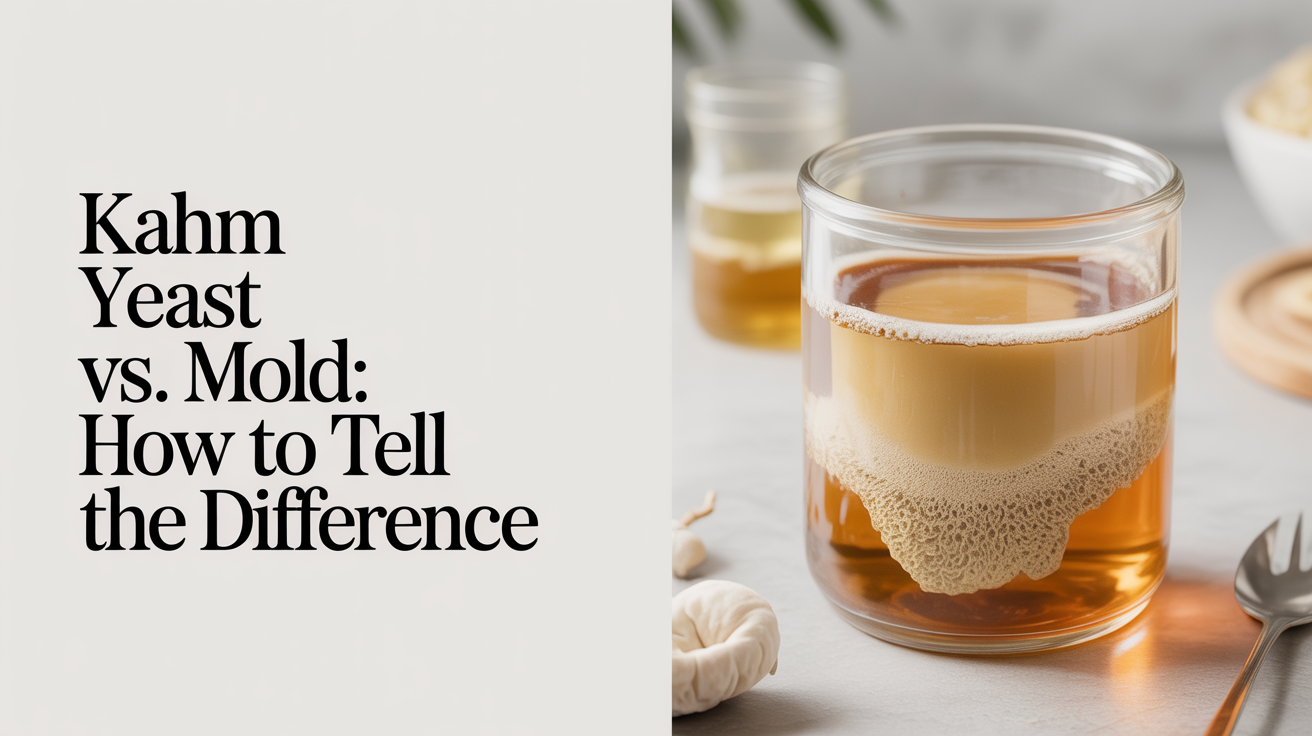
You open your jar of sauerkraut after a week and find something white on top. Before you panic or shrug it off, it helps to know what you're looking at. The two most common culprits are kahm yeast and mold, and while they can look superficially similar at first glance, they behave very differently and call for very different responses.
The short version: kahm yeast is a flat, white, harmless film. Mold is fuzzy, raised, and a genuine safety concern. Read on and you'll be able to tell them apart in under a minute.
What Is Kahm Yeast?
Kahm yeast is a collective term for several species of wild yeast (primarily from the Candida, Pichia, and Debaryomyces genera) that bloom on the surface of fermented vegetables when oxygen gets in. It's not a pathogen. It won't make you sick. But it is an indicator that your ferment's surface was exposed to air, and if left unchecked it will push your ferment toward a flat, musty, or mildly unpleasant flavor.
What kahm looks like:
- Thin and flat, almost like a skin or a film
- White to cream-colored, sometimes very pale tan
- Wrinkled or slightly powdery on the surface, but never fluffy
- Lies directly on the brine, hugging the surface rather than standing up from it
- Spreads laterally (across the surface) rather than growing upward
Kahm has no height to it. Press a clean spoon against it and it stays flat. That's the key detail beginners miss: kahm is two-dimensional.
Does Kahm Yeast Smell?
Yes, and that's actually a useful diagnostic tool. Kahm yeast typically smells yeasty, musty, or slightly cheesy. Some people describe it as bread dough or old beer. It's not a pleasant smell, but it's not a rotting or putrid smell either. If the brine underneath smells sharp, tangy, and sour in the way you'd expect a ferment to smell, that's a good sign the ferment itself is fine.
Is Kahm Yeast Safe to Eat?
Yes. Kahm yeast is not toxic, and small amounts that get mixed into your ferment won't harm you. That said, it does degrade the flavor over time, and nobody wants to eat a jar of sauerkraut that tastes like stale beer. Skim it off early, before it covers the whole surface and starts influencing the brine beneath it.
What Is Mold?
Mold is a fungus, and some molds can produce mycotoxins (toxic compounds that survive even after the mold itself is removed). In an acidic, anaerobic ferment that's working correctly, mold has a hard time establishing itself. But if conditions allow it, it can take hold, and that's when you need to act.
What mold looks like:
- Fuzzy, fluffy, or powdery in a raised, three-dimensional way
- Has obvious height and structure above the surface
- Can be white, but also green, blue, black, pink, orange, or gray
- Appears in discrete spots or patches rather than a uniform film
- May look dry or "dusty" on top of the fuzz
Mold colonies grow upward. That is the single clearest visual cue. If whatever is on your ferment is standing up, it's mold (or possibly something else, but not kahm).
What Does Mold Smell Like on a Ferment?
Mold often smells musty, damp, or earthy in a way that's clearly off. The underlying brine may also smell wrong: less sharp and sour, more flat or rotten. Trust your nose here. If something smells like a wet basement or a neglected refrigerator, don't eat it.
Can Mold Penetrate Below the Surface?
This is where the guidance gets cautious. The acidic environment of a healthy ferment limits how far mold can spread below the surface, but mycotoxins can migrate into the brine itself even when visible mold is only on top. This is why the "just scoop it off" approach that works for kahm doesn't work reliably for mold. You can't see mycotoxins, and you can't smell them.
Side-by-Side Comparison
| Trait | Kahm Yeast | Mold |
|---|---|---|
| Texture | Flat, smooth, wrinkled | Fuzzy, fluffy, raised |
| Color | White, cream, pale tan | White, green, blue, black, pink |
| Structure | Lies flat on brine surface | Stands up above the surface |
| Smell | Musty, yeasty, bread-like | Musty, earthy, "off," rotting |
| Spread pattern | Uniform film, spreads laterally | Spots or patches, grows upward |
| Safety | Not a health risk | Potentially harmful; discard the batch |
| Action to take | Skim off, continue fermenting | Discard the batch |
| Prevention | Keep veg submerged | Keep veg submerged, use adequate salt |
What to Do About Kahm Yeast
Kahm yeast is a manageable problem, not a reason to throw out your ferment.
Step 1: Skim it off. Use a clean spoon to lift and remove as much of the film as you can. Don't stir it into the brine; scoop from the edges inward and lift it out.
Step 2: Check beneath it. Does the brine smell sour and tangy? Are the vegetables still submerged? Is the brine cloudy in the normal lactic-fermentation way? If yes on all counts, your ferment is fine.
Step 3: Taste it (optional). If the kraut or pickles beneath the kahm taste good and sour, they're safe to eat. If they taste flat, musty, or "off," the kahm has already altered the flavor and you may want to discard for quality reasons rather than safety.
Step 4: Adjust your setup. Kahm returns if the conditions that created it persist. More on prevention below.
You can learn more about reading your ferment's overall signals in A Beginner's Checklist: Is My Ferment Safe to Eat?.
What to Do About Mold
The conservative advice is to discard the batch, and that's the guidance here. Here's why.
Mold on a ferment is not like mold on hard cheese, where you can cut away a margin and the remaining product is typically safe. Soft, brine-based ferments (sauerkraut, kimchi, pickles, fermented hot sauce) have no physical barrier that keeps mold compounds from diffusing through the liquid. By the time you see fuzzy growth on the surface, mycotoxins may have already spread into the brine.
Some experienced fermenters do attempt to salvage a batch by removing the affected top layer, checking for signs that the ferment is still active and acidic, and making a judgment call. That's their choice to make. For beginners who are still calibrating what a healthy ferment looks and smells like, the risk isn't worth taking.
The practical rule: if it's fuzzy and colored, throw it out. If it's fuzzy and white, throw it out too. White mold is still mold.
Starting over is frustrating, but the ingredients are cheap. A batch of sauerkraut costs less than a few dollars in cabbage and salt. Peace of mind costs nothing.
How to Prevent Both Kahm Yeast and Mold
The same core practices prevent both problems. Neither kahm nor mold can thrive in a properly maintained ferment.
Keep Vegetables Submerged
This is the single most important habit in home fermentation. Kahm yeast and mold both need oxygen to grow. If your vegetables are sitting below the brine, they're in an anaerobic (oxygen-free) environment where lactic acid bacteria dominate and surface growths can't establish themselves.
Use a fermentation weight, a zip-lock bag filled with brine, a small jar, or even a folded cabbage leaf to keep everything below the liquid line. Check daily during the first week. Bubbling ferments push vegetables upward; push them back down.
For more on what a well-managed ferment should look like at each stage, see What a Healthy Ferment Should Smell and Look Like.
Use the Right Amount of Salt
Salt is not just for flavor. It's your primary preservative. Too little salt and you're inviting unwanted microbes. For most vegetable ferments, the standard starting point is 2% salt by weight of the vegetables (20 grams of salt per kilogram of cabbage, for example). Go below 1.5% and your margin for error shrinks considerably.
Use non-iodized salt. Iodine inhibits the lactic acid bacteria you're trying to cultivate.
Keep Gear Clean
Wash jars, weights, and utensils with hot soapy water before each batch. Residual food particles from a previous batch can introduce competing microbes. You don't need to sterilize your equipment (a light bacterial load is actually fine for fermentation), but visibly clean is non-negotiable.
Ferment in a Cool Spot
Warmer temperatures speed up fermentation generally, including the growth of kahm yeast. Ferments kept at 65–72°F (18–22°C) move at a pace that favors lactic acid bacteria over surface yeasts. If your kitchen runs hot in summer, a basement or a cool pantry shelf will give you more consistent results.
Cap Loosely During Active Fermentation
A jar sealed completely airtight during active fermentation can build enough CO2 pressure to break the seal or crack the jar. But a jar left fully open invites ambient wild yeasts from the air. The practical middle ground: set the lid loosely, use an airlock system, or "burp" your jar daily. This lets CO2 escape without letting oxygen pool on the brine surface.
If texture issues follow you across multiple batches, the post on Why Is My Sauerkraut Slimy or Soft? may help you trace the root cause.
Frequently Asked Questions
Is kahm yeast the same as white mold?
No. Kahm yeast is a flat, two-dimensional film of wild yeast colonies. White mold is a true fungus with a fuzzy, three-dimensional structure. They can look similar at a quick glance because both are pale-colored surface growths, but the texture tells them apart immediately. Lay a clean utensil against the surface: if it lies flat and smooth, it's kahm. If it has height and fluff, it's mold.
My sauerkraut has a white film but smells fine. Is it safe?
Most likely yes, if the film is flat and the brine smells correctly sour and tangy. That's a classic kahm yeast presentation. Skim it off, check that your cabbage is submerged, and taste a small amount. If the flavor is good, the batch is fine to continue fermenting or eat now.
Can kahm yeast make you sick?
No. Kahm yeast is not a pathogen. It's unpleasant from a flavor standpoint and signals that your fermentation setup could use some adjustment, but it's not a health risk. Many batches with visible kahm produce perfectly fine, safe ferments once the film is removed.
What if the mold is only in one spot?
The cautious call is still to discard the whole batch. A localized mold spot on a soft brine-based ferment is not equivalent to a localized mold spot on a block of hard aged cheese. The brine has likely already been in contact with whatever the mold produced. For your first few batches especially, it's not worth hedging on.
How do I know if my ferment is ruined by kahm vs. still good?
Taste is your best guide after you've removed the kahm. A ferment that still tastes clean, sour, and like itself is fine. A ferment that tastes flat, musty, or "off" in a way that the sourness can't mask has been compromised by kahm long enough to affect flavor. Still safe to eat in most cases, but whether it's enjoyable is a different question.
The line between kahm yeast and mold is not complicated once you know what to look for. Flat and white: most likely kahm, skim it and move on. Fuzzy and raised, any color: mold, discard. In both cases, the fix for next time is the same: keep your vegetables submerged, use enough salt, and ferment somewhere that doesn't get too warm. Those three habits together make surface growths genuinely rare.