Troubleshooting & Safety
Why Is My Sauerkraut Slimy or Soft?
Slimy brine is usually temporary; mushy kraut is a salt or temperature problem. Learn the causes, fixes, and when to discard your batch.
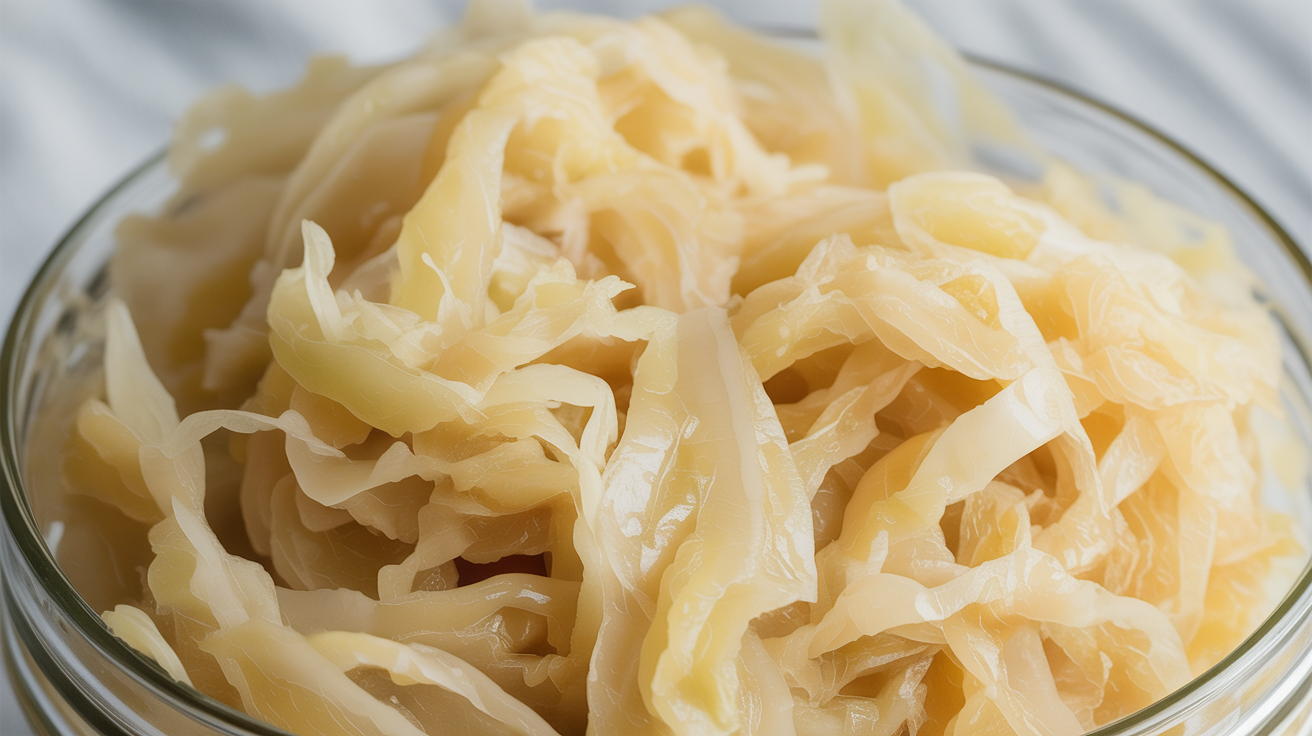
Open your jar, reach for the fork, and find something gelatinous clinging to the shreds. Not ideal. The good news: slimy sauerkraut is one of the most common fermentation problems, and it has a small handful of well-understood causes. Most of the time you can fix it, or at least prevent it next batch. Sometimes you toss the jar. This guide walks through how to tell which situation you're in.
Slimy or Ropey Brine: What's Actually Happening
The brine turning thick, viscous, or "ropey" is the most alarming-looking texture problem, and usually the least serious.
Certain lactic acid bacteria (LAB), particularly some strains of Leuconostoc species common in early fermentation, produce exopolysaccharides as a byproduct. These are long-chain sugars that make the brine look like it has strings or gel in it. This is the same phenomenon that makes kombucha occasionally ropey or gives some natural wines a "filer" texture.
It shows up most often when:
- Fermentation temperature is above 75°F (24°C)
- Salt percentage is on the low end (below 2% by weight)
- The ferment is still in its early stage (days 1–5)
As the pH drops and the microbial community shifts toward more acid-tolerant strains, the slime-producing bacteria get outcompeted. The brine often clears on its own within a week.
How to Tell If Slimy Brine Is Normal vs. Problematic
Harmless slimy brine looks like thick, slightly stringy liquid with no unusual smell beyond normal fermentation sourness. The kraut itself should still smell clean and tangy.
Problematic slime smells wrong, putrid, rotten, or like something chemically off. If the slime is accompanied by pink, black, or fuzzy growth (not the white film of kahm yeast, which is a separate issue), that is a discard situation.
What to Do When Brine Is Slimy
If the smell is fine and there's no visible mold:
- Move the jar somewhere cooler (60–68°F / 15–20°C is the ideal window).
- Check that cabbage is fully submerged under brine.
- Wait a few more days and observe. Ropey brine from Leuconostoc usually resolves as pH drops.
- Do not add water to thin the brine, that dilutes salt concentration and can slow the acid development you need.
If it's still slimy after two more weeks and the smell has gone off, toss it.
Mushy or Soft Sauerkraut
Sliminess in the brine is one thing. Soft, mushy kraut, shreds that have lost all crunch and turned limp or translucent, is a different problem with different causes.
Softness comes from cell-wall breakdown. Lactic acid fermentation is supposed to preserve crunch because the acidic environment inhibits the enzymes that degrade pectin (the structural compound in plant cell walls). When fermentation goes wrong, those enzymes get a head start.
The Main Causes of Mushy Kraut
Not enough salt. Salt draws water out of the cabbage and firms cell walls early in the process. Below roughly 1.5–2% salt by cabbage weight, you lose this protective effect. At 1% or less, softening is almost guaranteed.
Too much heat. Fermentation above 80°F (27°C) accelerates bacterial activity so fast the kraut goes acidic before the protective salt environment stabilizes. High heat also activates the pectin-degrading enzymes in the cabbage itself.
Over-fermentation. Kraut left at room temperature for four to six weeks can become very soft as acids continue breaking down cell walls. Refrigeration slows this dramatically. Once it's at the crunch and tang you want, move it to the fridge.
Late salt addition or uneven distribution. If salt is added after the cabbage starts sitting, or if it's not massaged in evenly, some sections of the batch get under-salted.
Prevention and Fixes
There's no way to un-soften cabbage that's already mushy. Prevention is the only real fix.
For next batch:
- Weigh your salt. 2% by weight of the cabbage (20g salt per 1kg cabbage) is a reliable starting point for crunch.
- Ferment cool. A basement, a root cellar, or even the coolest part of your kitchen (60–68°F) produces slower, more even fermentation that keeps texture intact.
- Add tannins. A grape leaf, a bay leaf, or a small piece of oak leaf (unwaxed, pesticide-free) placed at the bottom of the jar contributes tannins that help firm the pectin. This is an old-school trick that actually works.
- Refrigerate on time. Once your kraut is tangy and crunchy to your taste (usually two to four weeks at 65°F), move it to cold storage.
Symptom Reference Table
| Symptom | Likely Cause | Action |
|---|---|---|
| Ropey, stringy brine; kraut smells fine | Leuconostoc exopolysaccharides; too warm or low salt | Cool it down, wait; usually clears in days |
| Slimy brine + putrid or rotten smell | Contamination or spoilage | Discard immediately |
| Slimy brine + pink or black growth | Mold contamination | Discard immediately |
| Soft, mushy shreds; still smells sour | Over-fermentation, heat, or low salt | Refrigerate now to stop further softening; eat soon |
| Soft + off smell or off color | Spoilage | Discard |
| Kraut tastes fine but texture is limp | Normal at very long ferments; possible low salt | Acceptable to eat; adjust salt next batch |
| White film on top (not slimy) | Kahm yeast, not slime | See kahm yeast guide |
When to Discard Without Tasting
Smell is your most reliable safety test for ferments. A healthy ferment has a characteristic sour, tangy scent, sharp and clean. Spoilage smells different: rotten, putrid, or like something between garbage and sulfur.
Discard if you see or smell any of these:
- Fuzzy growth (any color) on the kraut or jar walls. Mold that's visible on the surface has likely spread through the batch.
- Pink, red, or black discoloration in the kraut or brine.
- A smell that makes you pull your head back. Trust that instinct.
- Slime that has persisted for more than two to three weeks alongside an off smell.
Sauerkraut that smells fine but has slimy brine and looks slightly gelatinous is almost always safe. Sauerkraut that smells wrong is not safe to eat, regardless of how it looks. For a full decision framework, check the beginner's safety checklist.
Frequently Asked Questions
Is it safe to eat sauerkraut with slimy brine?
Usually yes, if the smell is normal (sour, tangy, clean). The slime is most often from bacteria that are part of a normal early ferment and harmless to eat. If the smell is off at all, don't eat it.
Why did my sauerkraut get slimy after I put it in the fridge?
Cold slows fermentation but doesn't stop bacterial activity entirely. If ropey strains were already active, they can continue producing exopolysaccharides at a lower rate in the fridge. This is uncommon but not dangerous on its own. Give it a sniff test; if it smells fine, it's fine.
Can I fix mushy sauerkraut?
No. Once the cell walls have broken down, texture cannot be restored. Mushy kraut is still safe to eat if it smells right; it just won't be crunchy. Use it in cooked dishes (soups, pierogies, braised meats) where texture matters less. Adjust salt and temperature for your next batch.
How much salt should I use to prevent sliminess and softness?
2% salt by weight of the cabbage is the standard recommendation. That's 20 grams of salt per 1 kilogram of cabbage, or about 1 teaspoon per pound. Go below 1.5% and you increase the risk of both texture problems. Go above 3% and fermentation slows noticeably.
My brine looks normal but the kraut is still soft. What happened?
Check temperature history. Even a few days at 80°F (27°C) during a heat wave can soften a batch. Also consider whether your salt was measured by weight or by volume, volumetric measurements for salt vary a lot by grain size and can result in significantly less salt than intended. Switching to a kitchen scale is the single most reliable fix for recurring texture problems.