Troubleshooting & Safety
Mold on Your Ferment: When to Toss It and When It's Fine
Learn to tell harmless kahm yeast from real mold on fermented vegetables, and know exactly when to skim vs. when to throw it out.
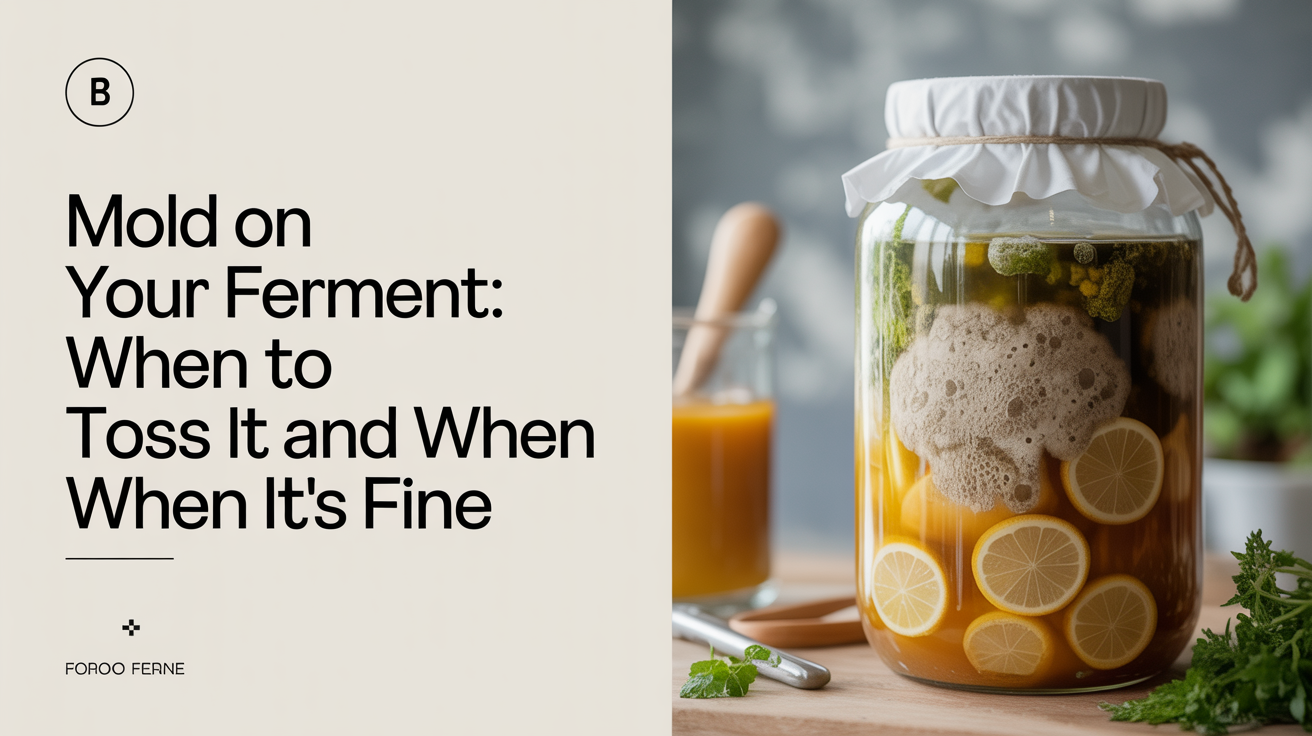
You lift the lid on your kraut after a week and see something white spreading across the surface. Your stomach drops. Is this mold? Did you just ruin a week's worth of work? Maybe, maybe not. The good news is that fermentation mold is one of the most common beginner worries, and once you know what you're actually looking at, you can make a confident call every time.
The short answer: not everything white or fuzzy on a ferment is dangerous, but real mold on a soft, low-acid vegetable ferment means you toss the jar. No exceptions. This guide will help you tell the difference, understand why mold happens, and prevent it on your next batch.
Kahm Yeast vs. Mold: The Key Difference
The number one thing that trips people up is confusing kahm yeast with actual mold. They can both show up as white patches on the surface of a ferment, but they behave very differently and carry very different risks.
Kahm yeast is a catch-all name for wild yeasts that thrive on the surface of ferments. It looks flat, white or off-white, and often has a wrinkled or powdery texture, almost like a thin film of skim milk. It stays close to the brine surface and does not rise up in a fuzzy way. Kahm is not dangerous. It can add a slightly yeasty or tangy smell and might affect flavor if you leave it long enough, but it is not a pathogen. You can skim it off with a clean spoon and carry on. See the deeper breakdown on kahm yeast vs. mold if you want side-by-side comparisons.
Mold looks different. Real fermentation mold is fuzzy or fluffy, often raised off the surface, and usually colored: green, black, blue, pink, or orange. Even white mold that looks like cotton or fine fur is mold, not kahm. Mold produces mycotoxins that can penetrate into the food below the surface, even if you scrape off what you can see. You cannot scoop it out and eat the rest.
A quick checklist:
- Flat, wrinkly, white or cream film on the brine surface? Probably kahm. Skim it, watch the ferment.
- Fuzzy, raised, or any color other than white? That is mold. Toss the jar.
- White AND fuzzy? Toss it. When in doubt, throw it out.
When to Toss It Without Hesitation
This is worth being direct about: if you see mold (fuzzy, raised, or colored) on a soft vegetable ferment like sauerkraut, pickles, kimchi, or fermented carrots, throw it out. All of it, including the brine.
Some older resources say you can scrape the top inch off and eat what's underneath. That advice is not safe with soft, moist ferments. Mold threads (hyphae) grow down into the food and its toxins diffuse through liquid. The visible patch is just the part you can see. The brine has already been affected.
The exception you may have heard about applies to hard cheeses, where mold growth tends to stay superficial and the cheese is dense enough to cut a margin. That logic does not transfer to fermented vegetables sitting in liquid brine.
Here is when you toss the jar, no ifs:
- Any fuzzy growth, regardless of color
- Green, black, blue, pink, or orange spots anywhere on the ferment or jar walls
- White growth that is raised and fluffy, not flat and filmy
- Strong unpleasant smell alongside surface growth (see what a healthy ferment should smell and look like for reference)
- You are not sure what you are looking at
The cost of tossing one jar of kraut is a few dollars and a week of time. The cost of eating a mold-contaminated ferment is potentially much worse. Err on the side of caution every time.
Why Mold Grows on Ferments and How to Prevent It
Mold is not random. It shows up when conditions favor it, which usually means something in your process was off. Understanding the causes helps you prevent it next time.
Salt concentration is the biggest lever. Lactic acid bacteria produce the acid that preserves a ferment, but salt creates the initial environment that favors those bacteria over harmful microbes and mold. For vegetable ferments, 2% salt by weight of the vegetables is the standard starting point. Weigh your vegetables, multiply by 0.02, and add that much salt. If you are eyeballing it, you are guessing. A kitchen scale solves this. Going below 1.5% is where mold risk rises noticeably.
Vegetables must stay submerged under brine. Oxygen is what mold needs. Any vegetable poking above the brine surface is exposed to air and will mold faster than what is submerged. Use a clean zip-lock bag filled with brine, a fermentation weight, or just a small jar filled with water to press everything down. Check the jar daily for the first week and push any floaters back under.
Temperature matters. Fermentation happens faster in warm kitchens and slower in cool ones. At 70 to 75 F (21 to 24 C) you will have active brine within a few days. At 65 F (18 C) it moves slower but the results are often better. The problem is that if your kitchen goes above 80 F (27 C), the ferment moves so fast it can run out of acid-producing activity before the pH drops enough to protect it, leaving a window for mold. If your kitchen runs hot, ferment in a cooler spot or check more often.
Clean equipment, not sterile. You do not need to boil jars or sterilize anything. A good wash with hot soapy water is enough. Residual soap or bleach can harm the bacteria you want. Just wash well and rinse thoroughly.
Use enough starter brine or wait it out. For water-based brines (pickles, carrots, beets), mixing a good quality salt brine and keeping vegetables submerged is usually all you need. For dry-salt ferments like kraut, work the salt into the cabbage until liquid releases. If you do not get enough liquid, top up with a 2% brine solution rather than plain water.
How to Salvage a Kahm Yeast Situation
If you have confirmed what you are seeing is kahm yeast and not mold, you have options. The ferment is not ruined.
Skim off as much kahm as you can with a clean spoon. Check that your vegetables are fully submerged and push them back under the brine if not. If the brine level is low, top it up with a fresh 2% salt solution. Rinse any kahm off the jar lid and seal.
After skimming, taste the ferment. If it is sour and smells clean and tangy, it is fine. If the taste has gone funky or noticeably yeasty in a way that bothers you, you can still toss it. Kahm will not hurt you but a jar that tastes off is not worth finishing.
Kahm often comes back once it has taken hold, especially in warm conditions. Move the jar somewhere cooler and check it every day or two until fermentation is complete.
Use the beginner's safety checklist to run through a full assessment of any ferment you are unsure about.
Frequently Asked Questions
Can I just scrape off the mold and eat the rest?
No, not with soft vegetable ferments in brine. Mold produces toxins that spread through liquid and into the food below the surface, even when you cannot see any visible growth. What looks safe below the surface may not be. Toss the whole jar.
My ferment smells fine but has a white surface film. Is it safe?
A flat, wrinkly, white film that smells neutral or slightly yeasty is almost certainly kahm yeast, not mold. Skim it off and check that your vegetables are submerged. If the smell changes or the film becomes fuzzy or raised, toss it.
How do I prevent mold from happening again?
The three main causes are low salt, exposed vegetables above the brine, and a kitchen that is too warm. Weigh your salt (2% by vegetable weight), keep everything submerged with a weight or follower, and ferment below 80 F (27 C). Those three fixes prevent the majority of mold problems.
Is mold on a ferment dangerous?
Yes. Real mold, the fuzzy or colored kind, can produce mycotoxins that cause illness. Kahm yeast is not dangerous but mold is. When you are not certain which you are looking at, throw it out.
My first batch had mold. Should I give up on fermenting?
No. Mold on a first batch almost always comes down to one or two fixable things: not enough salt, or vegetables that floated above the brine. Both are easy to solve. Most fermenters have tossed at least one early batch. It is part of learning the process. Try again with a kitchen scale and something to weigh the vegetables down.