Kombucha & Drinks
How to Carbonate Kombucha (the Second Fermentation)
Learn how to carbonate kombucha with a simple second fermentation: bottle with a little sugar or fruit, seal for 2-7 days, then refrigerate for fizzy results.
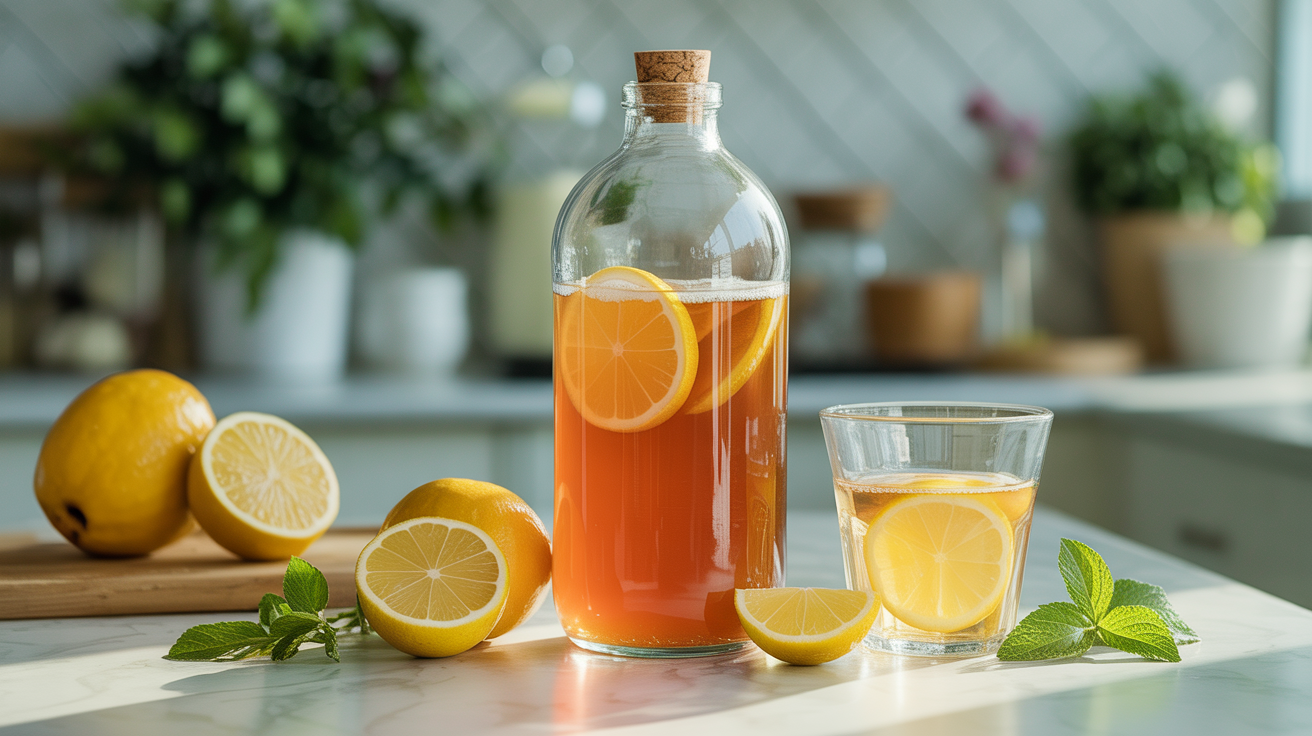
You carbonate kombucha by bottling your finished first-ferment brew with a small amount of sugar or fruit, sealing the bottles airtight, and letting them sit at room temperature for two to seven days. The yeast still in the liquid eats the added sugar and produces CO₂, which has nowhere to escape, so it dissolves into the brew and creates fizz. Then you refrigerate the bottles to stop fermentation and lock in that carbonation.
That's the whole method. The rest of this guide covers the details that determine whether your bottles come out lightly sparkling or dangerously over-pressurized.
Why the Second Fermentation Works
Your first fermentation produces a tart, mildly effervescent liquid. The SCOBY and yeast have consumed most of the original sugar, but there's still active yeast suspended in the brew. When you add a fresh sugar source and seal the bottle, those yeast cells get to work again in a closed environment. CO₂ can't escape, so it builds pressure and eventually saturates the liquid.
Refrigeration is what stops the process. Cold temperatures dramatically slow yeast activity, so chilling your bottles after fermentation halts further gas production and keeps the kombucha fizzy without continuing to build pressure.
What Drives Carbonation Level
Three variables control how much fizz you get:
- Sugar amount. More sugar means more CO₂ produced. Stick to the amounts in the table below for predictable results.
- Temperature. Warmer rooms ferment faster. At 75°F (24°C), two to three days is often enough. At 65°F (18°C), you might need five to seven days.
- Bottle seal quality. A bottle that leaks pressure gives you flat kombucha. Only use airtight bottles (more on this below).
What You Need Before You Start
You don't need much beyond what you already used for the first ferment.
Bottles: Use swing-top (flip-top) glass bottles rated for carbonated beverages, or repurposed commercial kombucha bottles with tight screw caps. Standard mason jars are not suitable, they're not designed to hold pressure and can crack or shatter. Plastic kombucha-style bottles are a useful pressure gauge, you can squeeze them to feel how firm they're getting, but glass swing-tops are the standard choice.
Sugar or fruit: See the flavoring table below.
A fine-mesh strainer or funnel: Optional, but it keeps pulp and SCOBY bits out of the bottle.
Refrigerator space: You'll need it ready before you start, because you want to be able to chill bottles quickly if pressure builds faster than expected.
Flavoring Options and Amounts
Add one of the following per 16 oz (475 ml) bottle. These amounts are starting points. Juice and purée vary in sugar content, so your results may differ slightly.
| Flavoring | Amount per 16 oz bottle | Notes |
|---|---|---|
| Plain white sugar | 1 teaspoon | Neutral flavor, reliable fizz |
| Honey | 1 teaspoon | Adds mild floral note; raw honey ferments well |
| 100% fruit juice (grape, apple, ginger-lemon) | 2–3 tablespoons | Flavor and sugar in one step |
| Fresh ginger (sliced) + 1 tsp sugar | 3–4 thin slices + sugar | Classic combination |
| Frozen berries (thawed) | 2 tablespoons (mashed) | Adds color and flavor |
| Fruit purée (mango, peach) | 1–2 tablespoons | Pulp settles; shake before opening |
Ginger and citrus are popular because they complement the tartness of kombucha without making it taste like juice. If you're new to second ferments, start with plain sugar or a tablespoon of grape juice. It's easier to diagnose what went wrong (flat, over-carbonated) when the only variable is the sugar.
The Bottling Process, Step by Step
-
Sanitize your bottles and caps. Rinse with a no-rinse sanitizer like Star San, or run them through the dishwasher on a hot cycle. Residue can introduce off-flavors or unwanted bacteria.
-
Add your flavoring first. Put the sugar, juice, or fruit into each bottle before pouring in the kombucha. This ensures even distribution.
-
Pour in your kombucha. Leave about one inch (2.5 cm) of headspace at the top. Too little headspace leaves no room for the pressure cap and increases burst risk; too much means less liquid to carbonate.
-
Seal the bottles firmly. Flip-top caps should click shut with a satisfying snap. Screw caps should be hand-tight.
-
Ferment at room temperature, out of direct sunlight. Store in a dark cabinet or inside a closed box. A cardboard box adds a containment layer if a bottle ever does rupture.
-
Check pressure daily. Flip-top bottles: tilt gently and listen for hiss when you crack the bail slightly. Plastic bottles: squeeze to gauge firmness. When they feel firm but not rock-hard, they're usually ready.
-
Refrigerate when fizzy enough. Once carbonation is where you want it, move all bottles to the fridge. Wait another 12–24 hours before opening, cold liquid holds carbonation better and is less likely to gush.
Safety: Pressure Is Real
This is the part of kombucha-making that beginners sometimes underestimate. Yeast produces CO₂ continuously until it runs out of sugar or gets too cold. In a sealed bottle, that means pressure keeps climbing. Glass bottles can and do rupture if left too long or filled with too much sugar.
Safety checklist:
- Use only bottles rated for carbonated beverages. Never use vintage flip-tops, mason jars, or thin glass.
- Burp bottles daily. Slightly release the seal, listen for pressure, then reseal. If there's a lot of pressure after just one day, refrigerate immediately and reduce the sugar amount next time.
- Keep bottles in a closed cardboard box or a dedicated fermentation container during the second ferment. If a bottle does crack, the mess and glass stay contained.
- Never ferment longer than seven days at room temperature without checking pressure.
- When opening a chilled bottle, point it away from your face. Even cold kombucha can gush if very carbonated.
- If a bottle feels rock-hard, refrigerate it before opening. Open it outdoors over a sink, slowly releasing the cap a millimeter at a time.
Most second ferments go fine. But treating pressure as a real concern rather than a remote possibility is what keeps it that way.
Troubleshooting Flat or Over-Carbonated Kombucha
Flat kombucha: The seal wasn't airtight, the yeast was sluggish (this can happen if your first ferment went very long and the yeast population dropped), or the room was too cold. Try a warmer spot, use a fresh batch of first-ferment kombucha that still has active yeast, and double-check that your bottle caps are sealing properly.
Too much fizz or gushing: You used too much sugar, the room was warm, or you waited too long. Reduce the sugar by half next time and refrigerate a day or two earlier.
Kombucha tastes too vinegary after the second ferment: It was probably already quite tart coming out of the first ferment. The second ferment continues acidification slowly even in the fridge. Drink it sooner after chilling, or shorten your first fermentation next time.
Sediment at the bottom: Normal. That's yeast. Swirl gently before pouring or pour carefully to leave it behind.
Frequently Asked Questions
How long does kombucha second fermentation take?
Most batches are ready in two to four days at room temperature (68–75°F / 20–24°C). Cooler kitchens need closer to five to seven days. Start tasting or checking pressure at day two so you don't overshoot.
Can I use a regular mason jar for second fermentation?
No. Mason jars aren't designed to hold carbonation pressure and can crack or shatter under the stress that builds during a second ferment. Use swing-top bottles or commercial-grade screw-cap bottles that have held carbonated beverages before.
Do I need to remove the SCOBY before bottling?
Yes. The SCOBY stays in your brewing vessel with some starter liquid for your next batch. You bottle only the finished kombucha. Small floating bits of culture (sometimes called "baby SCOBYs" or "yeast strands") will make it into the bottle and that's fine, but the main SCOBY stays behind. If you want to learn more about caring for it between batches, see what a SCOBY is and how to care for one.
What's the best fruit for flavoring kombucha second fermentation?
Grape juice is reliable because it has consistent sugar content and pairs well with kombucha's tartness. Ginger (fresh slices plus a teaspoon of sugar) is a classic for good reason. Berries add color and flavor but can leave a lot of sediment. Mango and peach purée make richer, sweeter kombucha. Start simple and branch out once you understand how your bottles carbonate.
Is water kefir carbonated the same way?
The process is similar: add sugar, bottle airtight, ferment briefly at room temperature, then refrigerate. The main difference is the culture. If you're curious about trying another fermented drink, water kefir uses a different grain-based culture and has a milder, less acidic flavor profile than kombucha.