Kombucha & Drinks
How to Make Kombucha at Home: A Beginner's Guide
Learn how to make kombucha at home with this beginner-friendly guide. Covers equipment, ratios, first fermentation, tasting, and food safety.
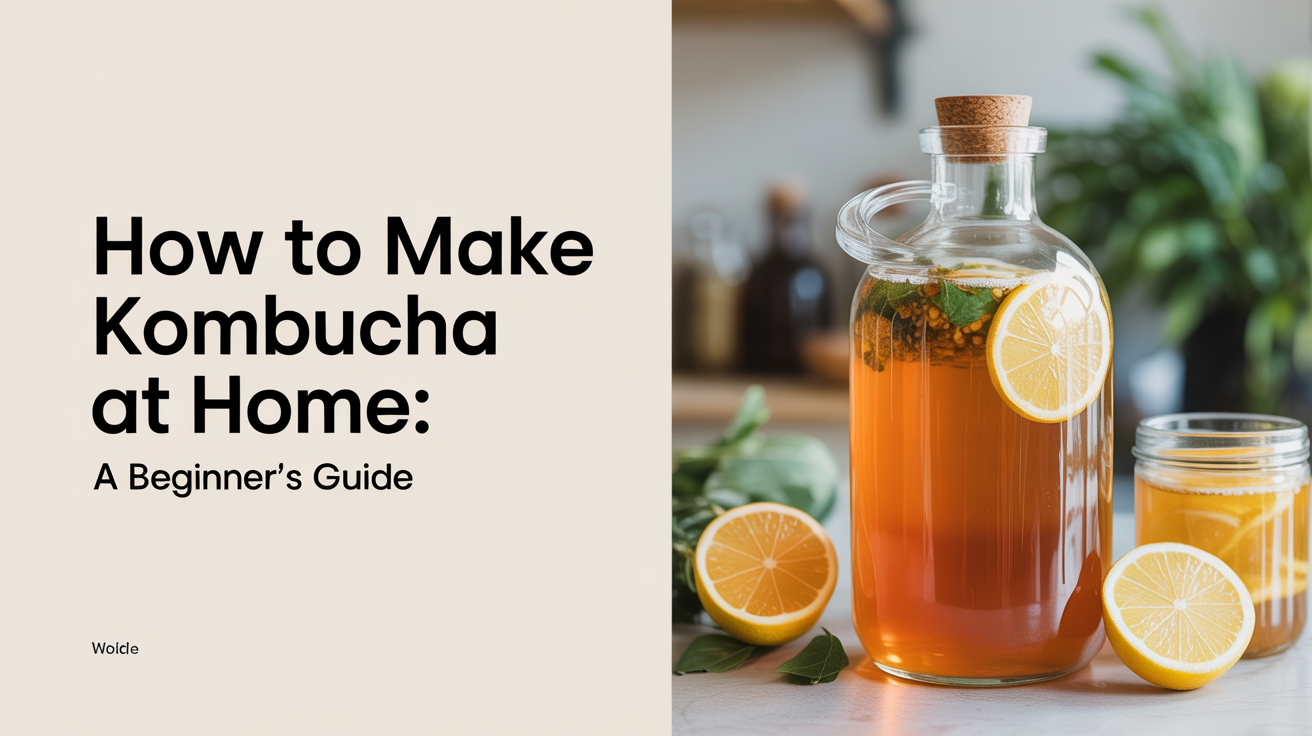
Kombucha is fermented sweet tea. A SCOBY (symbiotic culture of bacteria and yeast) eats the sugar, produces organic acids and a small amount of CO2, and turns the tea pleasantly tart. The whole process takes one to two weeks, costs almost nothing per batch, and is far more forgiving than most beginners expect.
This guide walks you through your first gallon, start to finish.
What You Need Before You Start
Equipment
- One-gallon glass jar (wide-mouth mason jars work perfectly)
- Breathable cloth cover: tightly woven cotton, coffee filters, or cheesecloth doubled over
- Rubber band to secure the cover
- Large pot for boiling water
- Wooden or plastic spoon (no metal in contact with the brew)
- pH strips or a basic pH meter (optional but reassuring)
Metal reacts with kombucha's acidity and can leach off-flavors or damage the SCOBY. Stick to glass, ceramic, or food-grade plastic for anything that touches the liquid.
The Two Ingredients You Cannot Skip
SCOBY + starter tea. The SCOBY is a rubbery disc that inoculates your sweet tea with the right microorganisms. Starter tea is already-finished kombucha, and it is not optional. It drops the pH of your brew immediately, making the environment too acidic for harmful bacteria to survive. You need at least one to two cups of starter tea per gallon. Get both from a trusted brewer, a homebrewing shop, or a reputable online supplier.
Sweet tea. Black tea is the most reliable base. Green tea works too. Avoid herbal, flavored, or oily teas (like Earl Grey) for your SCOBY jar, since the oils can harm the culture. Plain sugar (white cane sugar) is standard. The SCOBY consumes most of it during fermentation, so the finished kombucha is much less sweet than the starting brew.
To learn more about caring for your culture between batches, see what is a SCOBY and how do you care for one.
Standard Ratios for One Gallon
Use this as your baseline. You can adjust tea strength or sugar slightly once you have a few batches under your belt.
| Ingredient | Amount (1-gallon batch) |
|---|---|
| Water | 1 gallon (3.8 L) |
| White cane sugar | 1 cup (200 g) |
| Black tea bags | 8 bags (or 2 Tbsp loose-leaf) |
| Starter tea (unflavored kombucha) | 1–2 cups (240–480 mL) |
| SCOBY | 1 healthy disc |
The ratio of starter tea to total liquid should be at least 10%. For a gallon batch that is roughly one to two cups. Using more starter only makes your brew safer and speeds up acidification.
First Fermentation: Step-by-Step
This is called "F1." It produces tart kombucha without much carbonation. Fizz comes in a second fermentation (F2), which is a separate optional step.
- Boil half the water. Bring about half a gallon of water to a boil in a large pot.
- Steep the tea. Add 8 tea bags and steep for 5 to 10 minutes. Remove the bags without squeezing (squeezing adds bitterness).
- Dissolve the sugar. While the tea is still hot, stir in 1 cup of sugar until fully dissolved.
- Add the remaining water. Pour in the rest of the gallon (cold or room-temperature water). This cools the brew faster.
- Cool to room temperature. Wait until the liquid is below 80°F (27°C) before adding your SCOBY. Hot liquid kills the culture. Aim for 68 to 78°F (20 to 26°C). You can speed this up by using cold water in step 4, or by setting the pot in an ice bath.
- Add starter tea and SCOBY. Pour the cooled sweet tea into your glass jar. Add 1 to 2 cups of starter tea, then gently place the SCOBY on top. It may sink. That is fine.
- Cover with breathable cloth. Secure tightly with a rubber band. The cloth keeps out dust, fruit flies, and debris while allowing airflow. Do not seal the jar with a lid, because the culture needs oxygen during F1.
- Label with the start date. A strip of masking tape works. This helps you track when to start tasting.
- Set in a warm, dark spot. Ideal temperature is 68 to 78°F (20 to 26°C). Avoid direct sunlight and keep the jar away from strong-smelling foods or cleaning products.
- Leave it alone for 7 to 14 days. Check occasionally, but resist the urge to stir or disturb the SCOBY.
How to Know When It's Ready
Tasting for Tartness
Starting around day 7, taste the kombucha with a clean spoon or straw. It should be pleasantly tart with a slight sweetness still present. If it tastes like sweet tea with a faint vinegar note, it needs more time. If it tastes sharply sour with almost no sweetness left, it fermented longer than ideal but is still safe to drink.
Your target pH is between 2.5 and 3.5. Strips make this easy to check. A reading below 2.5 means the batch ran very long and will taste very vinegary (fine as starter tea for your next batch, but not ideal to drink straight).
Fermentation speed depends on temperature. At 78°F (26°C), a batch can finish in 7 days. At 68°F (20°C), it may need 12 to 14 days.
What a Healthy Batch Looks Like
Expect a new, thin SCOBY to form on the surface. The liquid will darken slightly and may have stringy brown yeast strands floating in it. Those are normal. The whole brew should smell tart and yeasty, similar to vinegar or apple cider.
Food Safety: What to Watch For
Homemade kombucha is safe when you maintain acidity through adequate starter tea. Here is what to watch:
Safe and normal:
- Brown, stringy yeast strands
- Bubbles along the SCOBY or jar walls
- A thin new SCOBY forming on the surface
- Slightly cloudy liquid
Stop and discard:
- Fuzzy mold on the SCOBY or jar surface. Mold looks like blue, green, black, or white fuzzy patches, not smooth brown or cream-colored growth. If you see fuzzy mold, discard the entire batch including the SCOBY and start fresh. Do not try to salvage it.
- Pink or red coloring that you cannot trace to an ingredient
- A rotten or unpleasant smell (not just sour, but putrid)
The acidity of a properly made batch (enough starter tea, clean equipment) is what keeps it safe. Mold is rare when you use sufficient starter, but it does happen, particularly if the starter tea was too diluted or the jar was not clean.
Bottling and Second Fermentation for Fizz
Once the kombucha tastes right to you, remove the SCOBY and set it aside in a clean bowl with about two cups of finished kombucha (this becomes your starter tea for the next batch). Pour the rest into swing-top glass bottles or any bottles designed for carbonated beverages.
For a plain, mildly fizzy result, seal the bottles and leave them at room temperature for one to three days before refrigerating. This is called second fermentation (F2). Adding a small amount of fruit juice, grated ginger, or a few berries to the bottle before sealing gives you flavored, more carbonated kombucha.
Burp the bottles (open briefly) once a day to release pressure and avoid over-carbonation. Once refrigerated, the fermentation slows dramatically and the kombucha keeps for a month or more.
For a detailed walkthrough of building carbonation, see how to carbonate kombucha: the second fermentation.
If you enjoy fermented drinks and want to try something grain-free with a milder flavor, how to make water kefir: a beginner's guide covers a similarly simple process.
Frequently Asked Questions
Can I use flavored tea like Earl Grey or chamomile?
Avoid them for your main SCOBY jar. Earl Grey contains bergamot oil, which can damage the culture. Herbal teas lack the tannins black tea provides and may produce off-flavors. Plain black tea (Assam, Ceylon, English Breakfast) or plain green tea are the safest options for beginners. Flavoring happens later, during second fermentation, using fruit or juice rather than infused teas.
My SCOBY sank to the bottom. Did I do something wrong?
No. SCOBYs sink, float, or drift sideways depending on their density and the level of carbonation in the starter tea. A new SCOBY will form on the liquid surface regardless of where the old one sits. The brew is still fermenting normally.
What if I don't have starter tea?
You can use a bottle of unflavored, raw (unpasteurized) store-bought kombucha. Check the label to confirm it is not pasteurized. Use at least two cups per gallon. Avoid kombucha that has been heat-treated, since the live cultures will have been killed and it will not acidify your batch.
How long does homemade kombucha keep?
Once refrigerated after second fermentation, it keeps well for four to six weeks. The flavor continues to develop over time and gets slightly more sour. Drink it whenever you like within that window.
Can I reuse the SCOBY indefinitely?
Yes. The SCOBY grows with each batch and will produce a new layer (called a baby) on the surface. You can peel layers apart and share them, compost older ones, or keep them in a SCOBY hotel (a jar of starter tea in the fridge) between batches. With basic care, a healthy SCOBY lasts for years.