Kombucha & Drinks
What Is a SCOBY and How Do You Care for One?
Learn what a SCOBY is, how to grow one from store-bought kombucha, store extras in a hotel, and spot the difference between normal and mold.
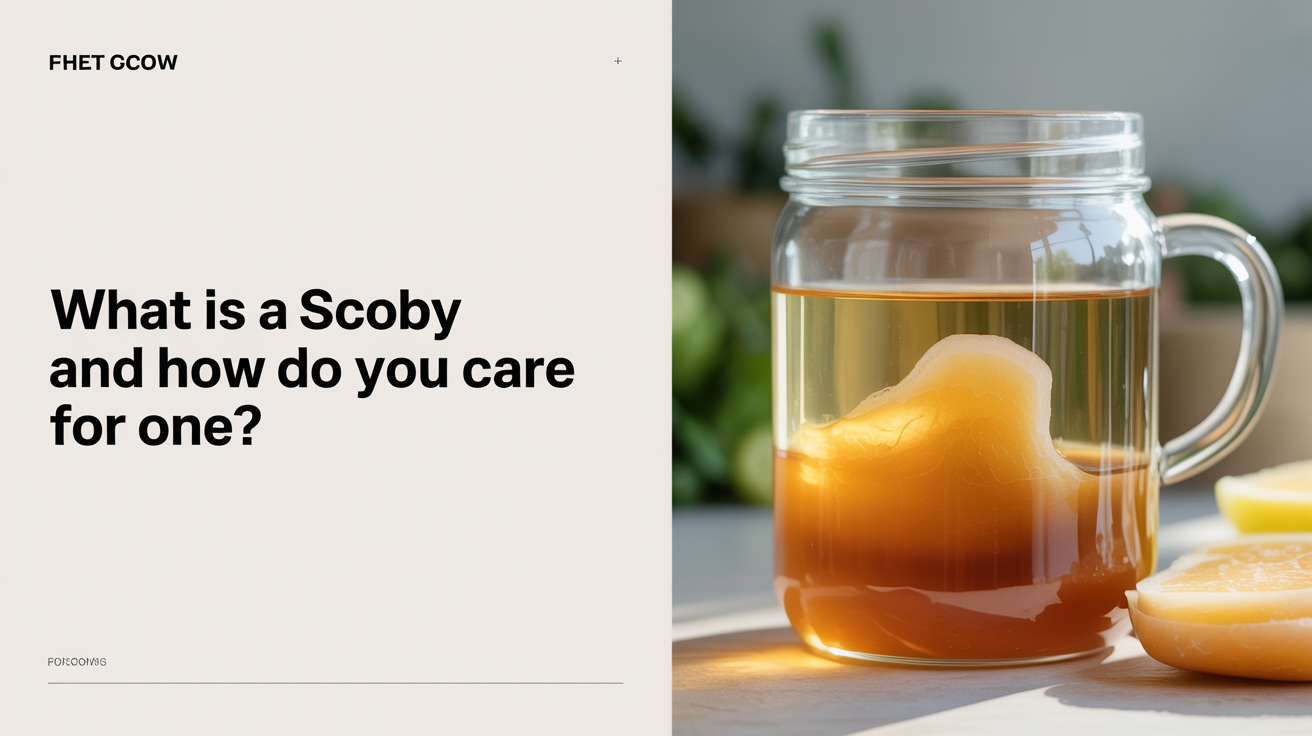
A SCOBY is a Symbiotic Culture Of Bacteria and Yeast. It's the rubbery, tan-colored disc that floats in your kombucha jar and does the actual work of fermentation. Hand it sweetened tea, give it warmth and time, and it transforms the brew into the tangy, lightly effervescent drink you're going for.
If you've bought raw, unflavored kombucha at the store and spotted a cloudy blob near the bottom, you've already seen a baby SCOBY in progress. That cloudiness is alive, and it's exactly what you need to get started.
What a SCOBY Actually Does
The bacteria and yeast in a SCOBY aren't separate organisms taking turns. They work together continuously. The yeast breaks down sucrose into simpler sugars and produces a small amount of ethanol (usually under 0.5% in finished kombucha). The bacteria then convert that ethanol, along with the sugars, into organic acids. Those acids give kombucha its tartness and act as a natural preservative, which is why a healthy batch resists harmful contamination.
The SCOBY also physically protects the brew. It forms a barrier across the surface of the liquid, limiting oxygen exposure and giving the culture a stable environment to work in. As it ferments batch after batch, it grows new layers and thickens over time.
What the Liquid Below It Does
The liquid kombucha itself, called the starter liquid, is just as important as the disc. It's already acidic, which lowers the pH of your fresh sweet tea immediately and makes the environment inhospitable to unwanted organisms. Never start a batch without at least one to two cups of strong, finished kombucha from a previous batch or a bottle of raw store-bought.
How to Grow a SCOBY from Store-Bought Kombucha
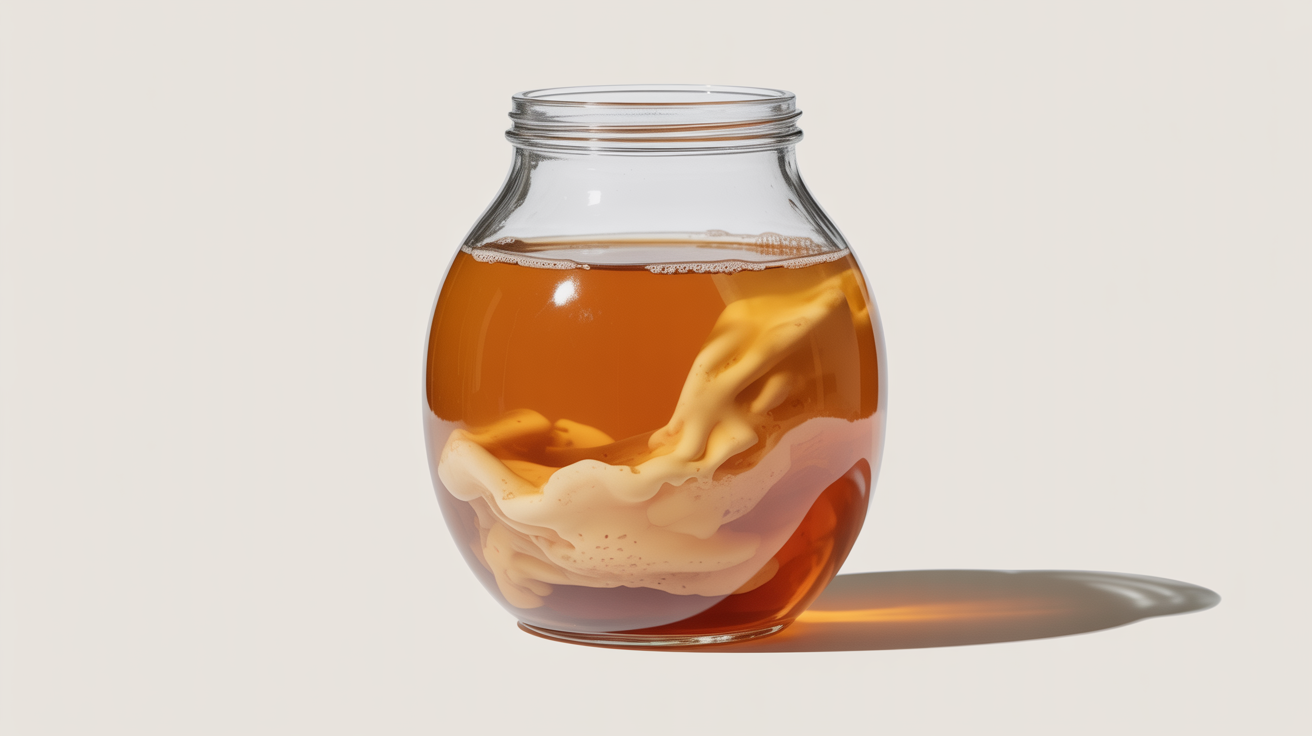
You don't need to track down a SCOBY donor or buy one online. A bottle of raw, unflavored kombucha from the grocery store is enough.
What you need:
- 1 bottle (16 oz) of raw, unflavored kombucha (GT's Original or similar, check that it says "raw" and contains live cultures)
- 2 cups of strong black or green tea, cooled to room temperature
- 1–2 tablespoons of plain white sugar, dissolved into the tea while hot
- A clean wide-mouth glass jar (quart size works well)
- Breathable cloth or a coffee filter and a rubber band
Steps:
- Brew your tea strong, stir in the sugar, and cool completely. Warm liquid can kill the culture.
- Pour the cooled sweet tea into your jar.
- Add the full bottle of raw kombucha.
- Cover with the cloth and secure it. The culture needs airflow but not dust or insects.
- Set in a warm spot (72–78°F is ideal) away from direct sunlight.
- Wait. Within 1–4 weeks, a thin pellicle will form across the surface. That's your SCOBY.
It will look unimpressive at first. A translucent film, maybe a quarter inch thick. That's completely normal. It thickens with each subsequent batch. Once it's at least a quarter inch and you have enough starter liquid, you're ready to brew your first full batch. Check out how to make kombucha at home, a beginner's guide for the full process.
Normal SCOBY Appearance vs. Signs of Trouble
New brewers often panic at the sight of brown strings hanging below the disc or uneven lumpy growth on top. Almost always, that panic is unnecessary. Here's a clear breakdown of what's normal and what's not.
| What you see | Normal or problem? |
|---|---|
| Brown stringy strands hanging below the disc | Normal, yeast strands, harmless |
| New thin layer forming on top | Normal, fresh growth from this batch |
| Uneven, lumpy, or lopsided shape | Normal, SCOBYs are not uniform |
| Tan, cream, or light brown color | Normal |
| Dark brown patches (from tea contact) | Normal |
| Bubbles trapped inside the disc | Normal |
| Fuzzy growth on the surface | Problem, discard immediately |
| Green, black, or pink spots | Problem, mold, discard immediately |
| Foul smell (not just tart or vinegary) | Investigate; trust your nose |
The key distinction is texture. Yeast strands are smooth and stringy. Mold is fuzzy, like what you'd see on old bread. If you see fuzzy growth anywhere on the SCOBY or across the surface of the liquid, throw out the entire batch (jar, liquid, and SCOBY) and start fresh. Don't try to scrape it off or salvage the liquid underneath. The acidic environment of healthy kombucha is very resistant to mold, so fuzzy growth usually means something went wrong early, often insufficient starter liquid or a jar that wasn't clean.
For everything fermentation-related that involves troubleshooting off smells and visual cues, the same principles apply across cultures. If you're also making water kefir, you'll find that grain health has similar visual tells.
How to Store Extra SCOBYs (The SCOBY Hotel)
After every batch, your SCOBY grows a new layer. Over time, you'll have more SCOBY than you can use. A SCOBY hotel is simply a jar where you store the extras.
Setting Up a SCOBY Hotel
- Use a clean glass jar with a lid (unlike an active brew, storage doesn't need airflow).
- Place extra SCOBYs inside.
- Cover them completely with strong, finished kombucha (the acidic liquid keeps the culture viable and discourages mold).
- Seal the jar and store it in the refrigerator.
Cold temperatures slow the culture way down but don't kill it. A well-maintained hotel can hold extras for months. Some brewers keep theirs going for years.
Maintaining the Hotel
Every four to six weeks, check on it. Pour off some of the old liquid and replace it with fresh strong kombucha or sweetened tea that's already slightly acidic. This keeps the pH low and the culture fed. If you see any fuzzy growth on the surface, the same rule applies: discard the affected SCOBY. The others may still be fine if they look clean and the liquid smells tart.
When you're ready to start a new batch, pull a SCOBY from the hotel and let it come to room temperature before pitching it. Cold SCOBYs can be sluggish at the start.
How Long Does a SCOBY Last?
A healthy SCOBY is remarkably long-lived. Kept active in regular batches, it can last indefinitely. Brewers sometimes pass SCOBYs through families for decades. In a hotel in the refrigerator, expect six months to a year of reliable viability with basic maintenance. Beyond that, the culture can weaken, so keep refreshing the liquid periodically.
If you've been storing one for a long time and aren't sure whether it's still good, run a small test batch. A sluggish or off-smelling result is a sign to start fresh with a new culture.
Once your SCOBY is healthy and your first brew is ready, you can explore how to carbonate kombucha with a second fermentation to get that fizz dialed in.
Frequently Asked Questions
Can I use a SCOBY from a flavored kombucha bottle?
Raw, unflavored kombucha is your best starting point. Flavored varieties are often heat-treated after flavoring, which kills the culture, and added fruit juice can introduce other organisms. Plain original-flavor raw kombucha gives you the cleanest culture to work with.
My SCOBY sank to the bottom. Is that a problem?
No. SCOBYs float, sink, or tilt at any angle. It doesn't affect fermentation. A new SCOBY will typically form at the surface regardless of where the original disc ends up.
How thick should my SCOBY be before I brew with it?
A quarter inch is a workable minimum. Thicker is not strictly better. What matters more is having plenty of acidic starter liquid (at least one to two cups per gallon of sweet tea). A thinner SCOBY with strong starter liquid will outperform a thick SCOBY with weak starter.
Is the brown slime on my SCOBY dangerous?
Brown discoloration is almost always from the tea itself. Tannins stain the SCOBY over time, and yeast collects as brown stringy strands. None of that is dangerous. The only thing to watch for is fuzzy or colored mold growth, which has a distinctly different appearance and texture.
Do I need to rinse my SCOBY between batches?
Rinsing is optional, but if you do, use plain water only, no soap. Some brewers rinse briefly to remove excess yeast buildup; others leave it as-is. Soap residue can harm the culture, so err toward skipping the rinse unless the yeast buildup is very heavy.