Cultured Dairy
How to Make Greek Yogurt by Straining
Greek yogurt is just regular yogurt with the whey strained out. Here's how to do it at home with cheesecloth, a strainer, and a little patience.
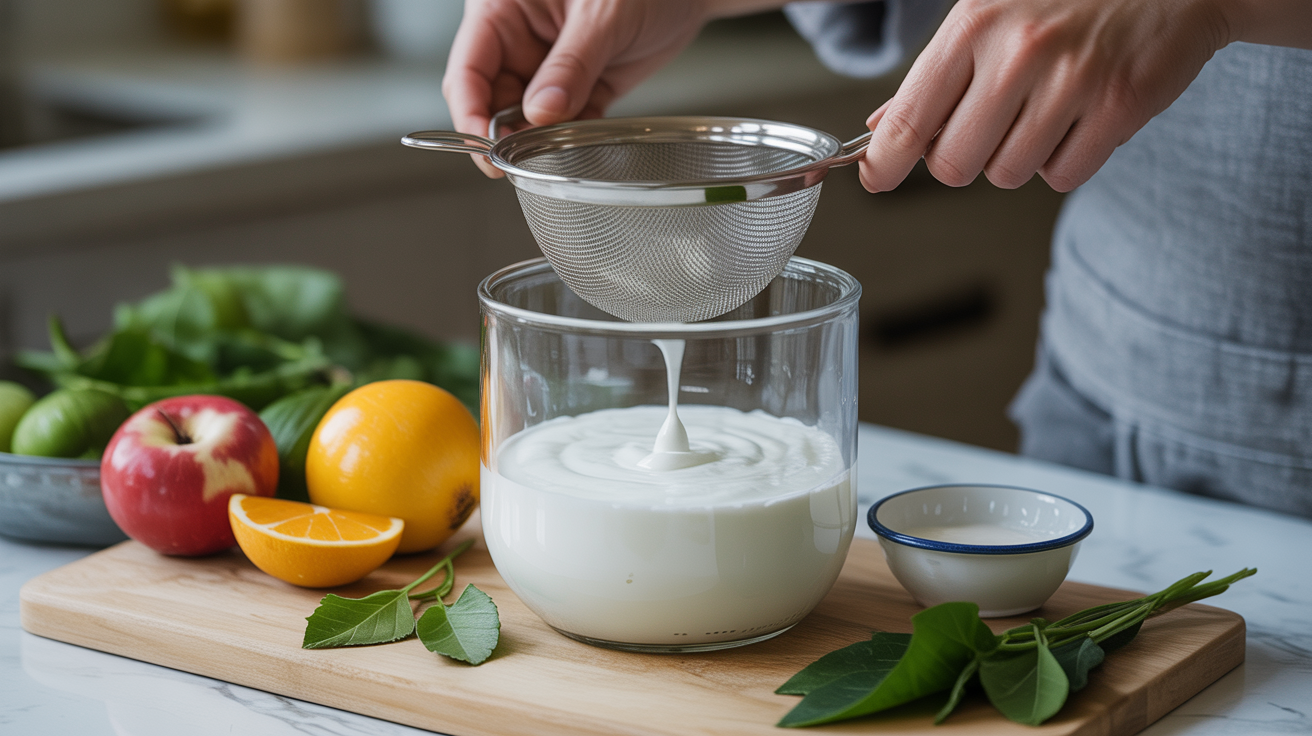
Greek yogurt is just regular yogurt with the liquid strained out. That's it. The thick, creamy texture you buy at the store comes from removing the watery whey that sits between the proteins, not from a special culture, a different animal's milk, or any magic ingredient. If you have a container of plain yogurt, a strainer, and something to line it with, you can make Greek yogurt at home in under two hours.
What Makes Greek Yogurt Thick
Regular yogurt is roughly 85–88% water. Most of that water is bound up in a protein gel, but a portion, called whey, drains off freely when you give it a path to escape. Straining removes that free whey, concentrating the protein and fat that remain. The longer you strain, the thicker the result.
This is also why store-bought Greek yogurt has more protein per serving than regular yogurt: the same amount of milk produces less final product. One quart of regular yogurt typically yields around two cups of Greek yogurt, depending on how long you strain and how thin the original batch was.
The fat content of your milk matters too. Whole-milk yogurt strains into something rich and almost spreadable. Low-fat yogurt strains into something denser but drier. Both work fine; just know what you're starting with.
How to Strain Yogurt at Home
You don't need specialized equipment. A fine-mesh strainer and cheesecloth (or a clean, thin kitchen towel, or even a few layers of paper towel in a pinch) is all it takes.
What You'll Need
- Plain yogurt, any fat level, at least 2 cups, since you'll lose volume
- A fine-mesh strainer or colander
- Cheesecloth, muslin, or a clean lint-free kitchen cloth
- A bowl large enough to hold the strainer above its base
- Plastic wrap or a lid
The Method
- Set the strainer over the bowl, making sure the bottom of the strainer sits above the base, you need room for whey to drip without the strainer sitting in it.
- Line the strainer with two to three layers of cheesecloth, or drape a clean cloth inside so it hangs over the edges.
- Pour or spoon your yogurt into the lined strainer.
- Cover with plastic wrap or a plate and transfer the whole setup to the refrigerator.
- Let it drain until it reaches your preferred thickness (see the table below).
- Scrape the thickened yogurt from the cloth into a clean jar. Store it in the fridge for up to two weeks.
Always strain in the refrigerator. Leaving yogurt on the counter to drain is a food-safety risk, the temperature rise encourages the wrong bacteria to grow alongside the cultures you want. The fridge takes only a little longer and keeps the yogurt safe.
Straining Time and What You Get
The same starting yogurt can become three different things depending on how long you let it drain.
| Straining Time | Result | Texture | Good For |
|---|---|---|---|
| 1–2 hours | Light Greek yogurt | Thick but still pourable | Breakfast bowls, smoothies, sauces |
| 2–4 hours | Classic Greek yogurt | Spoonable, holds its shape | Parfaits, dips, baking substitute |
| 8–12 hours (overnight) | Thick Greek / near-labneh | Very dense, almost cream-cheese-like | Spread on toast, mezze platter |
| 24–48 hours | Labneh (yogurt cheese) | Firm enough to roll into balls | Drizzled with olive oil, herb-coated |
Check at the one-hour mark by tilting the bowl, if whey is collecting and the yogurt has pulled away from the cloth slightly, it's working. Check every hour or so after that until you like what you see.
Adjusting Thickness After the Fact
If you strain too long and the yogurt comes out stiffer than you wanted, stir a spoonful or two of the reserved whey back in. It loosens right up.
What to Do With the Leftover Whey
Don't throw out the whey. It's slightly tangy, full of protein and lactose, and genuinely useful in the kitchen.
- Baking: Swap it 1:1 for water or buttermilk in bread, pancakes, muffins, or pizza dough. It adds a mild tang and helps with browning.
- Smoothies: A quarter cup blended into a fruit smoothie adds protein without changing the flavor much.
- Cooking grains: Use it instead of water to cook oatmeal, rice, or quinoa for a subtle savory-sour note.
- Soaking beans or grains: Traditional fermentation recipes sometimes call for an acid soak; whey works here.
- Garden fertilizer: If you have more than you can use, dilute it with water and pour it around acid-loving plants like tomatoes or blueberries.
Whey keeps in the fridge for about a week in a sealed jar, or you can freeze it in ice cube trays for longer storage.
Tips for Better Results
Start with good plain yogurt. The only ingredient is yogurt, so its quality matters. Look for one with live active cultures and no added thickeners like pectin or gelatin, those block the straining process and you'll be left with a rubbery result rather than something creamy.
Don't skip the fridge. It's tempting to leave the setup on the counter and check on it in an hour. Don't. Even at cool room temperature, yogurt can develop off flavors and pathogens if left out too long during straining.
Use the right liner. Cheesecloth sold for crafts (not food grade) can shed fibers. Buy food-grade cheesecloth, or use an old but clean flour-sack towel. Avoid anything with a strong detergent smell, it'll transfer to the yogurt.
Make a big batch. The effort is the same for one cup as for a quart. Since straining always reduces volume, it's worth straining a larger batch so you end up with a meaningful amount.
If your yogurt isn't firm to begin with, straining will still thicken it, but you'll lose more volume. A runny starting yogurt might need an extra hour compared to a firm one. For a deep dive into why yogurt sometimes comes out too thin in the first place, this guide on why your homemade yogurt won't set and how to fix it covers the common culprits.
And if you're making your own yogurt from scratch before straining, the complete beginner's guide to homemade yogurt walks through the whole process from heating milk to incubation.
Frequently Asked Questions
Can I use any kind of yogurt for straining?
Plain yogurt works best. Flavored yogurts can work in a pinch, but any fruit pieces or added thickeners will end up in your strained yogurt and affect the texture. Avoid yogurts with pectin, modified starch, or gelatin listed in the ingredients, those gels don't release whey the way a clean, culture-thickened yogurt does.
How long does homemade Greek yogurt last?
Two weeks in the fridge in a sealed container is a reasonable guideline. Strained yogurt actually keeps a little longer than unstrained because removing the extra whey reduces the water activity that bacteria need to grow. If it smells off or develops mold, discard it.
Can I strain yogurt at room temperature?
Technically yes, but it's not recommended. Room temperature speeds up the whey release, but it also raises the risk of unwanted bacterial growth. The fridge is slower but safe. For straining times of an hour or less, room temperature is probably fine, for longer sessions (overnight, 24 hours), keep it refrigerated.
My strained yogurt tastes more sour than store-bought. Why?
Straining concentrates everything in the yogurt, including lactic acid. More sourness is normal and expected. If it's sharper than you like, try straining for less time, or start with a milder yogurt. Whole-milk yogurts tend to taste less sharp than low-fat versions because the fat softens the acidity.
What's the difference between Greek yogurt and labneh?
Both start the same way, plain yogurt strained through cloth. The difference is time. Greek yogurt is strained for a few hours and stays soft and spoonable. Labneh is strained for 24 hours or more until it's firm enough to shape by hand. It's a staple in Middle Eastern cooking and can be rolled in herbs, drizzled with olive oil, or spread like cream cheese. If you enjoy making Greek yogurt, labneh is just one more overnight drain away.
If you want to branch out from strained dairy into other cultured drinks, milk kefir made from grains is a natural next step, it uses a similar hands-off fermentation approach but produces a pourable, probiotic-rich drink instead.