Cultured Dairy
Why Your Homemade Yogurt Won't Set (and How to Fix It)
Runny homemade yogurt is almost always caused by one of four things: wrong temperature, weak starter, not enough time, or skipping the milk-heat step.

You opened the lid after eight hours and found something closer to warm milk than yogurt. Frustrating, but fixable. Homemade yogurt fails to set for a handful of predictable reasons: the incubation temperature was off, the starter was too weak or too old, the batch didn't incubate long enough, or you skipped heating the milk first. One of those four is almost certainly your culprit.
Read through each section below, match it to what happened in your kitchen, and try again. Most failed batches are one small adjustment away from success.
At a Glance
- Incubation temperature is the single most common cause of runny yogurt. Target 108-112°F (42-44°C) for the whole incubation window, not just when you add the starter.
- Heat milk to 180°F (82°C) before cooling and culturing. Skipping this step is the second most common cause of a thin set.
- Give it at least 6 hours, and usually 8 to 12, before you check. Opening early and moving a barely-set batch to the fridge is a common beginner mistake.
- Use 2 tablespoons of fresh, live-culture starter per quart of milk. Homemade starter weakens after roughly 5 to 6 reused batches and needs refreshing from a commercial source.
- A runny batch is not ruined. Re-incubate it if it's still warm, or strain it into thick Greek-style yogurt if it's already cooled.
Temperature Problems
Temperature is the single most common cause of runny yogurt. The bacteria responsible for setting yogurt (mainly Lactobacillus bulgaricus and Streptococcus thermophilus) are fussy about heat. They need a warm, steady environment to work.
Incubation Too Cool
Yogurt cultures need to stay between roughly 100°F and 115°F (38-46°C) throughout the incubation window. Below 100°F, bacterial activity slows to a crawl. Below 90°F, it can stop almost entirely.
Common culprits: an oven that cools off too quickly after you turn it off, a yogurt maker with a weak heating element, or a countertop spot that gets a draft.
Fix: Use an instant-read thermometer to verify your incubation environment, not just the milk temperature when you add the starter. A probe left in a cup of water inside your oven or yogurt maker will tell you exactly what the bacteria are experiencing. Aim for 108-112°F (42-44°C) as your target sweet spot. This range matches what Washington State University Extension's guide to home yogurt-making recommends: incubation temperature that drifts above or below 108-112°F is the single most-cited cause of yogurt that never firms up.
Incubation Too Hot
Overheating kills the cultures. If your milk was still above 115°F (46°C) when you stirred in the starter, or if your incubation environment runs hotter than that, the bacteria were dead before they had a chance to work.
Fix: After heating and cooling your milk, check its temperature before adding the starter. It should feel comfortably warm on your wrist, not hot. A reading of 108-112°F is ideal. If your oven or yogurt maker tends to run hot, prop the door open slightly or use a lower setting.
Starter Problems
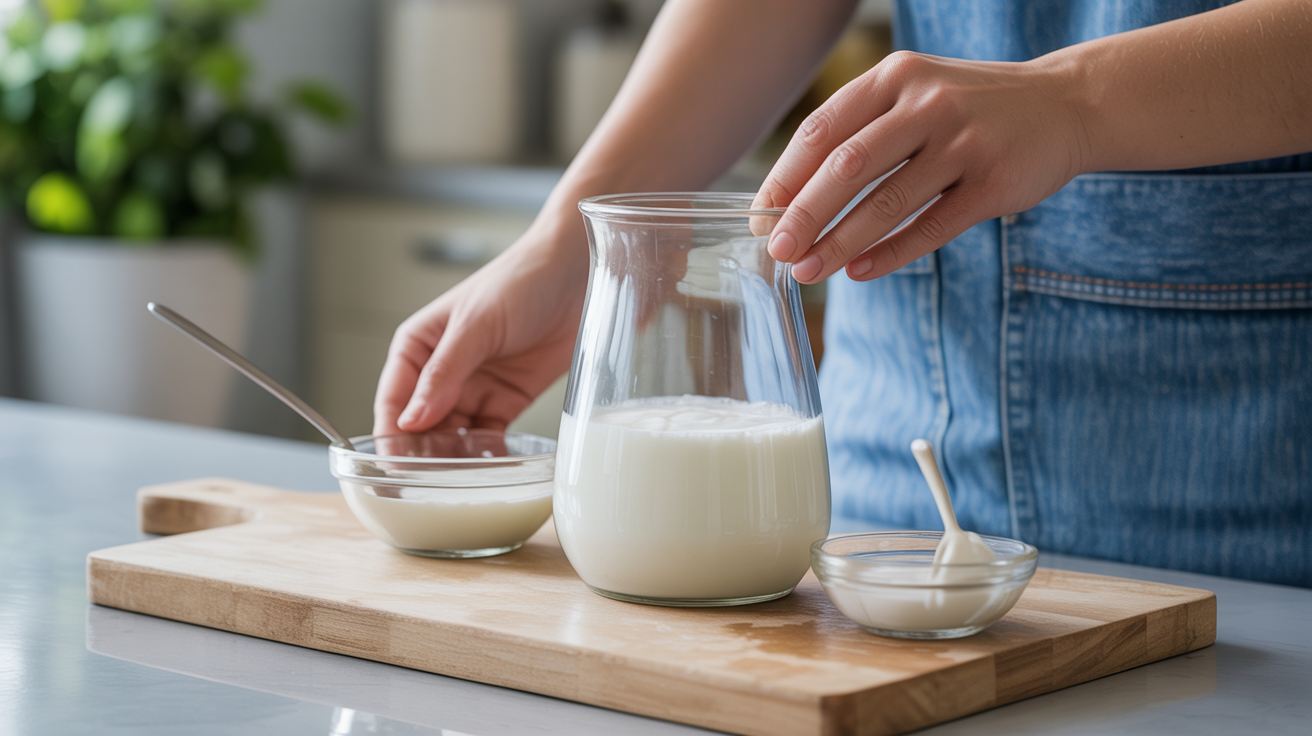
The starter is what seeds the milk with live cultures. If those cultures are weak, too few, or altogether dead, the milk won't set.
Dead or Inactive Starter
Store-bought yogurt that has been open for a week or more, or that was pasteurized after its cultures were added, may not have enough viable bacteria to seed a new batch. Frozen starter that wasn't thawed properly can also lose potency.
Fix: Use fresh, plain yogurt with "live and active cultures" clearly stated on the label. Whole-milk yogurt tends to work better than low-fat. If you're using a culture packet, check the expiration date and store unused portions in the freezer in small portions.
Too Little Starter
Under-seeding leaves the milk without enough bacteria to colonize and acidify it in a reasonable time frame.
Fix: Use 2 tablespoons of starter per quart (roughly 1 liter) of milk. More is not always better (too much can actually produce a thin or oddly tangy result), but staying in the 2-3 tablespoon range per quart is reliable for most starters.
Overusing Old Homemade Starter
Yogurt reserved from a previous batch works well for a few generations, but the bacterial balance shifts over time. After four to six cycles, the cultures can weaken or become dominated by less active strains. WSU Extension's guide puts a slightly tighter number on it: refresh your starter from a commercial source every 5 to 6 batches, since bacterial activity measurably declines past that point even if the yogurt still looks fine going into the jar.
Fix: Every few weeks, refresh your starter from a commercial source. See our complete beginner's guide to homemade yogurt for a full walkthrough of the cycle.
Incubation Too Short
Even with perfect temperature and a strong starter, yogurt needs time. The bacteria have to multiply, acidify the milk, and trigger protein coagulation. That process takes a minimum of 6 hours, and often 8 to 12.
Cutting It Short
Checking early and moving the jar to the refrigerator before the yogurt has fully set is a common mistake, especially on a first batch when you're not sure what to expect.
Fix: Leave the yogurt alone for at least 8 hours before checking. Resist the urge to jiggle or open the container, since physical disturbance during setting can break the gel. If you prefer a tangier result or are working in a slightly cooler environment, 10-12 hours often gives a firmer set.
Skipping the Milk-Heat Step
Many recipes instruct you to heat the milk to around 180°F (82°C) before cooling it and adding the starter. This step is not optional for best results.
Why Heating Matters
Heating milk denatures the whey proteins, particularly beta-lactoglobulin, which allows them to bond with the casein proteins during culturing. The result is a thicker, more cohesive gel. Milk that goes into the incubator unheated often produces a thinner, more fragile set, even when the cultures are perfectly healthy.
There is also a food safety dimension: heating to 180°F pasteurizes the milk (important if you're using raw milk) and kills off competing microorganisms that could interfere with the cultures.
Fix: Always heat your milk to 180°F (82°C), stirring occasionally to prevent scorching. Then cool it to 108-112°F before adding the starter. A double boiler or a heavy-bottomed saucepan over medium heat works well. An instant-read thermometer removes all guesswork. Holding the milk at 180°F for a bit longer changes the outcome, too: the WSU Extension guide notes 10 minutes at temperature gives a thinner yogurt and 20 minutes gives a noticeably thicker one, so if your last batch set but felt too loose, try holding it the full 20 minutes next time before you touch the starter ratio.
Ultra-Filtered Milk
Ultra-filtered milk (labeled UF milk or sometimes "ultra-filtered" on the carton) has had most of its lactose removed or reduced, and the protein concentration is altered. The bacteria in yogurt starter feed on lactose, so a significantly reduced lactose supply can slow or stall fermentation.
Fix: Use standard whole milk or 2% milk. Check the label if you're unsure; ultra-filtered milks are often marketed for their higher protein content and lower sugar. They can produce acceptable yogurt but may need a longer incubation time or a larger starter ratio.
Quick-Reference: Cause and Fix
| Cause | What Went Wrong | Fix |
|---|---|---|
| Too cool during incubation | Bacteria slow below 100°F | Verify env temp with thermometer; target 108-112°F |
| Too hot when starter added | Cultures killed above 115°F | Cool milk to 108-112°F before adding starter |
| Weak or expired starter | Not enough live bacteria | Use fresh yogurt with live cultures; check dates |
| Too little starter | Under-seeded milk | Use 2 Tbsp starter per quart of milk |
| Incubation cut short | Gel didn't fully form | Incubate at least 8 hours undisturbed |
| Skipped milk-heat step | Whey proteins not denatured | Heat milk to 180°F, then cool before culturing |
| Ultra-filtered milk | Low lactose starves bacteria | Switch to standard whole or 2% milk |
Choosing an Incubation Method
The temperature target doesn't change, but how you hold it does, and some methods drift more than others.
| Method | How to hold temperature | Best for |
|---|---|---|
| Oven (light or pilot only) | Pre-warm to 200°F, turn off, cycle on briefly if it drops below 100°F | Cooks who already own a thermometer and check periodically |
| Insulated cooler | Fill with warm water, nest jars in the bath | Hands-off batches; holds heat for hours without power |
| Yogurt maker | Built-in heating element holds a set temperature | Beginners who want a set-and-forget option |
| Crockpot (on warm, wrapped in a towel) | Heat milk in the pot, cool, add starter, wrap and hold | Large batches, one-pot convenience |
Whichever method you use, the failure mode is the same: an unmonitored heat source that drifts outside 108-112°F for hours without you noticing. A five-dollar probe thermometer left in the incubator solves this regardless of which method you pick.
How to Rescue a Runny Batch
A thin batch is not a waste. You have two solid options.
Re-incubate it. If the yogurt is still warm and you caught the problem within the first 10 hours, put it back in a warm spot and give it another 4-6 hours. Make sure the environment is holding 108-112°F. This works best when the issue was incubation time or mild temperature drift, not a dead starter.
Strain it into Greek yogurt. Pour the runny yogurt into a colander lined with cheesecloth or a nut milk bag set over a bowl. Refrigerate for 2-4 hours. The whey drains away, leaving behind a thicker, creamier product. A very thin batch may need overnight straining. This is exactly how Greek yogurt is made commercially, and the result is perfectly delicious. Our guide to straining Greek yogurt at home covers the process in detail.
Neither option erases the issue for your next batch, so once you've rescued this one, identify which step went wrong before you try again.
Frequently Asked Questions
Can I use non-dairy milk to make yogurt?
Yes, but it behaves differently. Oat, almond, and coconut milks don't contain the same proteins as cow's milk, so they don't set the same way from bacterial action alone. You typically need to add a thickener (tapioca starch, agar, or pectin) along with a dairy-free starter. The temperature and time principles still apply, but the process has more variables. If non-dairy yogurt is your goal, look for a recipe written specifically for the milk you're using.
My yogurt was firm in the jar but turned runny when I stirred it. Is it ruined?
No. This is called syneresis (or sometimes "weeping"), and it's normal. Stirring breaks the gel structure, which releases whey. Simply stir the whey back in or pour it off, depending on your preference. The flavor and safety are not affected. If you want a consistently thick texture after stirring, straining or adding a small amount of milk powder (about 2 tablespoons per quart) before heating gives a more stable result.
How do I know if my yogurt is safe to eat if it didn't set properly?
Smell and appearance are your guides. Fresh, properly handled yogurt that simply failed to set will smell clean and mildly tangy. Discard it if you see pink, orange, or black mold; an off-putting or putrid smell; or sliminess that isn't just thin whey. If you followed safe food handling (clean equipment, pasteurized milk or properly heated raw milk, and refrigeration within 12-14 hours), a thin batch is almost always safe, just not the texture you wanted. When in doubt, throw it out.
Does whole milk make thicker yogurt than skim?
Generally, yes. The fat in whole milk contributes to a creamier, more cohesive texture. Skim milk produces a thinner, slightly more watery result unless you compensate by adding nonfat dry milk powder or by straining the finished yogurt. For beginners, starting with whole milk removes one variable and tends to produce a more forgiving batch.
Can I make yogurt with kefir as my starter?
Technically yes, but the result will taste different and may have a looser texture than standard yogurt. Kefir contains a broader mix of bacteria and some yeasts, which creates a slightly fizzy, tangier product. If you're curious about kefir on its own terms, our guide to making milk kefir from grains is a better starting point than using kefir as a yogurt starter.
How many times can I reuse homemade yogurt as starter before it stops working well?
Plan on 5 to 6 batches before you go back to a fresh commercial starter. Each generation carries forward whichever bacterial strains happened to dominate the last batch, and that balance drifts with every cycle. You'll usually notice the decline before a batch fails outright: slower set times, a milder tang, or a slightly grainier texture are all early signs it's time to refresh rather than push for one more round.
I checked my yogurt at 6 hours and it looked done, but it fell apart when I moved it. What happened?
It probably wasn't fully set, just firm enough on the surface to look ready. The gel continues to strengthen through the later hours of incubation even after it stops looking obviously liquid. Give it the full 8 hours next time, and once you do move it, transfer it gently and refrigerate it undisturbed for a couple of hours before serving. That resting period in the fridge finishes firming up a batch that seemed borderline at the end of incubation.