Tools & Ingredients
How to Sterilize and Clean Fermentation Equipment
Learn when to clean vs. sanitize fermentation jars, what temperatures matter, and why antibacterial soap is your ferment's enemy.
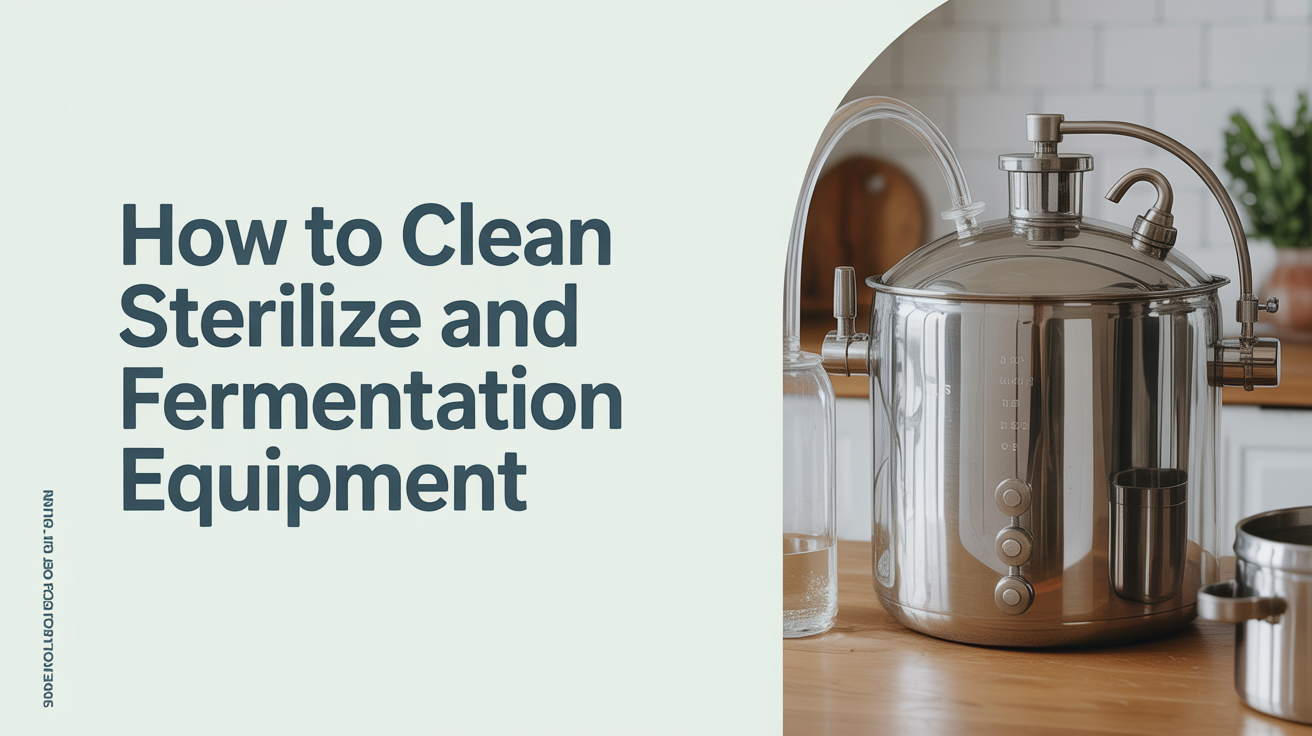
A batch of sauerkraut does not need a sterile jar. A jar that still has old garlic residue in it, though, will throw off your whole ferment. Understanding what "clean" actually means in a fermentation context saves you from both under-preparing (a grimy jar) and over-preparing (obsessing over sterilization that can actually backfire on you).
The short version: for most vegetable ferments, clean equipment is the goal. For cultured dairy and fizzy drinks like kombucha or water kefir, sanitizing gives you a better starting position. Actual sterilization is almost never necessary in home fermentation, and the wrong cleaning products can do more harm than skipping the cleaning step altogether.
What "Clean," "Sanitize," and "Sterilize" Mean in Practice
These three words get used interchangeably online, but they describe meaningfully different levels of microbial reduction.
Cleaning removes visible dirt, food residue, and most surface microbes. Soap and water, or a hot dishwasher cycle, does this well. A visibly clean jar has had its microbial load dramatically reduced just by scrubbing and rinsing.
Sanitizing goes further and reduces the microbial population to a safe level, though it does not eliminate everything. This is what commercial brewers and cheesemakers do with heat or food-safe no-rinse sanitizers. For home fermenters, sanitizing is most useful when the environment you are creating is delicate, like a kombucha brew or a batch of kefir.
Sterilizing kills everything, including heat-resistant spores. This requires either an autoclave or dry heat over 320°F (160°C) for extended periods. Home canners deal with sterilization for certain low-acid foods. Home fermenters almost never need it. In fact, trying to sterilize a fermentation environment can work against you by removing the trace bacteria that support your culture's dominance.
Do You Need to Sterilize Fermentation Equipment?
For vegetable ferments, the answer is almost always no. Lacto-fermentation is driven by lactic acid bacteria (LAB) that live naturally on the surface of fresh vegetables. The salt you add creates a brine that selects for those bacteria while discouraging harmful ones. A clean jar supports that process. A sterile jar offers no meaningful advantage and adds unnecessary work.
Kombucha and water kefir sit in the middle. The SCOBY or grains you add introduce a dominant culture, but if you are starting from scratch or your culture is weak, sanitizing your jar first gives the beneficial organisms a head start over anything that might have been living on the glass.
Cultured dairy, including yogurt and kefir, benefits most from sanitizing. The warm temperatures you use for culturing, around 100 to 110°F (38 to 43°C), also happen to be comfortable for a wide range of microbes, not just the ones you want. Starting with a sanitized vessel matters more here than it does for a cold-counter sauerkraut.
You can read more about which vessels to reach for in fermentation equipment every beginner needs.
How to Clean Fermentation Jars the Right Way
For vegetable ferments and most general use, you have a few solid options.
Hot water and dish soap. Wash thoroughly with unscented dish soap, rinse several times to remove all soap residue, then rinse once more with hot water. Let the jar air dry or dry it with a clean towel. Soap residue is a real problem: even a thin film of antibacterial soap can suppress the LAB you are counting on to drive your ferment. Rinse until you smell nothing on the glass.
The dishwasher. A hot dishwasher cycle works well for cleaning. Avoid dishwasher pods or rinse aids that leave a protective coating on glassware. If your dishwasher has a sanitize cycle, usually around 150°F (65°C), that is useful for dairy ferments. Consider skipping the heated dry cycle and air drying instead to avoid any residue issues.
Hot water rinse only. For vegetable ferments going into a jar that was just used for another healthy ferment and looks clean, a thorough rinse with very hot water, ideally above 140°F (60°C), is often sufficient. You are not trying to eliminate everything, just remove debris and bring surface bacteria down to a manageable level.
For kombucha or dairy ferments, add a sanitizing step after the initial wash:
- No-rinse sanitizer (Star San or similar): Follow the dilution instructions on the label, coat the inside of the jar, let it sit for the full contact time, then drain. Do not rinse after. The small amount of foam left behind will not harm your culture.
- White vinegar rinse: For kombucha jars specifically, a rinse with undiluted white vinegar after washing is a simple traditional approach. It lowers the pH of the glass surface slightly and makes the environment less welcoming to competing microbes.
- Boiling water: Pour boiling water carefully into the jar, let it sit for two to three minutes, then pour it out. No chemicals, works well, and is a reliable step when you want something simple.
The Soap and Antibacterial Problem
Standard dish soap is fine as long as you rinse it out completely. The issue is residue. Soap molecules are designed to disrupt cell membranes, which is useful against pathogens but less useful when you are trying to keep a living culture healthy.
Antibacterial soaps are the bigger concern. Many contain compounds like benzalkonium chloride that linger on surfaces even after rinsing. For vegetable ferments that depend on LAB, even trace amounts can knock back the population you need. If you ferment regularly, keeping a non-antibacterial dish soap at your fermentation station is worth doing.
Fragrance is a lower-risk issue but still worth avoiding near fermentation jars, particularly for dairy. Stick to unscented products when you can.
Your hands matter too. Wash them with plain soap and warm water before touching your vegetables, your jar, or anything that will be submerged. You do not need to glove up, but you want clean hands that are not coated in lotion, hand sanitizer, or residue from other food prep.
Setting Up a Safe Work Area
A clean jar in a messy workspace only solves part of the problem. Before you pack your crock or jar, wipe your counter with a clean, damp cloth. If you have been handling raw meat on that surface recently, wash it with soap and water and let it dry before you work.
Keep your fermentation area away from your compost bin, any open bags of flour (wild yeast can drift), and anything heavily fragrant. A clean, neutral surface keeps unintended things from landing in your jar during packing.
For more on the gear that goes inside your jars, see fermentation weights and airlocks explained and do you need a fermentation crock or will a jar work.
Recognizing Problems: Kahm vs. Mold and When to Throw It Out
Even with clean equipment, things sometimes go sideways. Knowing what to look for keeps you and your household safe.
Kahm yeast is a thin, flat, white or off-white film that can form on the surface of vegetable brines. It looks a bit like a skin or a milky coating. Kahm is not dangerous, though it can add a slightly yeasty or off flavor if left alone. You can scrape it off and continue the ferment if the brine smells pleasantly sour and nothing else looks or smells wrong.
Mold is different. It will be fuzzy or powdery, may appear in multiple colors (white, gray, green, black, or pink), and typically forms above the brine line on exposed vegetables. When you see mold, throw out the batch. Do not scrape it off and continue. The visible mold is only the surface of what is present, and some mold species produce toxins that will not be removed by removing the fuzzy layer.
The rule is simple: when in doubt, throw it out. A jar of vegetables is not worth a food safety risk, and you can start a new batch within the hour.
Frequently Asked Questions
Do I need to boil my jars before fermenting vegetables?
No. Boiling jars is a step in water-bath canning, where you are creating a sealed, shelf-stable product. Fermentation relies on living bacteria, not on eliminating all microbes first. A clean, well-rinsed jar is all you need for sauerkraut, pickles, or kimchi.
Can I reuse a jar from a previous ferment without washing it?
You can, but you should at minimum rinse it very thoroughly with hot water. Old brine, residue from a previous batch, or dried-on vegetable matter can introduce competing microbes or affect the flavor of your new ferment. A quick wash takes two minutes and is worth doing.
Is antibacterial hand soap okay to use before I pack a ferment?
Rinse very well if you do. Antibacterial compounds can transfer from your hands to your vegetables or jar and interfere with LAB activity. Plain dish soap and warm water for hand washing is a better choice before fermentation.
How do I know my sanitizing step actually worked?
You will not be able to see it, but the standard no-rinse sanitizers sold for brewing have been tested to reduce microbial populations on contact surfaces to safe levels when used at the correct dilution. Follow the label instructions, respect the contact time, and trust the process.
My jar still smells like the last thing I fermented in it. Should I use it?
A faint scent usually washes out. If the smell lingers after a thorough wash, soak the jar overnight in a solution of a few tablespoons of baking soda per quart of warm water, then rewash and rinse. A jar that still smells strong after that treatment is worth retiring from fermentation use and repurposing for dry storage instead.