Fermented Vegetables
How to Store Fermented Vegetables After Fermenting
Learn how to store fermented vegetables safely: cold storage temps, fridge shelf life by ferment type, and the signs that tell you when to toss a batch.
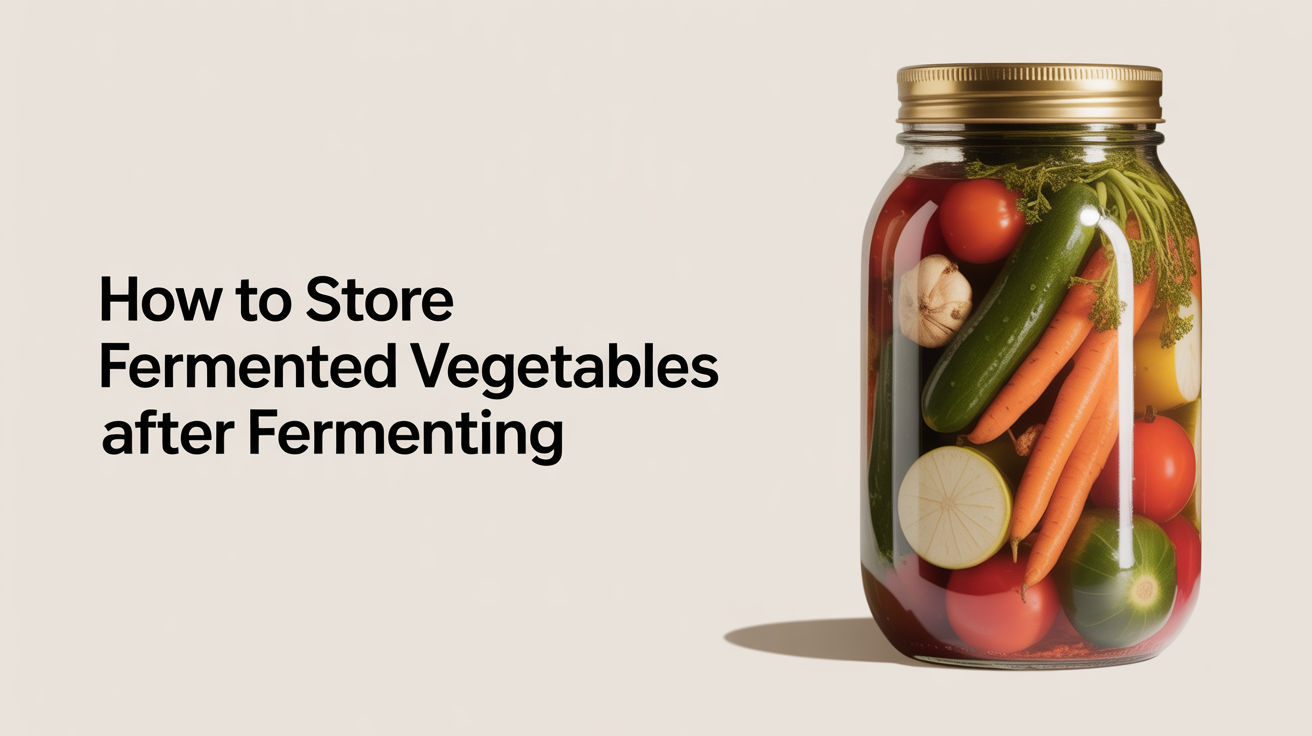
You opened your jar, tasted your ferment, and it's exactly where you want it. Now what? Getting to this point takes patience, but knowing how to store fermented vegetables properly is what keeps that work from going to waste. Storage is not complicated, but a few details matter more than most guides let on: temperature, submersion, and knowing the difference between a harmless film and a batch to discard.
This guide covers everything that happens after fermentation ends. Whether you have a finished batch of sauerkraut, a jar of fermented pickles, or a crock of kimchi, the same core principles apply.
Moving Your Ferment to Cold Storage
Once a ferment reaches the flavor you want, cold slows everything down. At room temperature, active fermentation continues, and the taste keeps shifting. Beneficial bacteria do not stop working; they just work faster in warmth. Moving your jar to a cold environment puts the brakes on that process without killing the culture.
Your main options are the refrigerator, a root cellar or unheated basement, and (with some trade-offs) the freezer.
Refrigerator: The most common and most practical choice for most home fermenters. A standard fridge sits between 35 and 38 degrees F (1 to 3 degrees C). At that temperature, fermentation slows to nearly a standstill. You get consistent, predictable storage with easy access.
Root cellar or cold room: If you have an unheated basement, a root cellar, or an outdoor cold storage space, this can work well for larger batches. The target range is 32 to 50 degrees F (0 to 10 degrees C). Above 50 degrees F (10 degrees C), fermentation stays active enough that your sauerkraut or pickles will keep souring noticeably over weeks. Below freezing, you get the same texture trade-offs as a freezer (more on that below). The sweet spot for cold room storage is around 38 to 45 degrees F (3 to 7 degrees C), cool enough to slow things significantly without freezing.
A note on timing: Transfer the ferment to cold storage before it overshoots your preferred sourness level. It is much easier to stop a ferment slightly early and let it continue slowly in the fridge than to try and rescue something that has gone too sour.
Fermented Food Shelf Life: What to Expect by Type
How long do fermented vegetables last? The honest answer is that it depends on the ferment, the salt percentage, and how well you keep it submerged. Here is a practical breakdown:
Sauerkraut: One of the most stable fermented foods you can make. Storing sauerkraut in the fridge, properly submerged under brine, gives you a shelf life of six months to a year or longer. High salt content and high acidity work together to make it very resistant to spoilage. Older sauerkraut gets softer and more sour, but it does not become dangerous if it stays submerged and shows no signs of mold.
Fermented pickles (lacto-fermented cucumbers): These are a bit more delicate than sauerkraut. Expect three to six months in the fridge under good conditions. Cucumbers have a higher water content and tend to soften over time. They are best in the first month or two.
Kimchi: Kimchi ferments relatively quickly and keeps evolving in the fridge. Freshly made kimchi is bright and crunchy; older kimchi gets sourer and softer. It is safe to eat for six months to a year when refrigerated and submerged, but the texture changes significantly after the first two to three months. Over-fermented kimchi works well cooked (kimchi jjigae, kimchi pancakes) even when it is past its prime for eating fresh.
Mixed vegetable ferments: Carrots, beets, cauliflower, and similar vegetables usually land in the three to six month range. Salt percentage matters a lot here. A brine at 2 to 3 percent salt by weight keeps vegetables firmer and safer longer than a low-salt ferment.
Keeping It Safe During Storage: Submersion and Watching for Problems
The single most important rule for storing fermented vegetables is this: keep the vegetables under the brine at all times, even in the fridge.
Lactic acid fermentation creates an acidic, oxygen-poor environment that keeps harmful bacteria out. That protection disappears the moment vegetables are exposed to air. In the fridge, the risk of dangerous spoilage is low because of the cold, but surface mold can still develop on exposed vegetables.
What to do: Use a small weight or a folded piece of cabbage leaf to press vegetables below the brine surface before sealing the jar. Check the level every week or so, especially if the jar is not tightly sealed and brine can evaporate slowly. If the brine level drops, mix a fresh batch of non-chlorinated water with salt (around 2 percent by weight, about 1 teaspoon of fine sea salt per cup of water) and top it off.
Kahm yeast vs. mold: You may see a thin, flat, white or off-white film on the surface of the brine. This is usually kahm yeast, a harmless but unsightly organism that shows up when vegetables are slightly exposed to oxygen. It does not make the ferment unsafe. Skim it off with a spoon, make sure your vegetables are submerged, and move on. Kahm has a flat, smooth or slightly wrinkled texture.
Mold looks different. It is fuzzy, often circular, and may be green, black, pink, or blue. If you see fuzzy mold on the brine surface or on the vegetables, do not just skim it off and eat the batch. The visible growth is only part of the picture, and you cannot tell how far it has spread. When in doubt, throw it out. Fermented vegetables are cheap to make again; food poisoning is not worth the risk.
Freezing Fermented Vegetables: Possible, but With Trade-Offs
Freezing is an option for long-term storage, but it comes with a clear trade-off: freezing kills most of the live bacteria in a ferment. The sour flavor stays intact, but the probiotic content largely disappears after thawing.
The texture also changes. Ice crystals break down cell walls, so frozen and thawed sauerkraut or kimchi comes out soft rather than crunchy. This is fine for cooking purposes (soups, stews, stir-fries), but it is not what most people want when eating fermented vegetables straight from the jar.
If you want to freeze a batch, portion it into freezer-safe containers or bags, leave a little headspace for expansion, and freeze for up to a year. Thaw in the fridge overnight before using.
For most home fermenters, the fridge handles shelf life well enough that freezing is rarely necessary. A quart jar of sauerkraut will last most households six months or more in the refrigerator, which covers just about any real-world situation.
Frequently Asked Questions
Do fermented vegetables need refrigeration? Yes, eventually. Room-temperature ferments are stable during active fermentation because the acidity keeps harmful bacteria at bay, but once fermentation slows and you want to stop the process, cold storage is the right move. Without refrigeration, the ferment keeps souring and softening until it becomes unpleasantly mushy or the brine evaporates.
Can I store fermented vegetables in a plastic container? Glass is strongly preferred. Plastic can absorb odors, and some plastics are not rated for acidic foods over long periods. Wide-mouth mason jars are inexpensive, easy to clean, and work well for both fermentation and storage. If you need to use plastic, choose food-grade containers rated for acidic use.
How do I know if my ferment has gone bad? Trust your senses. A normal ferment smells sour and tangy, like vinegar or sourdough. Off smells, rotten or putrid odors, or anything that makes you pull back instinctively are signs to discard the batch. Fuzzy mold (not flat white kahm film) is a hard stop. If the vegetables have turned slimy in a way that is different from the brine, that is another reason to toss it. When in doubt, throw it out.
What is the best container size for fridge storage? Smaller jars are easier to manage than large crocks. A quart jar is ideal for most households. Once a jar is opened and you are using from it regularly, the ferment tends to stay in good shape because you are keeping it moving. Large batches in a half-gallon jar work fine too, as long as you keep the vegetables submerged and use a lid that is not completely airtight (ferments release small amounts of CO2 even in the fridge).
Can I add fresh vegetables to an existing batch in the fridge? This is generally not recommended. The fresh vegetables have not been fermented and can introduce surface bacteria into your acidic environment. More practically, fresh additions tend to go soft quickly in the acidic brine without the fermentation process to preserve them properly. Better to start a fresh jar if you want more.