Kombucha & Drinks
Kombucha vs Water Kefir: Which One Should You Brew First?
Kombucha vs water kefir compared on cost, equipment, time, and forgiveness, so you can pick the easiest fermented drink to start brewing this week.
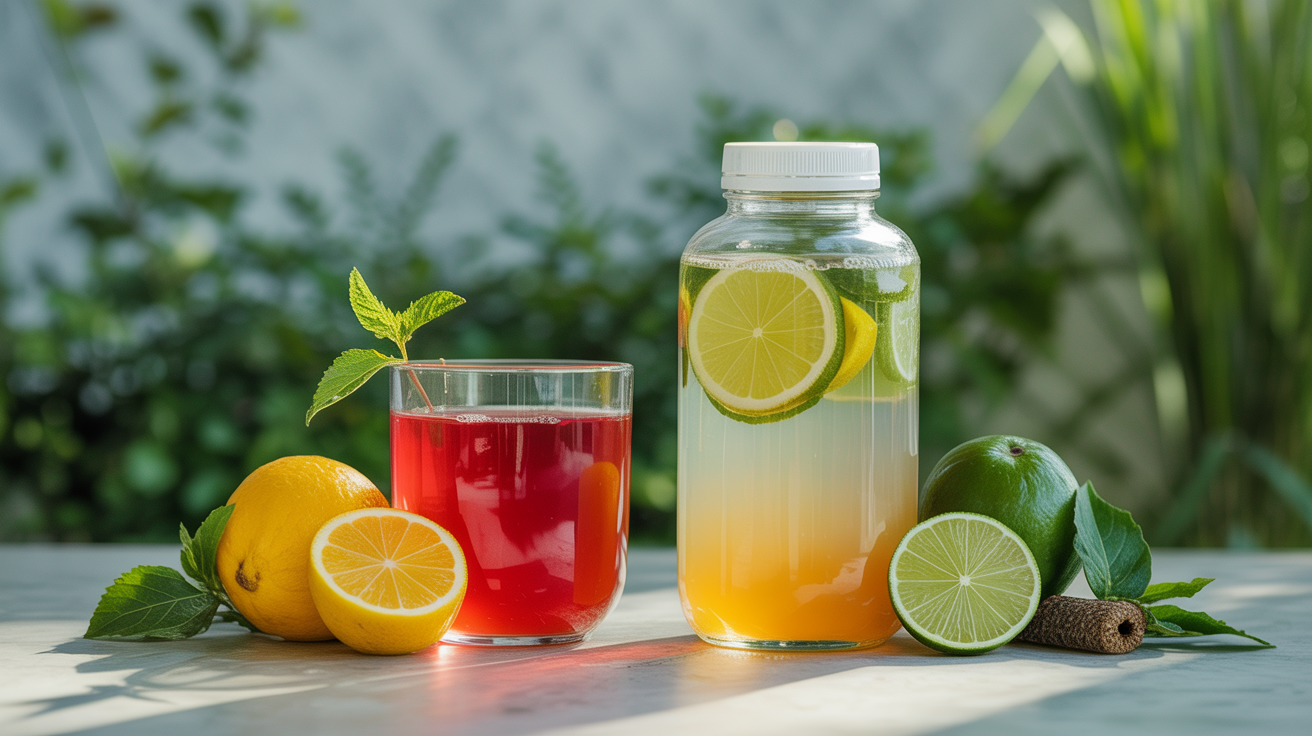
If you've been standing in the fermentation aisle of your own curiosity trying to decide where to start, the kombucha vs water kefir question is probably the first one you need answered. Both are living cultures that turn sugar water into a fizzy, tangy drink. Both look intimidating in photos of jars full of rubbery blobs or tiny translucent crystals. And both are genuinely easy once you've done it a couple of times. The real difference isn't difficulty so much as what kind of attention each culture wants from you, and what you can actually get your hands on locally.
I've kept both going for years, sometimes at the same time, sometimes letting one lapse for months. Here's how they actually compare, not in theory but in daily practice.
What Each Culture Actually Is
Kombucha starts with a SCOBY, a symbiotic culture of bacteria and yeast that floats as a rubbery disc on top of sweet tea. You steep black or green tea, dissolve sugar in it, let it cool, then add the SCOBY along with some starter liquid from a previous batch. Over one to two weeks the culture eats the sugar and produces acids, a little carbonation, and a small amount of alcohol as a byproduct. If you're curious exactly how much, it's worth reading about how much caffeine and alcohol ends up in homemade kombucha before you hand a bottle to a kid or a pregnant friend.
Water kefir grains are a different organism entirely, a small cluster of bacteria and yeast that looks like tiny translucent crystals rather than a flat disc. You feed them sugar water, sometimes with a bit of dried fruit for trace minerals, and within one to three days they've fermented it into a mildly sweet, faintly tart, naturally fizzy drink. There's no floating mat to manage and no tea to steep. For the full walkthrough, our guide on how to make water kefir from scratch covers grain ratios and feeding schedules, and the beginner's guide to brewing kombucha at home walks through the tea and SCOBY side step by step.
Ingredients and Cost
Kombucha needs tea (black, green, or a blend), white sugar, and a SCOBY with some starter liquid. Tea isn't expensive, but the SCOBY itself has to come from somewhere: a friend's extra culture, a kit, or a bottle of raw, unflavored store-bought kombucha that you use to grow your own from scratch.
Water kefir needs only sugar water and the grains themselves, no tea required. The grains are the harder ingredient to source locally since fewer people brew water kefir than kombucha, so you'll more often be mail-ordering dehydrated grains and reviving them, which takes patience the first time. Once established, feeding the grains is cheaper per batch since you skip the tea, though the difference is small if you already buy tea in bulk.
Equipment You'll Need
Kombucha wants a wide-mouth jar (a gallon size is typical), a breathable cover like a coffee filter or tight-weave cloth with a rubber band, and eventually bottles with tight seals for a fizzy second ferment. Keep tea and SCOBY away from reactive metal.
Water kefir uses the same jar and cloth cover, plus a plastic or wooden strainer for separating grains from finished liquid (again, avoid reactive metal touching the grains). Bottling for carbonation works the same way for both. Neither drink demands specialty gear beyond what you likely already own.
Brewing Time and How Much Attention Each One Wants
This is where the two cultures genuinely diverge, and it's the detail that should drive your decision more than anything else.
Kombucha ferments slowly, usually one to two weeks depending on your kitchen's temperature and how tart you like it. During that stretch the SCOBY mostly takes care of itself, but it's sensitive to being forgotten for a long time. Go away for a month and come back to find a very vinegary batch, or a SCOBY that's struggled without fresh sweet tea.
Water kefir ferments fast, often finishing in twenty-four to forty-eight hours. That speed is the tradeoff: the grains need feeding more often, since they'll eat through the available sugar and then start starving. A single missed day usually isn't a problem. A week away with no plan is a bigger risk for kefir grains than for a kombucha SCOBY sitting in its tea.
Kombucha suits someone who wants to set a batch going and mostly ignore it for a week or two. Water kefir suits someone happy to check in daily or every other day but not tied to a strict schedule.
How Forgiving Is Each One of Mistakes?
Both cultures are more resilient than people expect. A brief cool spell in your kitchen just slows things down. Using slightly too much or too little sugar in a batch or two won't kill either one.
Where they diverge is inconsistency over the long haul. Water kefir grains bounce back well after a stint dehydrated in the fridge or freezer, which makes them genuinely easier to keep alive through an erratic schedule or a chaotic few weeks. A kombucha SCOBY can also rest in the fridge, but it needs steadier attention once it's active, and it doesn't tolerate extended neglect at room temperature the way rested kefir grains do. If your life is unpredictable right now, that difference matters more than flavor preference.
Flavor Profile
Kombucha tastes like tart, slightly vinegary iced tea with a natural fizz, and the tea variety shapes the final flavor. Green tea kombucha tends to taste lighter and more floral, while black tea versions come out deeper and more assertive.
Water kefir tastes milder and less acidic, closer to a barely sweet soda than a vinegar-forward drink. With no tea in the base, the flavor is more neutral going in, which makes it an easier canvas for a second ferment with fruit juice or fresh ginger. Some people love kombucha's tang from the first sip; others need a few batches to adjust. Water kefir tends to be the easier flavor for a first-timer to enjoy right away.
Side-by-Side Comparison
| Factor | Kombucha | Water Kefir |
|---|---|---|
| Base ingredients | Tea, sugar, SCOBY | Sugar water, grains |
| Culture sourcing | SCOBY from a friend, kit, or raw kombucha | Grains usually mail-ordered |
| Brew time | 1 to 2 weeks | 1 to 3 days |
| Feeding frequency | Weekly-ish | Every 1 to 2 days |
| Tolerates a missed week | Moderately well | Better, especially chilled |
| Flavor | Tart, vinegary, tea-forward | Mild, lightly sweet, neutral |
| Equipment | Jar, cloth cover, bottles | Jar, strainer, bottles |
| Good for | Set-and-forget schedules | Frequent but flexible check-ins |
Which One Should You Actually Start With?
Honestly, the deciding factor for most people isn't taste or difficulty, it's what you can get your hands on. If a friend has an extra SCOBY sitting in a jar of backup tea, take it and start there. If someone local has spare water kefir grains, or you find a reliable seller, start with those instead. A culture that's already thriving in someone's kitchen tends to establish faster in yours than one shipped dehydrated.
If you genuinely have a choice, think about your schedule. Someone who travels often or forgets things for stretches will likely have better luck with water kefir grains, since a rest in the fridge is far more forgiving than an abandoned SCOBY. Someone who wants to start a batch on Sunday and check back the following weekend will probably prefer kombucha's slower rhythm.
And if you already enjoy fermented dairy, it's worth knowing that milk kefir (a different culture from water kefir, despite the shared name) sits in its own category entirely. Our piece on milk kefir vs yogurt is a useful read once you're comfortable with cultures in general and want to branch into dairy ferments too.
There's no wrong answer here. Plenty of home fermenters end up brewing both, rotating attention between a SCOBY and a jar of grains once each has become routine rather than a project.
Frequently Asked Questions
Is water kefir actually easier than kombucha for a total beginner?
For most people, yes, mainly because the feedback loop is faster. You'll know within a day or two whether your water kefir batch is working, while kombucha takes a week or more to tell you the same thing. Faster feedback means faster learning.
Can I brew kombucha and water kefir in the same kitchen at the same time?
Yes, and many people do. Just keep the cultures, jars, and any tools that touch them separate to avoid cross-contamination, and label your jars so you don't mix up which liquid belongs to which culture.
Which one has more caffeine, kombucha or water kefir?
Kombucha has a small amount of caffeine carried over from the tea base, though far less than a cup of brewed tea itself. Water kefir has none, since it's built on plain sugar water rather than tea.
Do I need special water for either one?
Both cultures generally do better with dechlorinated water, since chlorine can suppress the bacteria and yeast you're trying to cultivate. Filtered water, or tap water left out uncovered overnight to let chlorine dissipate, works for either ferment.
What if my culture just stops working?
A kombucha SCOBY that's gone moldy (fuzzy, dry-looking patches in unusual colors, not to be confused with the normal stringy yeast strands) should be discarded along with its liquid. Water kefir grains that stop fizzing anything after a couple of fresh feedings have likely died and are worth replacing. When in doubt with any ferment, trust your nose and eyes, and when something looks or smells clearly off, throw it out rather than taste-testing your way to an answer.