Tools & Ingredients
The Best Jars for Fermenting at Home
From wide-mouth mason jars to purpose-built fermentation vessels, here's how to pick the right jar size and style for safe, reliable home ferments.
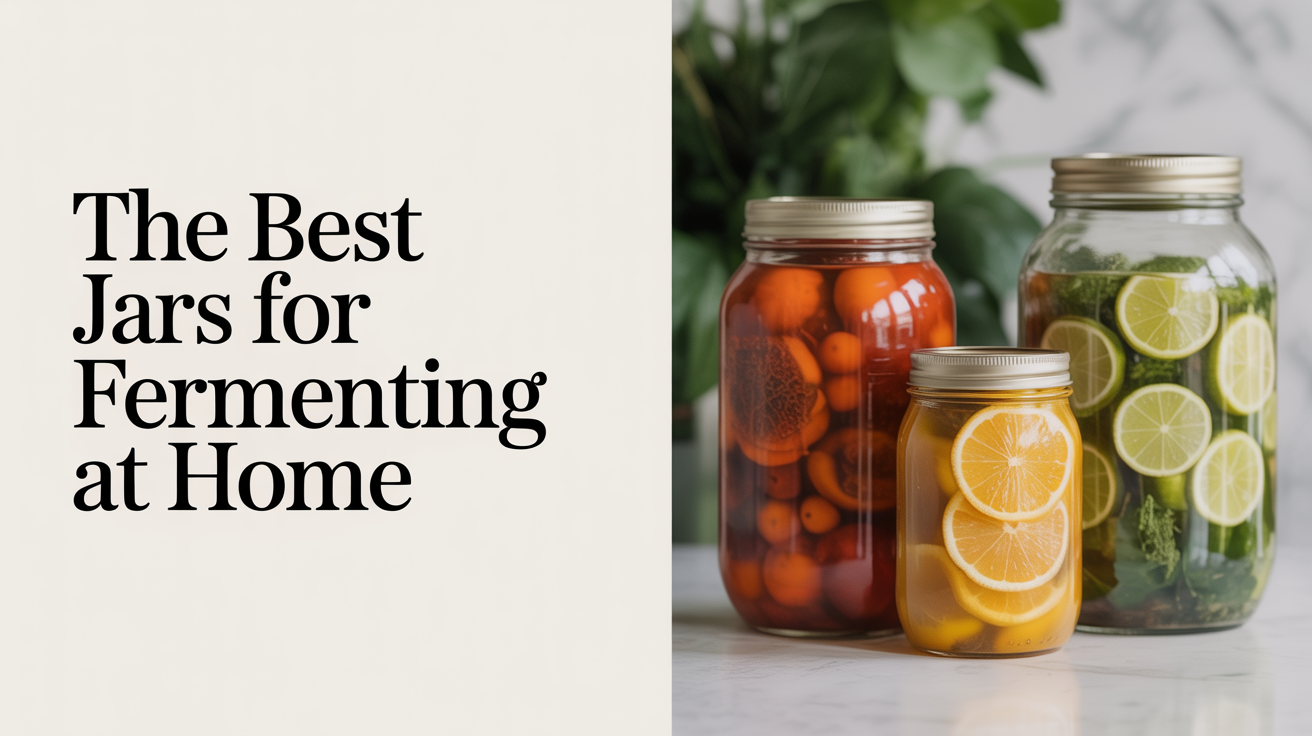
Most people start their fermentation journey with whatever jar is already in the cupboard, and for good reason: a standard mason jar is genuinely capable of producing excellent sauerkraut, pickles, and brine ferments without any special equipment. That said, not every jar is equally suited to the job. The shape of the mouth, the material, the size, and the lid style all affect how easy it is to keep vegetables submerged under brine, which is the single most important safety factor in vegetable fermentation.
This guide walks through the main jar options, what to look for, and how to match vessel size to batch size. If you are just getting started, check out the fermentation equipment every beginner needs for the broader kit picture. Here we are focused specifically on the jar itself.
Why the Right Jar Makes Fermentation Safer
Vegetable ferments are safe when anaerobic lactic acid bacteria can do their work without interference. That means keeping vegetables fully submerged below the brine line, away from oxygen. A jar that is too narrow makes it awkward to press vegetables down and add weights. A jar with a tight metal lid can build up enough carbon dioxide pressure to buckle or pop during active fermentation. A non-food-safe material can leach compounds into an acidic brine.
None of these problems are catastrophic on their own, but they create conditions where surface mold or spoilage organisms get a foothold. The right jar reduces friction so you can maintain submersion consistently throughout the ferment.
Mason Jars: A Solid Starting Point
Wide-mouth mason jars are the most practical choice for most home fermenters, and for good reason. The wide opening (roughly 86 mm across) makes it easy to pack vegetables tightly, press them down, and tuck in a weight or zip-lock bag filled with brine to hold everything below the waterline. Regular-mouth jars (70 mm opening) are noticeably harder to work with for solid ferments like kraut or kimchi, though they work fine for liquid brine ferments such as pickles where you are submerging whole or sliced pieces in a pre-made salt solution.
Ball, Kerr, and Bernardin wide-mouth jars are widely available in North America and designed for repeated use with food. The two-piece lid (flat disc plus screw band) is useful during fermentation because you can leave the band just finger-tight rather than fully sealed. This lets CO2 vent naturally and prevents pressure buildup, which can cause a fully sealed jar to forcefully open when disturbed. You do not want that.
If you plan to add an airlock, mason jars are compatible with a range of inexpensive silicone lids and drilled-lid kits designed to fit standard wide-mouth openings. See fermentation weights and airlocks explained for a breakdown of which lid and weight combinations work best.
What Size Jar Works Best for Each Ferment?
Jar size is a practical question as much as a fermentation one. Here is a quick guide to matching container to batch:
| Jar Size | Vegetable Yield | Best For |
|---|---|---|
| 1 pint (500 ml) | About 1 lb / 450 g of vegetables | Testing a new recipe, small households |
| 1 quart (1 litre) | About 2 lbs / 900 g | Standard sauerkraut or pickle batch |
| Half-gallon (1.9 litre) | About 4 lbs / 1.8 kg | Larger batches, kimchi, full heads of cabbage |
| Gallon (3.8 litre) | 8+ lbs / 3.6+ kg | High-volume batches, group use |
A few things to keep in mind on sizing: vegetables need at least 1 to 2 inches (2.5 to 5 cm) of headspace above the brine, both to allow for expansion during active fermentation and to give you room to place a weight. Overfilling a jar so that vegetables sit above the brine is one of the most common mistakes beginners make, and it is also one of the easiest to avoid by choosing a jar one size larger than you think you need.
For a first batch of sauerkraut, a quart jar is a sensible starting size. One medium head of cabbage (roughly 2 lbs / 900 g) fits comfortably with room for a weight and brine. At a standard 2% salt ratio by weight, you would use about 18 grams of non-iodized salt for that batch.
Purpose-Built Fermentation Jars
Several companies make jars specifically designed for fermentation. These typically feature a built-in airlock channel, silicone gasket, and sometimes a glass weight that fits the jar diameter. The advantages are convenience and a cleaner setup: you do not have to improvise a weight or worry about a zip-lock bag leaking.
Common options include jars with flip-top lids and water-seal channels (similar to a small crock design), and wide-mouth jars with integrated plastic or silicone airlock lids. These are worth considering if you ferment regularly and want a more streamlined process, but they are not necessary for safe fermentation. A basic mason jar with a loose two-piece lid or a simple airlock lid does the same job.
One thing to be aware of with purpose-built jars: check that any plastic components are BPA-free and food-safe. Prolonged contact with acidic brine can degrade some plastics over time. Glass bodies with silicone or food-safe plastic lids are a better long-term choice than all-plastic fermentation containers.
For a comparison of jars against dedicated crocks, the guide on whether you need a fermentation crock or if a jar works covers the trade-offs in more detail.
What to Avoid When Choosing a Fermentation Jar
A few jar types cause recurring problems:
Regular-mouth jars for solid ferments. The narrow opening makes packing and weighting difficult. Reserve these for liquid brine ferments or kombucha.
Metal containers. Salt brine is corrosive to most metals. Even stainless steel can pit over time with high-salt brines. Glass is the standard and there is no real reason to deviate from it.
Jars with decorative coatings or unknown glazes. Vintage or antique jars with coloured or decorative glazes may contain lead or cadmium, particularly on the inside. Use modern, food-grade mason jars or purpose-built fermentation glass.
Airtight lids left fully sealed during active fermentation. This is more of a lid issue than a jar issue, but it is worth noting here. Carbon dioxide builds up during the first several days of fermentation, and a fully sealed jar can develop enough pressure to pop the lid suddenly or, in rare cases, crack. Leave the lid finger-loose, use an airlock, or "burp" the jar once a day during peak activity.
Frequently Asked Questions
Can I use any glass jar for fermenting, or does it have to be a mason jar? Most glass jars work, as long as the material is food-safe and the mouth is wide enough to work with comfortably. Repurposed pasta sauce jars or pickle jars are fine for short ferments. That said, mason jars are purpose-made for this kind of use and are designed to handle repeated washing, temperature changes, and acidic contents over many cycles.
Do I need a special fermentation lid, or can I use the standard two-piece mason jar lid? The standard two-piece lid works well if you leave it finger-tight rather than fully sealed. This allows CO2 to vent. Airlock lids are a useful upgrade because they let gas out without letting oxygen in, but they are an optional convenience rather than a requirement.
What is the best jar size for a beginner? A quart-size (1-litre) wide-mouth mason jar is the most practical starting point. It holds a reasonable batch size, is easy to find, and is inexpensive. Once you know which ferments you make most often, you can scale up to half-gallon jars for regular batches.
How many jars do I need to start? Two or three quart jars is enough to get going. That lets you run a batch of sauerkraut in one jar, a batch of pickles in another, and have a spare for brine top-ups or a second experiment. You do not need a full pantry of fermentation gear on day one.
Should I sterilize my jars before fermenting? Thorough cleaning with hot soapy water is enough for lacto-fermented vegetables. You do not need to sterilize jars the way you would for canning, since lactic acid fermentation creates its own hostile environment for pathogens as the pH drops. That said, starting with clean equipment, clean hands, and clean vegetables is non-negotiable. Any residue from a previous ferment, especially mold, should be scrubbed away completely before reuse.