Tools & Ingredients
Where to Get a SCOBY, Kefir Grains, and Starter Cultures
Find out where to get a SCOBY, buy kefir grains, or source starter cultures for free, plus how to spot a healthy culture before you use it.
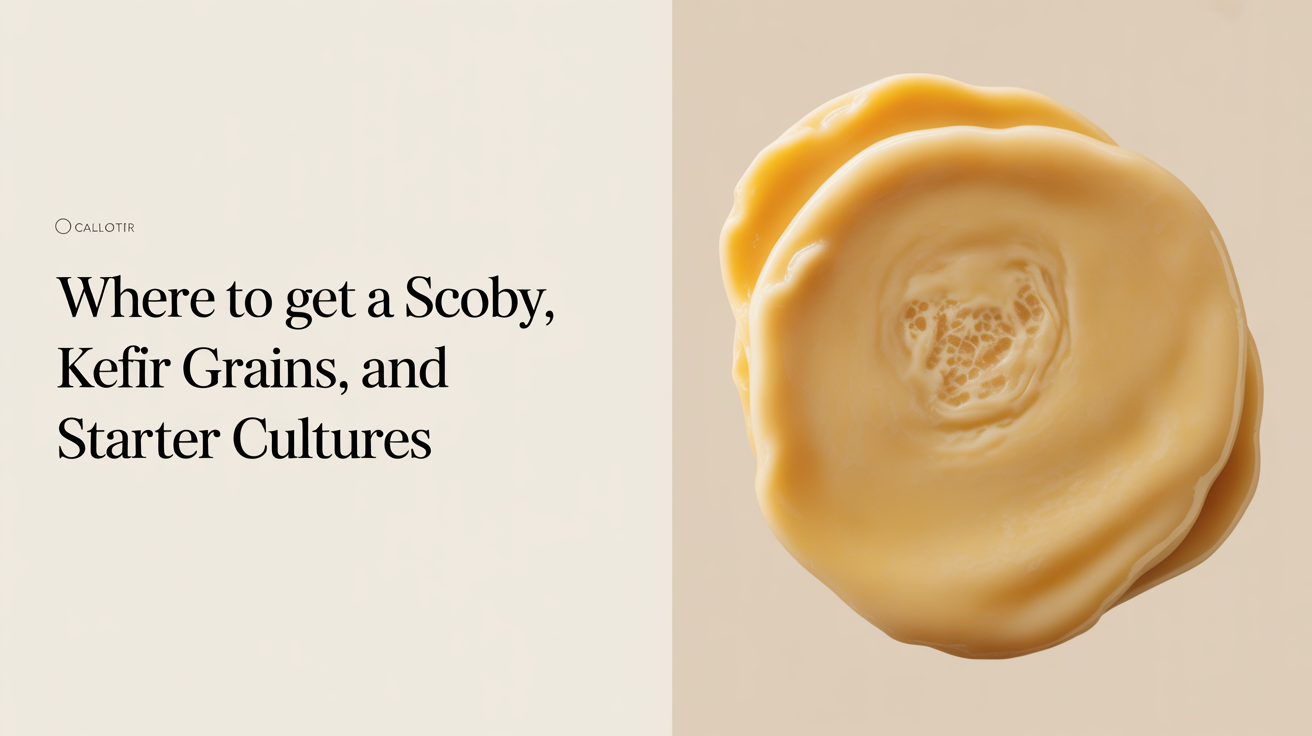
Before you brew your first batch of kombucha or culture your first jar of kefir, you need a live starter. That starter, whether a SCOBY (symbiotic culture of bacteria and yeast), milk kefir grains, water kefir grains, or a sourdough starter, is the engine that turns plain ingredients into something fermented. Finding one is usually easier than people expect, and in many cases you can get a healthy culture for free.
This guide covers the main ways to source a SCOBY, kefir grains, or other fermentation cultures, what to look for in a healthy one, and the signs that tell you to walk away and start over.
Grow a SCOBY from Store-Bought Kombucha
The cheapest way to get a kombucha SCOBY is to grow one yourself from a bottle of raw, unflavored, unpasteurized kombucha. Look for bottles labeled "raw" or "live cultures" and check that the liquid is slightly cloudy rather than crystal clear. Pasteurized kombucha will not work because the heat kills the bacteria and yeast you need.
To grow a SCOBY, pour one bottle of raw kombucha into a clean wide-mouth jar and add half a cup of plain sweet tea (brewed black or green tea cooled to room temperature, with about two tablespoons of white sugar dissolved in). Cover the jar with a breathable cloth secured with a rubber band, and keep it somewhere out of direct sunlight at a steady temperature between 72 and 82 F (22 to 28 C). Within one to four weeks, a thin pellicle will form at the surface. That pellicle is your new SCOBY.
The resulting SCOBY is often thin and pale at first, which is completely normal. It will thicken with each successive brew. The main challenge here is patience: if you move the jar too often or store it somewhere too cold (below 65 F / 18 C), the pellicle may be slow to form or come out patchy.
Ask Friends, Neighbors, and Fermentation Groups
Anyone who brews kombucha regularly ends up with more SCOBY than they can use. Every batch produces a new "daughter" layer that eventually needs to go somewhere. The same is true for milk and water kefir grains, which multiply as they feed and need to be divided periodically.
Local fermentation groups, Facebook communities, and subreddits dedicated to kombucha or kefir almost always have members giving away healthy cultures. Search for "SCOBY hotel" in your area's fermentation groups, or post asking if anyone has free kefir grains to share. Many people will mail a small portion in a zip-lock bag with a little sweet tea or milk for the journey, often for just the cost of postage.
Getting a culture from someone local has a real advantage: you can see the ferment they are running, ask questions face to face, and confirm the culture looks active before you take it home.
Buy from Online Culture Suppliers
If you cannot find a free culture locally, purchasing from a reputable seller is straightforward. Several companies specialize in fermentation starters and ship live or dehydrated cultures directly to home fermenters.
When buying online, you will typically encounter two formats: live and dehydrated.
Live cultures arrive in a bag with a little liquid and are ready to use within a day or two. They are more fragile during shipping and tend to cost more, but they activate quickly because the organisms are already awake.
Dehydrated cultures are shelf-stable, travel well, and are usually less expensive. They take longer to activate, often one to two weeks, because the organisms need time to rehydrate and build back up to working numbers. Temperature matters a lot during rehydration: kefir grains activate best between 68 and 77 F (20 to 25 C), while a SCOBY being rehydrated prefers the warmer end of that range, around 75 to 80 F (24 to 27 C).
When shopping for kefir grains specifically, look for sellers who ship in actual milk (for milk grains) or sugar water (for water grains) rather than a dry powder labeled "kefir starter." Powdered kefir starters are single-use cultures that produce one or two batches and then die out. True kefir grains are living clusters that regrow indefinitely when fed properly. The difference matters a lot for long-term fermentation.
How to Judge a Healthy Culture Before You Use It
Whether you sourced your culture from a friend, an online shop, or grew it yourself from store-bought kombucha, it is worth evaluating before you commit ingredients to a full batch.
A healthy SCOBY is firm enough to hold its shape, smells mildly vinegary or tea-like, and ranges in color from cream to light tan to dark brown. Brown patches from tannins in the tea are normal and not a sign of damage. Small bubbles or strands of yeast hanging beneath the pellicle are also normal and indicate active fermentation.
Healthy milk kefir grains look like small, irregular cauliflower clusters. They are white to pale yellow, slightly rubbery, and smell tangy and lactic, like yogurt. Water kefir grains are translucent, gelatinous, and off-white or pale yellow.
Signs to take seriously:
- Fuzzy spots in black, green, or blue-green. Fuzzy growth is mold. Mold on a SCOBY or culture is a firm discard signal. Do not try to cut away the visible fuzzy patch and keep the rest. Mold mycelium can run much deeper than the surface looks.
- A slimy, pink, or orange surface on a SCOBY. These colors can indicate contamination with organisms that do not belong in a healthy culture.
- An off-putting smell, meaning putrid or garbage-like rather than sour or vinegary. A sour smell is fermentation working. A rotten smell is something else entirely.
Kahm yeast is a common point of confusion, especially for new fermenters. It looks like a thin, flat, white or off-white film on the surface of a vegetable ferment or even a kombucha jar. Unlike fuzzy mold, kahm is smooth and almost powdery in texture. It is not harmful, but it can give your ferment an off flavor and usually signals the ferment ran a little warm or the sugar content was too high. You can skim it off and continue, but if you are not sure whether you are looking at kahm or early mold, err on the side of discarding and starting with a fresh culture.
The rule here is simple: when in doubt, throw it out. A replacement culture costs a few dollars or a quick post in a community group. A bad batch of starter is not worth the health risk.
Setting Up Your Starter Culture for Success
Once you have a healthy culture in hand, the conditions you give it matter as much as the culture itself. Temperature stability is one of the biggest factors in how quickly and reliably a starter activates.
Kombucha: keep the SCOBY and sweet tea mixture between 72 and 82 F (22 to 28 C). Below 65 F (18 C), fermentation slows significantly and can stall. Above 85 F (29 C), the yeast can outpace the bacteria and the balance of the culture tips off.
Milk kefir: grains are happy between 68 and 77 F (20 to 25 C). A countertop spot away from drafts usually works fine. Warmer temperatures mean faster culturing but also a sharper, more sour flavor.
Water kefir: similar range, 68 to 78 F (20 to 26 C). Water kefir grains are sometimes pickier about minerals in the water. If yours are sluggish after a week, try adding a small pinch of baking soda or a drop of unsulfured molasses to the sugar water to provide trace minerals.
For all of these cultures, clean equipment is non-negotiable. Soap residue left in a jar can suppress culture activity, and certain metals react with kefir grains and throw off their balance. Glass jars, wooden or plastic spoons, and a good rinse with hot water before use are a solid baseline. You can read through a full list of what you actually need in fermentation equipment every beginner needs, and weigh whether a dedicated vessel or a plain jar makes more sense for your setup in do you need a fermentation crock or will a jar work. If you plan to use an airlock for secondary fermentation, fermentation weights and airlocks explained walks through what each tool does.
Frequently Asked Questions
Can I use flavored kombucha to grow a SCOBY? Plain unflavored raw kombucha gives you the best odds. Fruit juices and flavorings added during secondary fermentation can introduce competing organisms or sugars that interfere with pellicle formation. If plain is hard to find, try a lightly flavored bottle, but expect the process to take longer and be less reliable.
How long do kefir grains last in the fridge? Milk kefir grains stored in a jar of fresh milk in the fridge can stay dormant for two to four weeks without a feeding. When you are ready to use them again, pour off the milk, rinse the grains gently with non-chlorinated water, and put them in fresh milk at room temperature. The first batch or two may be thinner or more sour than usual while the grains reactivate.
What is a SCOBY hotel? A SCOBY hotel is a jar where extra SCOBYs are stored in finished kombucha. As you brew batch after batch, each new brew produces another SCOBY layer. Rather than discarding the older ones, fermenters collect them in a topped-up jar kept at room temperature or in the fridge. These hotels are a common source of free SCOBYs in local fermentation communities.
Is it safe to use a dehydrated culture mailed from across the country? Yes, as long as the seller packages it properly and ships with adequate moisture or protective medium. Follow the rehydration instructions that come with the culture, keep it at the right activation temperature, and give it the full recommended time before deciding it is not working. Cultures that seem slow at first often pick up noticeably once they have had several more days at a stable temperature.
My new SCOBY looks brown and a little stringy underneath. Is that a problem? No. Brown color is tannins from the tea and is completely normal. The stringy strands hanging below the pellicle are yeast strands, also normal, and actually a good sign that the culture is active. As long as there are no fuzzy spots on the surface and the smell is vinegary rather than putrid, your SCOBY is fine to brew with.